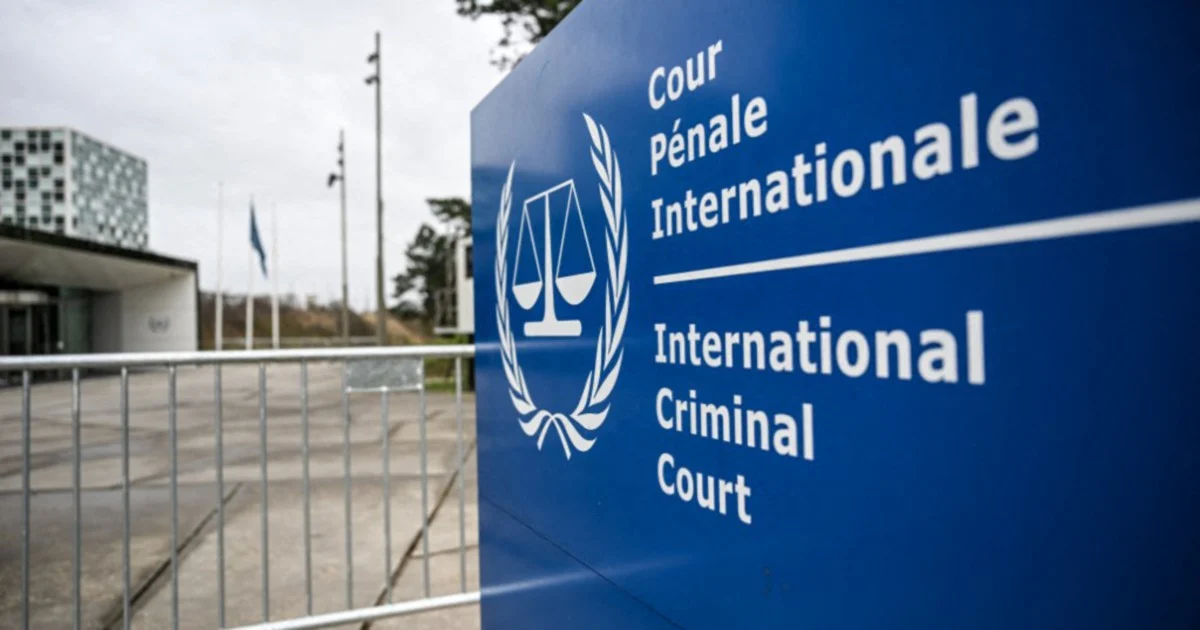
Two United States-based advocacy organizations initiated legal proceedings this week against the Trump administration over penalties targeting the International Criminal Court, contending that the sanctions framework breaches fundamental constitutional protections for free expression. The lawsuit marks the opening salvo in what promises to be a significant confrontation over executive power, international justice mechanisms, and domestic constitutional law.
The advocacy groups argue that the sanctions regime, which emerged following an aggressive diplomatic push by American officials to undermine the ICC's operational capacity and legitimacy, effectively suppresses the ability of citizens and organizations to advocate for international criminal justice and support the court's investigative mandate. By weaponizing economic penalties against an institution, the plaintiffs maintain, the administration has crossed constitutional boundaries that typically protect advocacy, speech, and association rights within the United States.
This legal challenge carries particular relevance for Southeast Asian observers, given the region's complex relationship with international accountability mechanisms. Several nations in the region have been subjects of ICC investigations or consideration, while others maintain ambivalent positions toward the court's jurisdiction and authority. The Trump administration's hostile stance toward the ICC, if upheld legally, could reshape how international institutions operate and how democratic governments approach accountability for alleged mass atrocities.
The timing of the lawsuit coincides with intensifying American diplomatic efforts to isolate and weaken the ICC. Senior Trump administration officials have embarked on a coordinated campaign to persuade other nations to withdraw ICC membership, challenge the court's legitimacy, and restrict its operational scope. These efforts represent a significant departure from the traditional American posture toward international institutions, signaling a broader retreat from multilateral frameworks that have defined post-Cold War international relations.
The constitutional claim advanced by the advocacy groups focuses on a relatively understudied dimension of free speech jurisprudence: whether government restrictions on foreign institutions can impermissibly burden domestic citizens' rights to support, advocate for, and provide resources to those institutions. The argument suggests that sanctions targeting the ICC function as a proxy mechanism for suppressing protected speech and association by American advocates who support international criminal accountability.
This case intersects with longstanding American ambivalence toward the ICC. The United States was instrumental in establishing the court through the Rome Statute negotiations, yet has never ratified the treaty creating it, citing concerns about American sovereignty and fears of politically motivated prosecutions of American officials. The Trump administration has taken this skepticism to new extremes, treating the court not merely as an institution to avoid, but as an entity requiring active sabotage through economic and diplomatic pressure.
For Malaysia and other Southeast Asian nations, the case highlights how American foreign policy volatility creates uncertainty around international legal institutions. If the Trump administration successfully implements its anti-ICC agenda without meaningful legal constraints, it could embolden other powerful nations to similarly challenge multilateral frameworks that they find inconvenient. Conversely, if the advocacy groups succeed in their constitutional challenge, it would establish important precedent protecting Americans' rights to engage with international institutions even when their government opposes them.
The free speech dimension introduces an innovative legal strategy that may appeal to judges skeptical of overtly asserting limitations on executive foreign policy powers. Rather than directly challenging whether the president possesses authority over sanctions policy, the advocacy groups reframe the dispute as a First Amendment matter, potentially offering courts a path to intervene without appearing to second-guess diplomatic or national security judgments. This approach mirrors litigation strategies employed successfully in other contexts involving government restrictions on engagement with disfavored entities.
The ICC itself has become an increasingly polarizing institution globally. Some nations view it as an essential mechanism for accountability that supplements inadequate domestic justice systems. Others perceive it as a tool of powerful nations and a threat to sovereignty. The Trump administration clearly falls into the latter camp, seeing the court as an illegitimate exercise of authority that should be dismantled or drastically reformed. The administration's hardline position reflects conservative concerns that international institutions operate beyond meaningful democratic control or accountability.
The lawsuit's success remains uncertain, as courts have traditionally granted considerable deference to executive branches on matters involving foreign relations and sanctions. However, when First Amendment rights are implicated, judicial scrutiny typically intensifies. The advocacy groups must convince the court that government measures targeting the ICC substantially burden domestic speech and association rights, and that the burdens cannot be justified by compelling governmental interests. This represents a sophisticated legal argument that requires careful navigation of both constitutional and foreign affairs law.
Beyond the immediate legal contest, the case reflects deeper questions about how democracies should relate to international institutions when those institutions adopt positions inconsistent with national governments' preferences. The challenge for courts will be determining whether citizens possess protected rights to engage with international bodies regardless of their government's stance, or whether executive foreign policy decisions enjoy near-absolute immunity from constitutional scrutiny.

