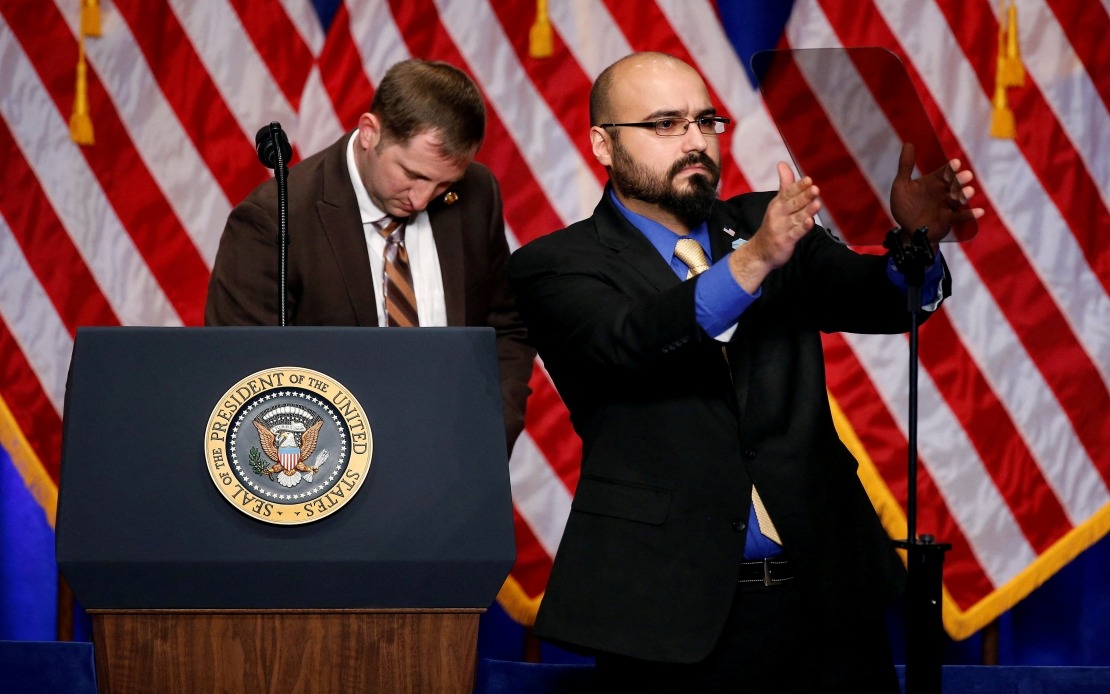
The White House has suspended a senior member of Donald Trump's communications team on unpaid leave following serious allegations that he exploited confidential knowledge of the president's speeches for financial gain. White House press secretary Karoline Leavitt disclosed the development on Thursday, characterising the situation as "deeply unfortunate and frankly a disgrace" after Trump was briefed on the matter. The operator, who has managed Trump's teleprompter since 2016, stands accused of using his privileged access to advance speech content to place lucrative wagers on Kalshi, a specialised prediction markets platform where participants bet on real-world occurrences.
The scope of the alleged misconduct appears substantial. According to reports from broadcaster ABC, the teleprompter operator is believed to have accumulated winnings exceeding $100,000 through bets placed on the prediction markets platform. The trades in question centre on outcomes directly related to Trump's public statements and policy announcements, suggesting a systematic pattern of leveraging non-public information for personal profit. This form of activity raises profound questions about information security protocols within the White House and the safeguarding of sensitive operational details that remain confidential until public disclosure.
The prediction markets industry has emerged as a significant financial sector in recent years, attracting millions of participants who wager on geopolitical developments, election outcomes, and other newsworthy events. Kalshi operates within this space, providing a platform where users can place contracts on anticipated real-world outcomes. The platform's structure mirrors traditional futures trading, but focuses on events rather than commodities or securities. For individuals with advance knowledge of significant announcements or policy shifts, such platforms theoretically present extraordinary profit opportunities—a dynamic that regulators and compliance specialists have increasingly scrutinised.
Kalshi's own enforcement apparatus moved swiftly upon detecting irregularities in the operator's trading pattern. Robert DeNault, the platform's legal representative and head of enforcement, confirmed via X (formerly Twitter) that Kalshi had "promptly" identified, investigated, and reported the suspicious trades to the Commodity Futures Trading Commission, the federal agency tasked with regulating derivatives markets and prediction platforms. DeNault emphasised the company's cooperative stance with regulatory authorities, stating that Kalshi had provided "all evidence that we collected" to the CFTC during the referral process, mirroring standard protocol for any flagged transaction.
The involvement of the Commodity Futures Trading Commission signals the gravity with which federal authorities are treating this matter. The CFTC maintains oversight of prediction market platforms and possesses investigative authority to determine whether the operator violated federal trading laws or insider information restrictions. Such cases carry potential criminal implications beyond mere regulatory violation, particularly if prosecutors determine that the operator engaged in what amounts to securities fraud or theft of government information. The commission's investigation will likely examine the timing of trades against Trump's public statements, communication records, and any coordination between the operator and others.
This incident illuminates broader vulnerabilities within high-level government operations. The role of a teleprompter operator, while seemingly technical, provides exceptional vantage points for accessing non-public presidential remarks, policy decisions awaiting announcement, and strategic communications planned for future delivery. Unlike classified information systems that operate under strict compartmentalisation and security protocols, teleprompter preparation involves regular exposure to speech drafts, edits, and timing changes that flow through various channels within the communications apparatus. The case suggests that ethical guardrails and financial disclosure requirements governing lower-ranking White House staff may merit reinforcement.
For Malaysian and Southeast Asian observers, this episode offers instructive lessons regarding government transparency, insider trading enforcement, and the modernisation of financial regulation. Malaysia's own capital markets regulator, Securities Commission Malaysia, monitors prediction markets and derivative trading within the country's financial ecosystem. The incident underscores the necessity of robust surveillance systems and proactive investigation protocols to identify suspicious trading patterns that deviate from normal market behaviour. As prediction markets gain prominence globally, regulators across the region must develop sophisticated detection capabilities to prevent misuse of official knowledge for speculative advantage.
The suspension raises questions about compartmentalisation practices within the Trump administration's communications infrastructure. How thoroughly are staff members screened for financial vulnerabilities or external pressures that might incentivise misuse of confidential information? Do conflict-of-interest disclosure requirements adequately capture trading activity on prediction markets, which many officials might regard as innocuous gambling rather than meaningful security risks? These governance gaps extend beyond the current incident and warrant systematic review across the federal government.
The case also illustrates the evolving nature of information security threats in the digital age. Traditional insider trading enforcement focused primarily on securities markets and corporate secrets. Prediction markets introduce novel vectors for exploiting non-public information, with lower regulatory visibility than established stock exchanges. The alleged teleprompter operator's scheme required merely accessing speeches before public delivery and executing trades on a relatively accessible platform—no complex financial engineering or sophisticated market manipulation tactics. This accessibility makes prediction markets simultaneously attractive to wrongdoers and challenging for regulators attempting comprehensive surveillance.
White House officials have not yet disclosed whether additional investigations into other staff members' financial activities are underway, nor have they outlined concrete measures to prevent similar occurrences. The incident occurs within a broader context of heightened scrutiny regarding government ethics, particularly following previous controversies involving congressional stock trading and executive branch financial disclosure practices. Whether this suspension catalyses systematic policy reforms or remains an isolated disciplinary action will influence perceptions of institutional commitment to ethical governance standards.
The CFTC's investigation remains ongoing, and its conclusions will establish important precedent for prosecuting insider trading misconduct within prediction markets specifically. Should the commission pursue enforcement action, the case could establish legal frameworks governing information misuse within this emerging financial sector. For trading platforms and government agencies alike, the outcome will likely inform future compliance architectures and inter-agency coordination protocols. Meanwhile, the teleprompter operator's suspension stands as a cautionary reminder that proximity to presidential power and confidential communications creates fiduciary obligations that transcend traditional job descriptions.

