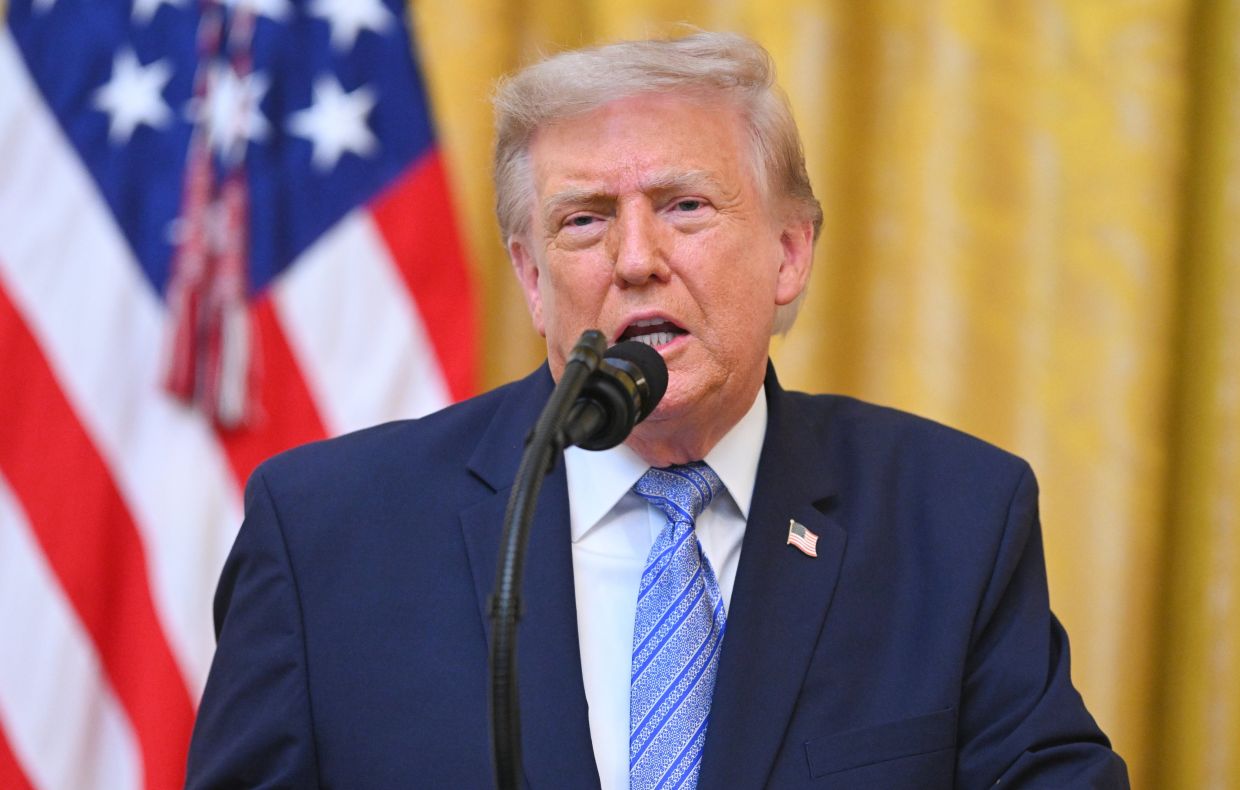
President Trump used a significant White House address to launch a multipronged assault on China's alleged election interference, combine it with renewed pressure for voting reforms, and brandish threats against critical media outlets—a speech that underscores the administration's strategy of intertwining geopolitical confrontation with domestic political messaging as the midterm elections approach.
Central to Trump's remarks was an accusation that China orchestrated what he characterised as the "largest compromise of election data in history," a claim he positioned as a matter demanding urgent national security response. By framing electoral vulnerability in this manner, Trump attempted to elevate concerns about data integrity into a top-tier strategic issue, though he did not elaborate extensively on the scope, nature, or timeframe of the alleged breach. The assertion serves multiple purposes simultaneously: it redirects attention toward a foreign adversary while simultaneously validating his broader narrative about the fragility of American electoral systems.
Beyond the data compromise allegation, Trump extended his criticism to encompass what he termed systemic state-sponsored interference, alleging that Beijing had specifically worked to undermine his political position during his first term. He went further by accusing Chinese officials of orchestrating a campaign to influence American business leaders and media figures to publicly turn against him, characterising this as a coordinated effort to damage his standing domestically. These allegations, while unsubstantiated in the speech itself, reflect a hardening of rhetoric that treats Chinese influence operations as existential threats to American democracy rather than conventional espionage activities.
The President's fixation on election security formed a substantial portion of his address, yet his remedies were notably partisan in focus and character. Rather than advancing bipartisan electoral safeguards, Trump championed voter ID requirements and proof-of-citizenship provisions, policies that typically encounter Democratic opposition and are widely viewed through the lens of partisan advantage. These measures, he suggested, would constitute part of his proposed SAVE America Act, a legislative framework designed to tighten electoral procedures according to his specifications. The rhetorical linkage between foreign interference threats and voter identification represents a strategic merger of national security concerns with long-standing conservative electoral preferences.
For Malaysian and broader Southeast Asian observers, Trump's escalatory posture towards China carries significant implications. The region remains acutely sensitive to US-China tensions, particularly regarding technology, trade, and strategic competition. Trump's framing of election interference as a paramount security threat potentially signals an administration intent on pursuing more aggressive confrontation with Beijing across multiple domains, with consequences for regional stability and supply chain security. Southeast Asian nations, which maintain complex relationships with both superpowers, face pressure to calibrate diplomatic positioning amid such heightened rhetoric.
The speech's treatment of Iran, though mentioned less prominently in the overall address, suggested a continuation of Trump's maximum pressure approach toward Tehran. By bundling Iran concerns alongside China accusations, Trump attempted to construct a narrative of multiple simultaneous threats requiring decisive American response. This framing echoes his first-term foreign policy worldview, wherein the United States faces multifaceted challenges necessitating confrontational diplomacy.
Trump's warning about revoking broadcast licences for ABC and NBC represented perhaps the address's most openly authoritarian moment, signalling willingness to weaponise regulatory authority against media organisations perceived as hostile. Such threats, whether operationalised or merely rhetorical, inject uncertainty into the media landscape and align with a pattern of pressure on critical journalism. The explicit mention of potential licence revocation exceeds earlier critiques and moves into territory that raises press freedom concerns internationally.
The speech ultimately reflected an administration strategy of linking foreign threats, electoral insecurity, and media criticism into a unified narrative justifying expansive executive action and partisan electoral changes. By presenting China's alleged interference alongside domestic vulnerabilities, Trump constructed an argument for why his proposed reforms constitute necessary national defences rather than partisan measures. This rhetorical move attempts to inoculate his electoral agenda against charges of partisanship by dressing it in national security language.
For regional analysts, the address underscores the centrality of elections to American strategic thinking and the degree to which domestic political calculations influence foreign policy pronouncements. Trump's willingness to deploy security arguments in service of partisan advantage suggests the administration views electoral outcomes as sufficiently consequential to warrant international dimension integration. This approach contrasts with traditional American framing of election security as a domestic matter best insulated from geopolitical considerations.
The convergence of election integrity concerns, foreign interference allegations, media criticism, and regulatory threats within a single address demonstrates how contemporary American political discourse increasingly conflates security, legitimacy, and partisan advantage. Southeast Asian governments observing this dynamic witness a major power seemingly unable to disaggregate electoral questions from foreign policy matters—a development that complicates regional security architecture and suggests heightened unpredictability in American strategic behaviour during competitive election periods.

