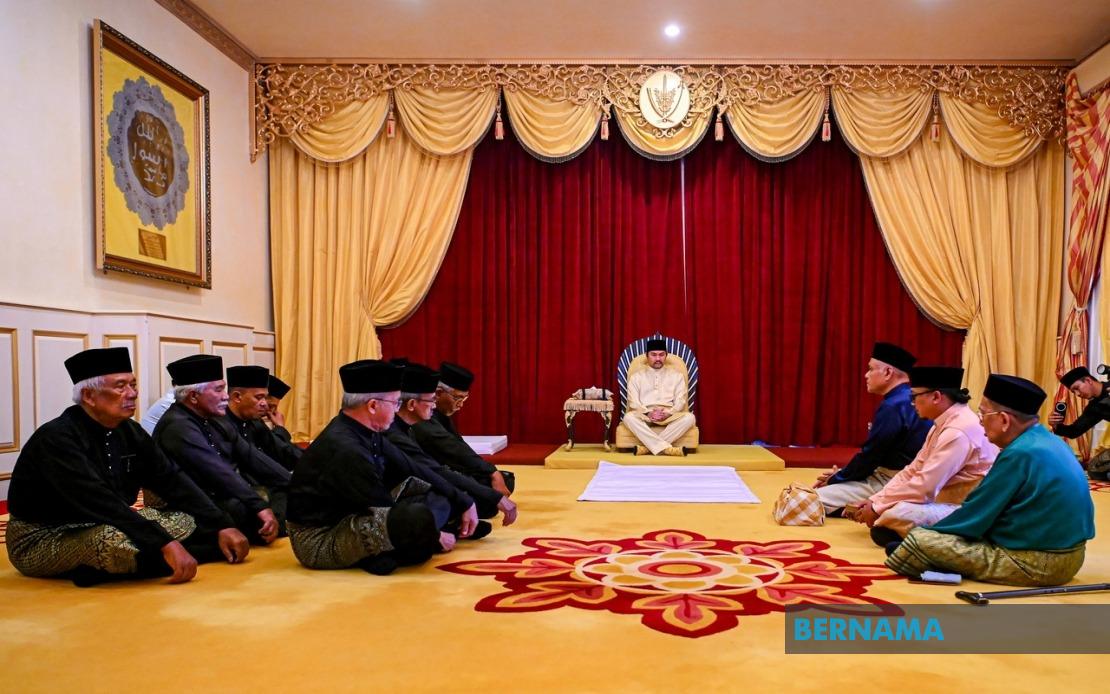
Negeri Sembilan's reigning monarch, Tuanku Muhriz Tuanku Munawir, has formally consented to conduct a royal audience at Istana Besar Seri Menanti in Kuala Pilah on Saturday morning to formalise the installation of the newest Undang of Luak Sungei Ujong. The royal approval was announced following a delegation meeting between palace officials and customary leaders representing the luak, marking an important ceremonial moment in the state's constitutional framework.
Tunku Besar Seri Menanti Tunku Ali Redhauddin Tuanku Muhriz, acting as his father's representative during today's audience, formally conveyed the Yang Dipertuan Besar's authorisation to proceed with the Istiadat Menghadap Menjunjung Duli Bagi Menyempurnakan Kejadian Undang Luak Sungei Ujong. This traditional ceremonial protocol, translating as the formal audience to perfect the installation of an Undang, represents the constitutional recognition required under Negeri Sembilan's unique adat-based governance system. The Tunku Besar emphasised that all selection processes had been conducted in strict accordance with customary law and established traditions.
Muhammad Faris Johari, aged 29, has been selected as the 11th Undang of Luak Sungei Ujong through the Buapak customary council assembly, the supreme decision-making body for such appointments within the luak. His selection followed the customary procedures that have governed the succession of this hereditary office for generations. This appointment comes in the wake of the Dewan Keadilan dan Undang's acceptance of the dismissal of his predecessor, Datuk Klana Petra Datuk Mubarak Dohak, who served as the 10th Undang of Luak Sungei Ujong.
The dismissal decision was reached during a special sitting convened at the palace and presided over by Tuanku Muhriz himself, reflecting the magnitude of such constitutional matters within Negeri Sembilan's governance structure. Menteri Besar Datuk Seri Aminuddin Harun confirmed that this special session had taken place at Istana Besar Seri Menanti, underscoring the involvement of both traditional and modern state leadership in resolving succession matters. The removal of an Undang represents a rare occurrence in Negeri Sembilan's administrative history, as these offices have traditionally enjoyed considerable tenure and stability.
For Malaysian readers unfamiliar with Negeri Sembilan's constitutional arrangements, the Undang system distinguishes the state from all other Malaysian territories. Unlike conventional local government structures, each of the nine luaks (territorial divisions) maintains its own hereditary Undang, a chief custodian of adat and local custom who holds significant ceremonial and administrative authority. These offices function as bridges between federal governance and community-level customary practices, making their succession matters of considerable constitutional importance.
Waris Negeri Sungei Ujong Datuk Sinda Maharaja Razlan Hamid, representing the luak in official capacities, confirmed to media representatives that the entire selection process adhered strictly to established customary protocols. The involvement of the Waris Negeri, a senior custodian of state traditions, in validating the selection demonstrates the multi-layered approval mechanisms built into such appointments. These safeguards ensure that appointments reflect not merely individual preferences but broader community consensus on customary matters.
The palace announcement also referenced a parallel ceremony scheduled for the same morning—the formal installation of the 22nd Undang of Luak Rembau, another of Negeri Sembilan's nine territorial divisions. The scheduling of both ceremonies on the same day represents an efficient consolidation of royal protocols while acknowledging the significance attached to each installation individually. This dual ceremony reflects broader patterns of adat succession that may be occurring across the state's various luaks.
Tunku Ali Redhauddin instructed that administrative details concerning the ceremony and its logistical arrangements should be coordinated between the adat leadership and the Orang Empat Istana, the palace's traditional council of senior officials. This delegation of planning authority to established channels ensures that ceremonial protocols are executed according to longstanding palace conventions while respecting the customary prerogatives of the luak's leadership. The Tunku Besar's emphasis on smooth arrangements reflects the importance the palace attaches to such ceremonial occasions.
The installation of an Undang carries implications extending beyond ceremonial significance. These officials exercise considerable influence over local land disputes, customary disputes, and community welfare matters within their respective luaks. Their selection therefore affects governance outcomes for thousands of residents and influences how adat principles are interpreted and applied in contemporary contexts. The recent dismissal and succession thus represent substantive changes in local authority structures rather than merely symbolic transitions.
For Southeast Asian observers, Negeri Sembilan's adat-based governance system offers a distinctive model of how traditional authority structures have been preserved and adapted within modern constitutional frameworks. Unlike many post-colonial Asian states that radically displaced traditional leadership, Malaysia's federal arrangement permits states like Negeri Sembilan to maintain customary institutions alongside elected governance. This coexistence occasionally generates tensions when customary and democratic principles diverge, as may have occurred in the recent dismissal of the previous Undang.
The royal audience ceremony on Saturday will formalise the transition from the disputed previous regime to the new administration. While the exact circumstances prompting the earlier dismissal remain limited in public disclosure, the ceremonial affirmation by Tuanku Muhriz signals conclusive resolution of the succession question. The new Undang assumes office with full constitutional legitimacy derived from both customary selection procedures and royal approval, positioning him to exercise his considerable local authority with unambiguous authority.
The timing and public announcement of these ceremonies also reflect evolving transparency in Negeri Sembilan's governance. Whereas such appointments might once have proceeded with minimal public notification, contemporary practices involve media briefings and formal announcements. This shift suggests growing recognition that customary governance, while rooted in traditional practice, operates within a wider accountability framework in the modern Malaysian context.

