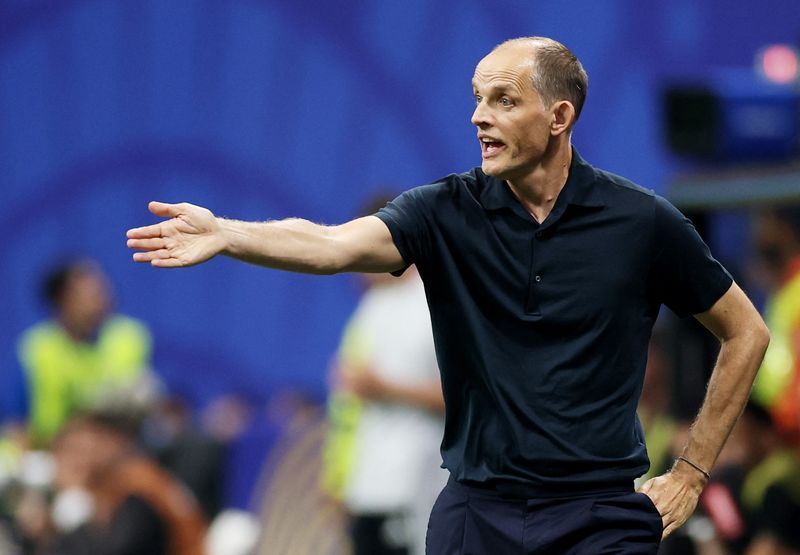
England's World Cup campaign imploded in the semi-final against Argentina on Wednesday, leaving manager Thomas Tuchel to absorb a torrent of criticism despite the reality that tactical decisions alone cannot explain the nation's continued failure on the grandest stage. Tuchel, appointed last year with the explicit mandate to deliver a major tournament victory, made a defensive substitution following Anthony Gordon's opening goal that critics argue surrendered the initiative at a crucial moment. Yet beneath the surface recriminations lies a more sobering truth: England's shortcomings extended far beyond the dugout and reflected fundamental deficiencies in how the team approached the contest.
Tuchel arrived as a serial winner at club level, having captured the Champions League with Chelsea and accumulated silverware across Europe's elite leagues. The Football Association heralded his appointment in October 2024 as England's optimal pathway to finally adding a second World Cup title to the nation's 1966 triumph. Chief Executive Mark Bullingham declared in characteristically optimistic terms that Tuchel represented the best possible chance for success at the next World Cup, signalling the board's confidence in the German tactician's ability to overcome decades of near-misses and quarter-final disappointments.
What defenders of Tuchel's management conveniently overlook is the calibre of opposition England faced in midweek. Argentina entered the semi-final as the defending champions, a team still powered by Lionel Messi, widely acknowledged as the world's greatest footballer. Even the most analytically sophisticated tactical framework struggles against such a combination of experience, cohesion, and individual genius. Tuchel would later reflect that no defensive structure imaginable could have circumvented the fundamental problems that emerged during the match.
The manager's post-match assessment pointed to a more existential concern about English football itself. Tuchel suggested that possession-based football, the controlling style that has become hallmarks of successful Spanish, German, and South American sides, lacks deep roots in the English game's DNA. This observation strikes at a more uncomfortable reality: England's historical reliance on physicality and directness may increasingly prove inadequate against opponents who have invested decades in technical mastery and positional intelligence. The tactical debate, therefore, transcends individual match decisions and reflects divergent footballing philosophies.
Yet Tuchel must navigate a different challenge going forward. Despite achieving a semi-final appearance that matched Southgate's 2018 effort, the German finds himself in his first major international tournament. Didier Deschamps of France required six years at the helm before steering Les Bleus to the 2018 World Cup title, subsequently reaching the final again in 2022. France's 1998 World Cup-winning architect, Aime Jacquet, needed five years to mould his squad into champions. International football demands a patience and gradual refinement that club football, with its relentless fixture congestion and immediate accountability, rarely permits. Tuchel has secured a two-year contract extension through February, suggesting the FA intends to grant him time to learn from this experience.
Argentina's path to the final offers instructive perspective on the unpredictability of tournament football. Lionel Scaloni's defending champions navigated the group phase impressively yet faced sustained pressure throughout the knockout rounds. Cape Verde pushed them uncomfortably close, Egypt required three late goals to dispatch in the round of 16, and Switzerland forced extra time in the quarter-finals despite being reduced to ten men. The narrative arc pointed to a team fuelled by desperation and collective will, galvanised by the prospect of claiming back-to-back World Cups, an achievement last accomplished by Brazil in 1962.
Messi orchestrated Argentina's revival throughout these encounters with the orchestral mastery that has defined his career. Against England's increasingly defensive formation, Messi drifted to the right flank to exploit the crowded box, delivering assists for late goals from Enzo Fernandez and Lautaro Martinez that sealed the semi-final victory. The statistical imbalance proved revealing: England attempted only two passes in Argentina's half during the final twenty minutes, while the Argentine midfield completed 111. This disparity symbolised the growing passivity that engulfed the English approach as the match progressed.
Thierry Henry, who spent three seasons observing Messi's genius at Barcelona, provided poignant testimony to the Argentine's capacity for transformation. Henry described a player who elevates his performance when circumstances demand it, who shifts into an almost transcendent state where individual brilliance becomes irrepressible. The French legend counselled against provoking such competitive fire, warning that awakening Messi's competitive instincts often proves catastrophic for opponents. Henry's observation encapsulated a fundamental challenge: how does any team genuinely neutralise a player operating at such extraordinary levels of technical excellence and football intelligence?
England's defeat reflects not merely the execution of a specific tactical plan but the structural challenge of confronting elite opponents in tournament conditions where margins disappear and individual quality often determines outcomes. Messi's performance exemplified how possession statistics and positional discipline crumble before sustained pressure from a player willing to dribble past entire defences and bend the match to his will. The Argentina great's insistence on running 120 minutes while driving his team forward represented a mentality that transcended conventional football categories.
For Malaysian and Southeast Asian observers, England's exit carries significance beyond immediate sporting results. The defeat underscores how established footballing nations struggle to maintain competitive relevance against opponents with deep-rooted technical cultures and cohesive team structures. England's historical emphasis on physical dominance and counterattacking football shows vulnerability against teams trained in sustained possession and positional intelligence. As regional sides develop increasingly sophisticated approaches, the English experience suggests that cultural footballing traditions require fundamental transformation rather than tactical adjustment to compete at the highest levels.
Tuchel inherits a squad with considerable talent yet organisational inconsistency that extends beyond individual managerial decisions. The defensive switch that critics highlighted may have contributed to defeat, yet the underlying weakness lay in England's inability to dictate possession and rhythm against a defence that had managed multiple close encounters. Tuchel's task moving forward involves not merely refining tactics but potentially reshaping how English football approaches the game itself, embracing technical development and positional discipline while preserving the physicality that remains a national strength.
The manager will draw lessons from this failure, though success in international football rarely arrives during a first tournament campaign. Argentina's hunger for another title and Messi's enduring excellence proved simply too formidable on the evening. England must now regroup, knowing that structural improvements in player development and tactical philosophy require sustained investment beyond any individual manager's tenure. Tuchel's appointment remains justified by the opportunity to build long-term success, but this semi-final exit reveals that England's World Cup challenge transcends the capabilities of even the most accomplished European tactician.

