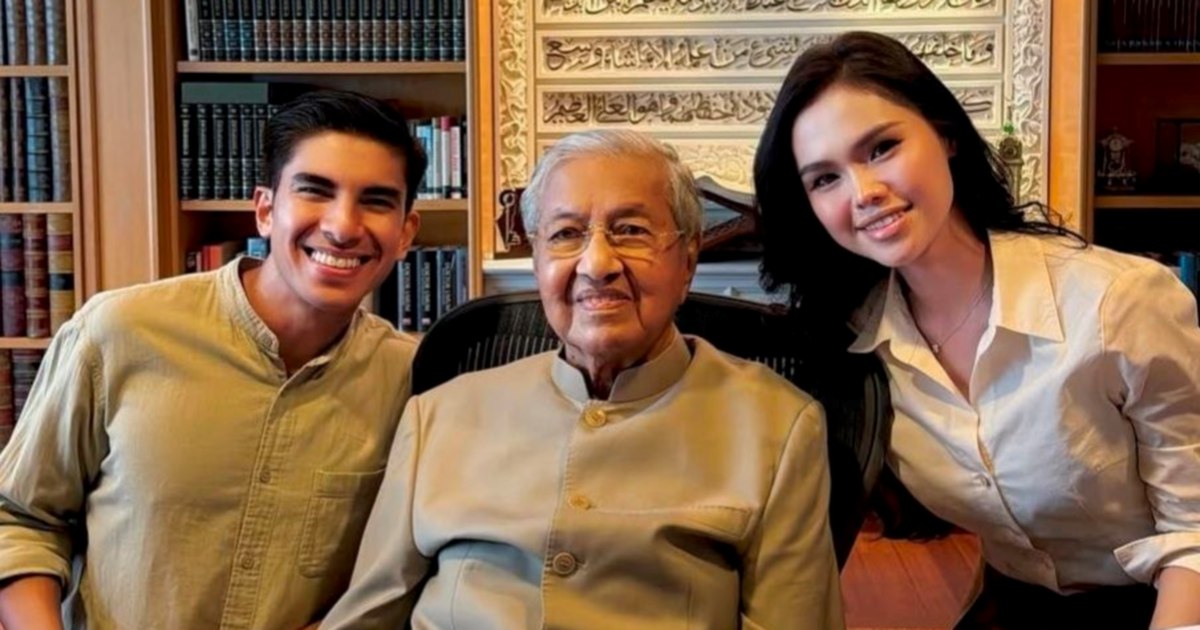
Entertainment personality Bella Astillah has shared an unexpected and touching moment from her personal life, disclosing that she and her fiancé received relationship guidance from former Prime Minister Tun Dr Mahathir Mohamad. The actress and singer encountered the elder statesman during what she described as a recent meeting, where the conversation naturally turned toward matrimonial matters.
Bella Astillah's fiancé is Syed Saddiq Syed Abdul Rahman, the Member of Parliament representing Muar in Johor. The 33-year-old politician has maintained a relatively progressive public profile within Malaysian politics, and his relationship with the entertainment industry figure represents a notable intersection between the worlds of showbusiness and governance. The couple's engagement has attracted considerable attention within local media circles and among followers of both their professional endeavours.
The revelation offers a window into the informal networking and social interactions that occur between Malaysia's political establishment and entertainment personalities. Such encounters, while perhaps not unusual in practice, are seldom publicly acknowledged in such a personal manner. Bella Astillah's willingness to share this experience suggests a degree of comfort and perhaps a desire to humanise both the political figure and her own life journey at this significant juncture.
Tun Dr Mahathir Mohamad, who served as Prime Minister for two non-consecutive terms spanning multiple decades, remains an influential voice in Malaysian public discourse despite stepping back from active politics. His 22-year tenure as Prime Minister fundamentally shaped the nation's political and economic trajectory, and he continues to command respect across demographic lines. That he would take time to offer counsel to a younger generation embarking on married life reflects a characteristic willingness to engage in mentoring, regardless of whether the recipients work in entertainment or other sectors.
The circumstances under which such advice is dispensed—informal, unprompted, and shared over conversation—often carry particular weight precisely because they lack the formal structure of prepared remarks or public statements. Marriage guidance from someone of Tun Dr Mahathir's vintage and experience inevitably draws on decades of observation regarding relationship dynamics, personal commitment, and navigating life's major transitions. For a younger couple establishing their own household, such wisdom can prove invaluable, particularly when grounded in long personal experience.
Bella Astillah's career in entertainment spans multiple disciplines, encompassing acting, singing, and public appearances that have kept her in the public eye over several years. Her willingness to speak openly about receiving counsel from a respected elder also reflects broader societal values around deference to experience and wisdom. This contrasts sharply with some Western celebrity narratives, where personal milestones are discussed without reference to guidance from mentors or authority figures.
The intersection of entertainment and politics in Malaysia has historically generated considerable public curiosity and media attention. Relationships spanning these two spheres occasionally surface public discourse, though not always with the openness that Bella Astillah has demonstrated in this instance. Her candour suggests confidence in both her relationship and her public standing, and perhaps also a recognition that sharing such moments humanises both herself and her fiancé to the broader Malaysian audience.
Syed Saddiq's status as a Member of Parliament adds another dimension to this narrative. Representing Muar requires responsiveness to constituents and a public-facing role that demands careful management of personal and professional boundaries. His engagement to someone working in entertainment means navigating these spheres with awareness of how such relationships are perceived within his political constituency and the broader Malaysian electorate. That the couple appears willing to engage publicly with their relationship suggests comfort with this visibility.
The engagement itself represents a merging of different social circles and professional communities within Malaysia's urban middle class. Entertainment figures and younger generation politicians often occupy similar social spaces, yet their worlds rarely intersect as directly as in this case. The fact that both have achieved prominence in their respective domains while remaining connected to each other speaks to contemporary Malaysian society's increasing fluidity across traditional professional boundaries.
For Malaysian audiences, this revelation also touches on enduring values around marriage, family, and seeking guidance from those with greater life experience. That a public figure would publicly credit another elder with offering marital counsel reflects cultural continuity even within a modernising society. It suggests that despite rapid change, consultation with respected figures remains valued, particularly during life's major transitions.
As Bella Astillah and Syed Saddiq prepare for marriage, their willingness to acknowledge receiving counsel from Tun Dr Mahathir Mohamad adds a distinctive narrative dimension to what is ultimately a personal commitment. The story resonates precisely because it demonstrates that regardless of professional status or generational positioning, seeking and receiving guidance from those with accumulated wisdom remains meaningful. For a nation navigating its own evolution across multiple domains, such moments of intergenerational connection carry significance beyond the personal sphere, touching on broader questions about mentorship, continuity, and change within Malaysian society.

