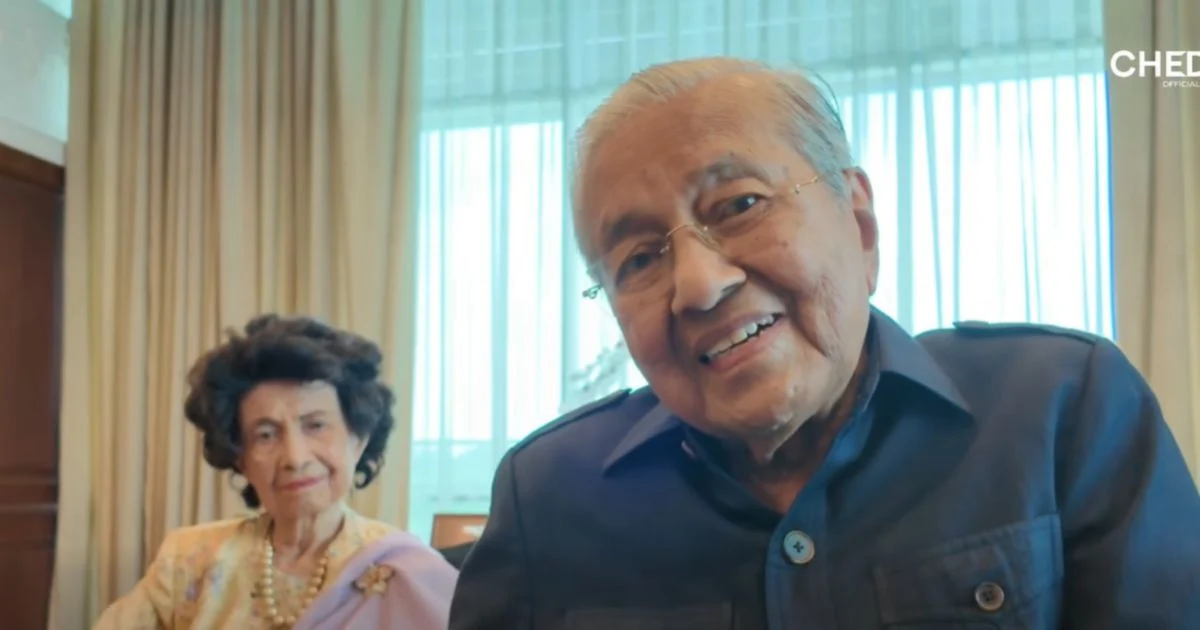
Tun Dr Mahathir Mohamad, Malaysia's longest-serving prime minister who led the nation through transformative decades of development, has publicly acknowledged the heartfelt birthday wishes that flooded in from across the country as he reached his 101st milestone. The centenarian statesman received an overwhelming response from citizens, well-wishers, and supporters who took the opportunity to celebrate his longevity and reflect on his considerable influence on the nation's trajectory during his two separate tenures at the helm of government.
The volume of birthday greetings and greeting cards presented to Tun Mahathir underscores the enduring resonance of his political legacy among Malaysians, spanning from his earliest supporters who remember his first term in the 1980s and 1990s to younger citizens who came to know him during his return to office in 2018. His gratitude, expressed publicly in Kuala Lumpur, serves as a touching moment that transcends the typical political divisions that have marked Malaysian discourse in recent years, revealing a measure of national unity centred on recognition of the elder statesman's historical significance.
At 101 years old, Tun Mahathir remains among the world's oldest living former heads of government, a distinction that itself has generated considerable interest both domestically and internationally. His longevity has allowed him to observe and comment upon successive administrations and shifts in the nation's political landscape, positioning him as a living repository of institutional memory regarding Malaysia's post-independence evolution. The birthday tributes reflect not merely personal affection but broader acknowledgment of his role in shaping the nation during critical junctures of its development.
The former premier's tenure as prime minister, first from 1981 to 2003 and again from 2018 to 2020, left indelible marks on Malaysia's economic policies, infrastructure development, and regional diplomacy. His emphasis on rapid industrialisation and the flagship Petronas Towers, which dominated Kuala Lumpur's skyline, became defining symbols of the nation's ambitions during his first period in office. These tangible achievements continue to feature in contemporary discussions about Malaysia's development narrative, providing context for why his milestone birthday resonates across demographic groups.
The greeting cards and messages that reached Tun Mahathir represent individual acts of recognition from ordinary Malaysians, political figures across the spectrum, business leaders, and international observers who have tracked his influence. This breadth of acknowledgment illustrates how certain political figures transcend partisan boundaries through the sheer magnitude of their impact on national institutions and collective memory. Even those who disagreed with specific policies during his tenures tend to acknowledge his centrality to understanding modern Malaysian history.
Tun Mahathir's gratitude carries particular significance given Malaysia's contemporary political environment, which has been characterised by considerable fragmentation, coalition-building challenges, and disagreements over governance priorities. His gracious acceptance of birthday wishes offers a counterpoint to more contentious recent political discourse, suggesting that Malaysians retain capacity for honouring national figures who have served their country over extended periods, irrespective of individual policy disagreements. This sentiment may hold value as the nation navigates ongoing questions about institutional stability and political consensus.
The centenarian's milestone also prompts reflection on the institutional knowledge and personal relationships that ageing statesmen carry with them. Tun Mahathir's direct experience of Malaysia's transition from British colonial rule through independence, his participation in Commonwealth and regional forums, and his navigation of multiple economic cycles position his perspectives as historically grounded in ways that newer generations of leaders necessarily lack. The birthday tributes indirectly affirm the value that Malaysians place on such accumulated experience and continuity with the nation's founding generation.
International observers of Malaysia's political development have frequently noted that Tun Mahathir's two tenures, separated by fifteen years in opposition, represented distinct phases in the nation's trajectory. His return to office in 2018 came amid significant public demand for change and raised hopes about addressing accumulated governance concerns. While his second tenure ultimately proved shorter than many anticipated, his continued public acknowledgment and the respect conveyed through birthday wishes suggest that Malaysians continue to regard him as a significant historical figure whose contributions merit recognition even as they may critique specific decisions or policies.
The broader implications of this outpouring of goodwill extend beyond personal tribute to Tun Mahathir. In a nation where political discourse has grown increasingly polarised and where transition planning for ageing institutions remains contested, the spontaneous and widespread birthday recognition of a former leader may indicate underlying agreement on certain core values regarding national service and historical contribution. This consensus, however modest, could serve as foundation for constructive dialogue on how Malaysia honours those who have served while remaining open to critical assessment of their legacies.
Tun Mahathir's public expression of gratitude represents more than simple acknowledgment of courtesy. It demonstrates a former leader's continued engagement with national sentiment and his appreciation for being remembered as someone whose life intersected significantly with Malaysia's modern history. As he enters his 101st year, the birthday wishes from across the nation affirm his position as an elder statesman whose influence, though sometimes contested, remains acknowledged as central to understanding Malaysia's path from the independence era through the contemporary period.

