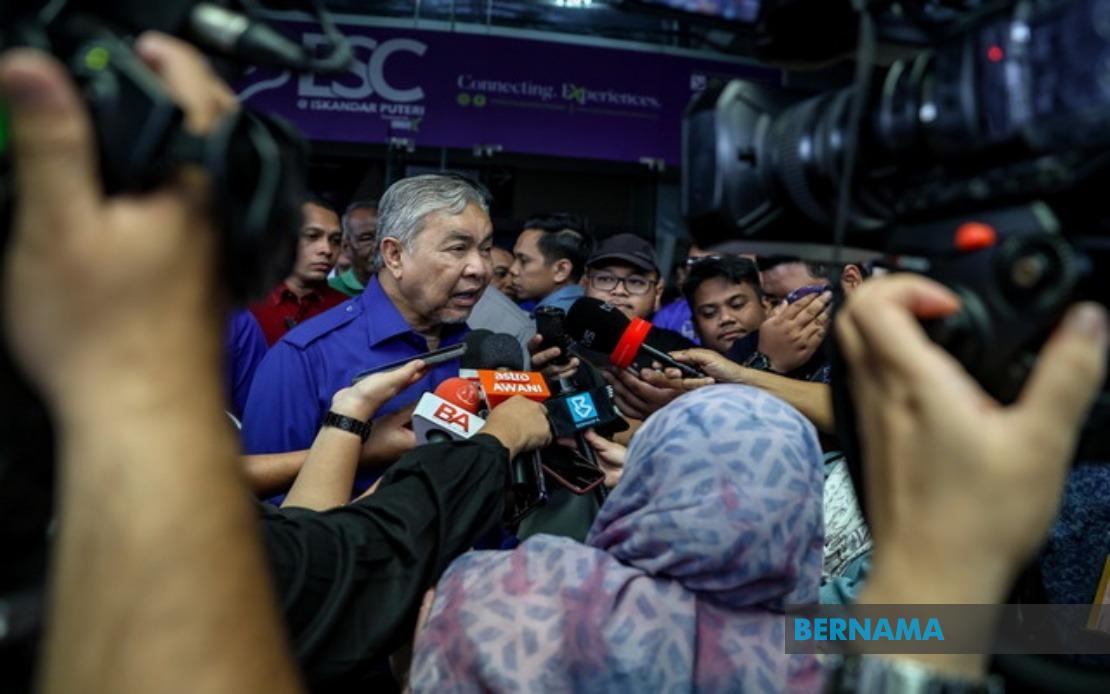
Malaysia's vocational education landscape is poised for significant institutional change, with Deputy Prime Minister Datuk Seri Dr Ahmad Zahid Hamidi announcing that the Technical and Vocational Education and Training (TVET) Commission will be formally established by the close of 2024. Speaking at the Johor Darul Ta'zim TVET MARA Roadshow in Iskandar Puteri on July 5, Ahmad Zahid outlined the government's timeline for both creating the new commission and tabling the required legislation in Parliament, marking a pivotal moment for the nation's vocational training infrastructure.
The proposed TVET Commission represents a structural evolution in how Malaysia manages its technical and vocational education sector. Rather than simply reorganising existing bodies, the commission is intended to supplant the current National TVET Council with a more robust institutional framework designed to address weaknesses in policy coordination and implementation. Ahmad Zahid, who doubles as Rural and Regional Development Minister and currently chairs the National TVET Council, framed the transition as part of a broader modernisation effort to ensure Malaysia remains competitive in developing skilled workforces aligned with global standards and emerging labour market demands.
The pathway to establishing the commission involves multiple governmental processes that explain the deliberate pace of implementation. Ahmad Zahid disclosed that while Cabinet-level policy approval has already been secured, the administration is still navigating the formal legal requirements needed to present the matter before both the Dewan Rakyat and Dewan Negara. This careful approach reflects the complexity of legislative matters affecting education and training across Malaysia, where coordination between federal authorities, state governments, and numerous stakeholder institutions requires meticulous attention to constitutional and procedural requirements.
Currently, the government is engaged in extensive consultations with diverse stakeholders across Malaysia's education, industry, and labour sectors. These engagement sessions serve a critical function beyond mere rubber-stamping: they allow affected parties—including employers, training providers, student representatives, and civil society organisations—to input concerns, suggestions, and practical insights that should inform the commission's eventual operational structure and regulatory approach. Only after these consultations conclude will officials submit a comprehensive Cabinet paper detailing the proposed commission's powers, responsibilities, funding mechanisms, and governance arrangements.
The international context underpins the government's rationale for this institutional upgrade. Ahmad Zahid explicitly referenced successful models adopted by developed nations that maintain dedicated TVET commissions with genuinely independent authority over the sector. This benchmarking approach suggests policymakers recognise that Malaysia's vocational education quality and responsiveness to labour market needs require more than advisory structures; they need bodies with enforcement capacity and direct implementation authority. The shift signals an implicit acknowledgment that the previous National TVET Council, while valuable, operated within constraints that sometimes limited its ability to drive meaningful change across the sector.
A defining characteristic of the proposed commission, according to Ahmad Zahid, will be its expanded mandate extending beyond policy formulation alone. The new institution will shoulder responsibility for implementing and enforcing the policies it establishes, creating clearer lines of accountability and reducing coordination gaps that sometimes emerge when policy and implementation sit with separate agencies. This integration of functions mirrors international best practices where specialised commissions operate with sufficient operational autonomy to translate strategic vision into tangible improvements in training quality, curriculum relevance, and graduate employability.
For Malaysian policymakers and educators, the commission's establishment carries implications for how TVET funding flows, how training standards are certified and monitored, and how the sector responds to rapid changes in industrial technology and labour market composition. A commission with genuine implementation powers could potentially accelerate adoption of emerging technologies in training facilities, harmonise qualification frameworks across providers, and strengthen links between educational institutions and employers requiring skilled workers. These improvements would benefit not only Malaysia but the broader ASEAN region, where talent mobility increasingly depends on mutual recognition of vocational credentials.
During the same Iskandar Puteri event, Ahmad Zahid touched upon demographic shifts reshaping Malaysia's political landscape in ways that could influence education policy priorities. The Deputy Prime Minister noted that voters aged 40 and below, including the newly eligible 18-year-old cohort enabled by the Undi18 policy, now constitute approximately 52 percent of Johor's electoral base. This generational composition matters for TVET policy because younger voters increasingly demand that government investments in vocational training demonstrably improve employment prospects and economic mobility, rather than serving as a secondary track for those unable to access university pathways.
The voting demographic shift also has implications for how political leaders frame TVET development. As Ahmad Zahid's remarks suggested, younger constituents expect tangible connections between educational investment and career advancement in an economy where traditional pathways are becoming less secure. A well-functioning TVET Commission that delivers visible improvements in training quality and graduate employment rates could become an asset in political messaging aimed at younger voters concerned about their economic futures. Conversely, continued underperformance in the TVET sector could erode political support among demographics that lack inherited wealth or family business networks to buffer against economic disruption.
The government's simultaneous focus on establishing the TVET Commission and engaging younger voters reflects an understanding that Malaysia's long-term competitiveness depends on developing skilled workforces capable of navigating digitalisation, green economy transitions, and manufacturing evolution. The commission's ability to coordinate between education providers, industry bodies, and government agencies will determine whether Malaysia can channel more young people toward rewarding technical careers rather than creating credential-saturated graduate labour markets with limited employment opportunities. This institutional question carries weight beyond administrative reorganisation—it shapes whether Malaysia can maintain social cohesion and economic dynamism as automation and globalisation reshape labour markets.
The presence of MARA chairman Datuk Dr Asyraf Wajdi Dusuki and Deputy Rural and Regional Development Minister Datuk Rubiah Wang at the Iskandar Puteri event underscored the multi-institutional nature of Malaysia's TVET ecosystem. MARA itself operates numerous vocational training centres and has undergone its own modernisation efforts, meaning the new commission will need to coordinate effectively with autonomous agencies that sometimes pursue parallel agendas. The roadshow format served partly as a communication exercise, introducing younger Johoreans to vocational training pathways while simultaneously building political momentum for the institutional reforms Ahmad Zahid outlined.
Looking toward the final months of 2024, the government faces the technical task of completing stakeholder engagement, drafting detailed legislation, and securing Parliamentary approval for what would constitute a significant shift in how Malaysia structures its vocational education governance. Success in meeting the year-end deadline would allow the commission to commence operations with sufficient lead time to influence planning for the 2025 training calendar and budget allocations. Failure to meet this timeline, conversely, would push commission establishment into 2025, potentially delaying improvements in TVET coordination and implementation capacity during a critical period when Malaysia faces intensifying regional competition for skilled workers and investment from multinational companies operating in high-technology sectors.

