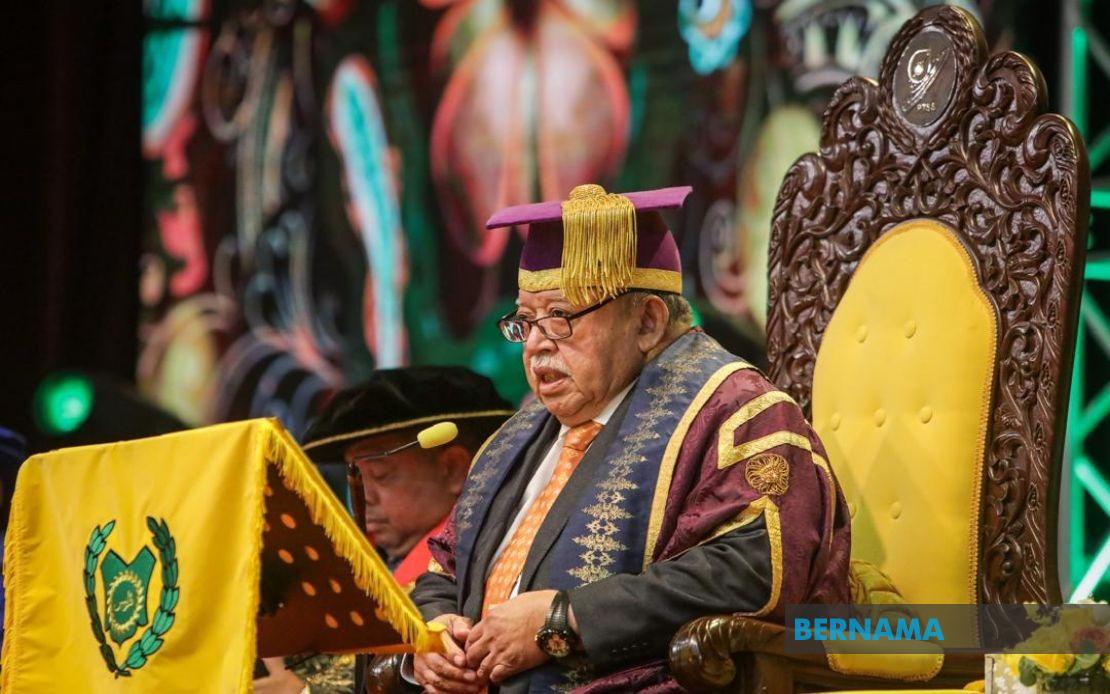
Technical and vocational education has emerged as a cornerstone in developing the skilled workforce Malaysia needs to navigate an increasingly complex economic landscape driven by technological change. At the 2026 Northern Zone Polytechnic and Community College Convocation Ceremony in Arau, the Raja of Perlis, Tuanku Syed Sirajuddin Jamalullail, articulated how TVET institutions serve as essential pipelines for producing the creative, innovative professionals required to sustain the nation's competitiveness in a rapidly transforming world.
The Ruler's remarks reflected growing recognition within Malaysia's leadership that innovation can no longer be treated as a peripheral concern but must be woven into the very fabric of the country's development strategy. Technological disruption—particularly advances in artificial intelligence, automation, robotics and widespread digitalisation—is fundamentally reshaping employment patterns and industrial structures across Southeast Asia. Institutions like Politeknik Tuanku Syed Sirajuddin must therefore prepare graduates not merely to operate within existing systems, but to anticipate and drive necessary transformations.
Crucially, Tuanku Syed Sirajuddin distinguished between innovation as an abstract concept and innovation as a practical instrument for social and national benefit. The capacity to generate novel ideas holds little value without the ability to translate those concepts into tangible solutions that address real challenges faced by communities and industries. This perspective aligns with Malaysia's broader ambitions to transition toward higher-value economic activities that depend on a sophisticated, adaptable workforce capable of solving complex problems.
Beyond technical proficiency, the Ruler emphasised that excellence in the modern context demands a foundation of strong moral principles and integrity. As Malaysia competes in knowledge-intensive sectors, the character and ethical standards of its workforce become increasingly significant competitive factors. Employers and international partners increasingly scrutinise not only credentials and technical capabilities but also the reliability, trustworthiness and values embodied by professionals. Graduates equipped with both advanced skills and robust ethical frameworks represent a more complete asset to employers and to the nation's development trajectory.
The convocation ceremony itself testified to the scale of TVET's reach within the northern corridor. Spanning from August 3 to 9, the event honoured 6,104 graduates from polytechnic and community college programmes across Perlis, Kedah and Penang. This concentration of institutions and graduating cohorts reflects the strategic importance of the northern region in Malaysia's human capital development strategy, particularly as these states position themselves as economic growth centres.
Among those recognised was Teerti Ganapathi Rao, a 22-year-old graduate in Digital Technology from Politeknik Tuanku Syed Sirajuddin's Department of Information and Communication Technology. Rao's receipt of the Director-General of Polytechnic and Community College Education Award highlighted the calibre of talent emerging from these programmes and the institution's commitment to identifying and nurturing exceptional performers. Digital technology expertise represents precisely the type of capability Malaysia requires as it advances digitisation initiatives across both public and private sectors.
The challenge ahead for Malaysia's TVET system involves scaling the cultivation of innovation culture described by the Ruler. Polytechnic staff and faculty must themselves be encouraged to experiment, challenge conventional approaches and model the innovative mindset expected of graduates. This requires investment not only in cutting-edge facilities and curricula but also in professional development opportunities that keep educators abreast of rapidly evolving industry standards and emerging technologies.
For Malaysian policymakers, the Ruler's remarks underline the inadequacy of viewing TVET as a second-tier educational pathway. Countries that have successfully transitioned to high-income status—notably South Korea, Singapore and Germany—have invested substantially in technical vocational systems that command social prestige and attract capable students. Malaysia must continue building this perception domestically while ensuring that TVET pathways offer genuine career progression and economic mobility.
The geographic focus on the northern zone also hints at regional economic diversification strategies. As traditional industries face disruption, developing innovation-capable workforces across all regions becomes essential to ensuring equitable development and preventing the concentration of high-skilled employment in the Klang Valley. Polytechnics and community colleges in Perlis, Kedah and Penang can serve as anchors for emerging knowledge-based industries suited to their respective local contexts.
Looking forward, the integration of cutting-edge technologies into TVET curricula will determine whether Malaysian graduates remain competitive globally. AI and automation should be taught not as abstract concepts but as tools students will deploy professionally, requiring hands-on experience with current systems and platforms. Employers report persistent gaps between graduate capabilities and workplace requirements, suggesting that curriculum development must maintain closer coordination with industry partners.
The Ruler's emphasis on moral principles and patriotism also carries particular weight given Malaysia's multicultural fabric. TVET institutions serving diverse student populations have unique capacity to foster inter-communal understanding and shared commitment to national progress. Graduates grounded in both technical excellence and ethical conviction become agents not only of economic development but of social cohesion.
Ultimately, Tuanku Syed Sirajuddin's message positioned TVET as fundamental infrastructure for Malaysia's future. As regional competition for skilled talent intensifies and technological change accelerates, institutions that successfully blend cutting-edge technical training with strong values education will produce the calibre of professionals capable of sustaining Malaysia's prosperity. The challenge now lies in translating this vision into consistent investment and policy support across the decade ahead.

