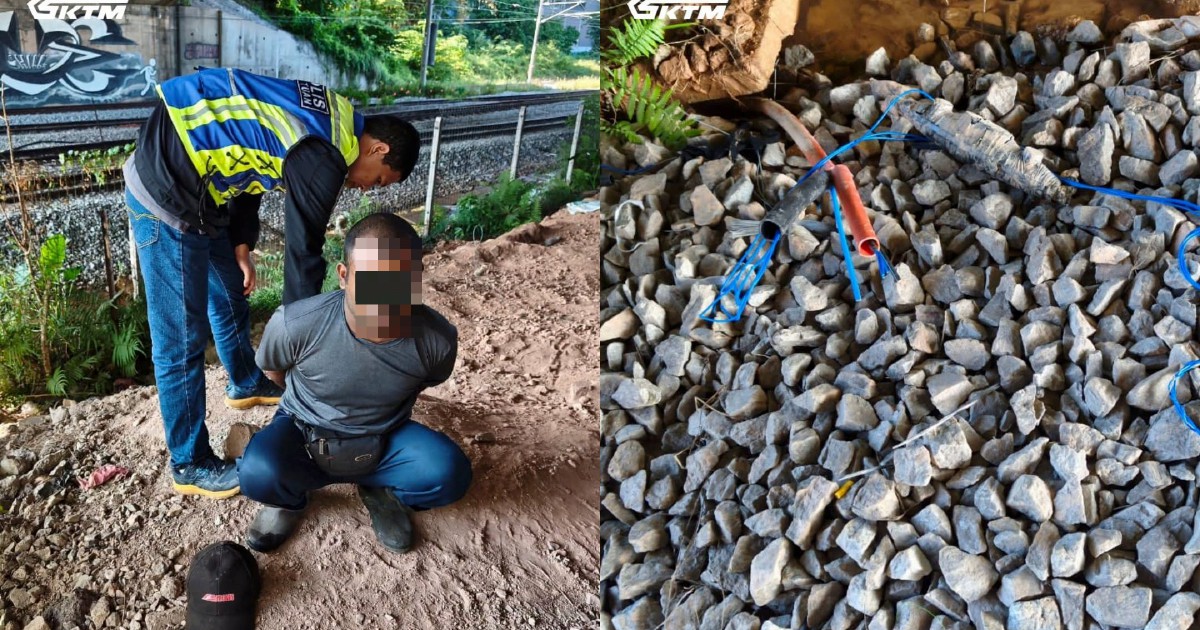
Railway authorities in Kuala Lumpur have made headway in combating infrastructure theft after Keretapi Tanah Melayu Bhd (KTMB) auxiliary policemen arrested two suspects in Shah Alam yesterday in connection with an attempted theft of railway cables. The apprehension underscores persistent challenges facing Malaysia's rail operator as it grapples with recurring incidents of metal and cable pilferage from its network.
The arrests in Shah Alam represent another chapter in the broader struggle between railway security personnel and those seeking to exploit the country's extensive rail infrastructure for quick profit. Railway cables, particularly copper components, remain attractive targets for thieves due to their resale value in the scrap metal market. The incident illustrates how KTMB's security apparatus continues to respond to threats against critical transport assets, even as the scale of such incidents underscores systemic vulnerabilities.
Theft from railway infrastructure carries significant implications beyond the immediate financial loss to KTMB. When cables are removed or damaged, disruptions ripple across the rail network, affecting service reliability for thousands of commuters who depend on trains for their daily transportation needs. In a densely populated region like the Klang Valley, where Shah Alam serves as a crucial nodal point, any degradation in railway integrity compounds already challenging urban mobility issues.
The copper and other metals in railway cables fetch reasonable prices in Malaysia's scrap metal trade, creating persistent economic incentives for theft despite legal consequences. This market-driven demand, coupled with relatively accessible sections of track in suburban areas like Shah Alam, creates conditions where opportunistic thieves operate. The auxiliary police intervention suggests that KTMB has heightened vigilance in vulnerable zones, though the continued occurrence of such incidents suggests that prevention remains an ongoing struggle.
KTMB's auxiliary police force represents the front line of railway security across the operator's extensive network spanning the peninsula. These officers patrol tracks, monitor infrastructure, and respond to reported breaches, operating with mandate to apprehend those engaged in theft, vandalism, or other crimes affecting railway operations. The Shah Alam arrests demonstrate the force's active engagement, though critics have long questioned whether current security arrangements are proportionate to the scale of the problem.
For Malaysian commuters, incidents like this cable theft attempt carry practical significance beyond mere criminality. Each disruption to railway infrastructure translates into delayed services, crowded buses as alternative transport, and broader frustration with a system meant to serve as backbone of urban and inter-city connectivity. The Klang Valley's transportation challenges remain substantial, and any degradation of reliable rail capacity exacerbates congestion and extends commute times across the region.
The economics of railway cable theft reveal deeper societal challenges around poverty and informal economy dynamics in Malaysia. Those engaging in metal theft often operate within precarious circumstances, viewing scrap collection as accessible income source even while understanding legal risks. Addressing infrastructure theft therefore requires not only enhanced security but also social interventions targeting economic desperation that drives such activity.
International experience suggests that railway networks worldwide struggle with comparable theft challenges. Copper theft has disrupted commuter rail systems across developed and developing nations, with countries investing substantially in physical barriers, surveillance technology, and community awareness programs. Malaysia's rail operators might consider lessons from these experiences, potentially exploring innovations in cable protection, tracking technology, or community-based reporting mechanisms to strengthen defences.
The Shah Alam arrests also raise questions about resource allocation within KTMB's security division. As incidents continue despite enforcement actions, the operator faces recurring decisions about whether to emphasise deterrence through prosecution, physical security upgrades, technology deployment, or combination of approaches. These strategic choices will likely shape how effectively KTMB addresses infrastructure theft in coming years, particularly as urbanisation increases demand on existing rail capacity.
Looking forward, the sustainability of Malaysia's rail infrastructure depends partly on ability to protect assets from theft and vandalism. KTMB's continued efforts to apprehend cable thieves represent necessary enforcement action, yet broader solutions may require cross-sector cooperation involving law enforcement, scrap metal traders, community engagement, and social services. The challenge facing railway authorities extends beyond catching individual offenders to creating systemic conditions where infrastructure theft becomes neither economically attractive nor logistically feasible.

