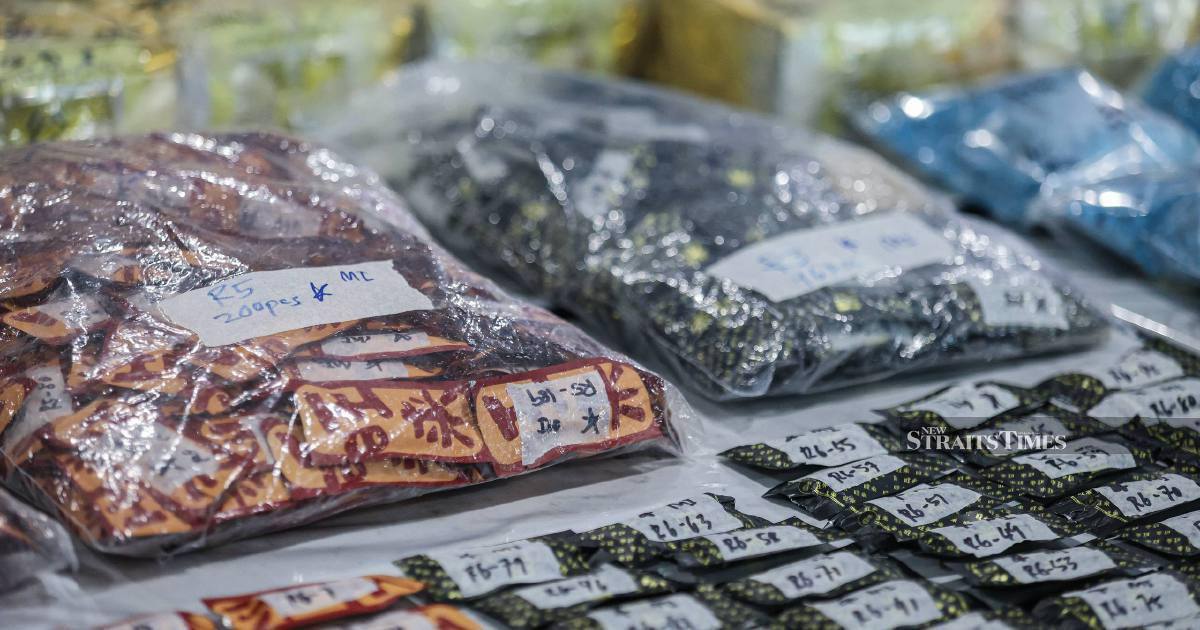
Authorities in Johor Baru have apprehended two brothers accused of orchestrating a substantial maritime drug smuggling operation, marking another significant enforcement victory in Malaysia's ongoing battle against organised narcotics trafficking. The Malaysian Maritime Enforcement Agency conducted the interception and arrests on Sunday following intelligence-gathering operations that identified suspicious maritime activity in waters off Johor. The confiscated narcotics, with an estimated street value exceeding RM6.85 million, were destined for trafficking into a neighbouring nation, according to agency officials.
The substance in question is identified as 'Piu Piu', a relatively emerging drug variant that has begun surfacing in enforcement operations across Southeast Asia. This particular seizure underscores how illicit drug markets continue to evolve, with traffickers introducing new formulations and branded products to evade detection and capture market share. The nomenclature suggests a consumer-facing branding approach typical of synthetic drug operations seeking to establish product recognition within illicit networks. Malaysian authorities have intensified focus on identifying and tracking such substances before they establish widespread distribution patterns.
The operation illustrates the critical role played by maritime enforcement in disrupting regional drug trafficking networks. Johor's geographical position as a gateway to Singapore and its extensive coastline create both opportunities and challenges for law enforcement agencies tasked with monitoring cross-border smuggling attempts. The MMEA's capacity to intercept shipments at sea, rather than allowing them to reach land distribution networks, prevents the multiplication of harm that typically accompanies drugs entering domestic markets. Such interventions reflect years of investment in maritime surveillance capabilities and inter-agency intelligence coordination.
The two arrested brothers remain under investigation for trafficking-related offences, with authorities examining their connections to larger smuggling syndicates that may operate across multiple jurisdictions. Drug trafficking rarely functions as a two-person operation; rather, these individuals likely represent middle-tier operatives within supply chains that extend from production facilities through to street-level distribution. Understanding these connections allows law enforcement agencies to map and dismantle entire networks rather than merely removing temporary participants.
This seizure arrives amid heightened regional concern about drug trafficking patterns evolving across Southeast Asia. The emergence of novel narcotics and designer drug variants has challenged law enforcement agencies across the region to continuously update identification protocols and enforcement strategies. The MMEA's capacity to execute significant maritime intercepts demonstrates Malaysia's commitment to combating transnational organised crime, though sustained pressure on trafficking routes continues to require resources and intelligence cooperation across borders.
Johor's role as a trafficking corridor reflects broader realities of Southeast Asian geography and economic interconnectedness. The state's proximity to major regional economic hubs creates opportunities for legitimate commerce that traffickers simultaneously exploit. Distinguishing legitimate maritime activity from smuggling operations requires sophisticated analysis combining vessel movement patterns, historical intelligence, and behavioural indicators. The successful interception represents the culmination of such analytical work translated into enforcement action.
The estimated RM6.85 million valuation placed on the seized narcotics reflects both the wholesale cost and the significant profit margins incentivising trafficking operations. These financial calculations help explain why criminal organisations persist in attempting maritime smuggling despite considerable enforcement activity. The potential returns justify substantial investment in acquiring vessels, recruiting personnel, and organising distribution networks. Breaking the economic calculus that makes trafficking attractive remains a strategic challenge for authorities across the region.
Drug enforcement agencies throughout Southeast Asia increasingly recognise that disrupting individual trafficking attempts requires complementary efforts targeting the financial infrastructure supporting organised narcotics operations. Money laundering networks, asset acquisition schemes, and the integration of trafficking proceeds into legitimate commerce enable organisations to sustain operations despite periodic enforcement actions. Malaysia's financial intelligence units work alongside maritime agencies to create more comprehensive pressure on these networks, though gaps remain in regional coordination and information sharing.
The characterisation of this shipment as destined for 'a neighbouring country' reflects established trafficking patterns whereby Malaysia functions not only as a destination market but also as a transshipment point for drugs moving toward other destinations. This intermediate role complicates enforcement by creating multiple jurisdictional layers and requiring cooperation among various national authorities with sometimes divergent priorities and capabilities. The successful interception demonstrates that such cooperation, while challenging, remains achievable when organised crime activities cross established borders.
Moving forward, the identification of 'Piu Piu' as a trafficking concern will likely prompt Malaysian and regional law enforcement agencies to increase monitoring for similar substances and to strengthen information-sharing mechanisms that alert border agencies and port authorities to emerging drug variants. The MMEA's arrest demonstrates that maritime interception capacity, when properly resourced and intelligently directed, can substantially impact trafficking operations. However, the persistent nature of drug smuggling suggests that additional enforcement successes will continue alternating with new smuggling attempts employing modified routes, methods, and products.

