Singapore's police force has brought charges against two Chinese nationals suspected of manufacturing and attempting to use counterfeit Singapore currency notes. The 33-year-old male and 25-year-old female face prosecution for conspiracy to counterfeit the republic's legal tender, a serious economic crime that strikes at the heart of financial system integrity across Southeast Asia.
The investigation began when casino security at Marina Bay Sands uncovered the scheme in its earliest stages. On the morning of August 24, a man approached the establishment's gaming cage with what appeared to be legitimate currency. He sought to deposit S$150,000 into his casino account, a routine transaction that should have proceeded without incident. However, sharp-eyed cage staff noticed something amiss among the banknotes presented for processing.
Upon closer inspection, one of the S$100 notes bore a suspicious marking: the word "COPY" printed across its surface. This simple but damning detail immediately triggered alarm bells and prompted casino workers to alert the authorities rather than process the transaction. The discovery prevented what could have been a significant loss for the casino and, more broadly, represented an important catch in protecting Singapore's currency from fraudulent infiltration.
Police moved swiftly to apprehend the man and followed his trail to his hotel accommodation. When officers conducted their search, they discovered a woman exiting the room with a printer in hand—clear evidence suggesting a division of labour in the counterfeiting operation. The separate roles hint at a coordinated scheme where one individual sourced victims and attempted transactions while the other managed the technical production of fake notes.
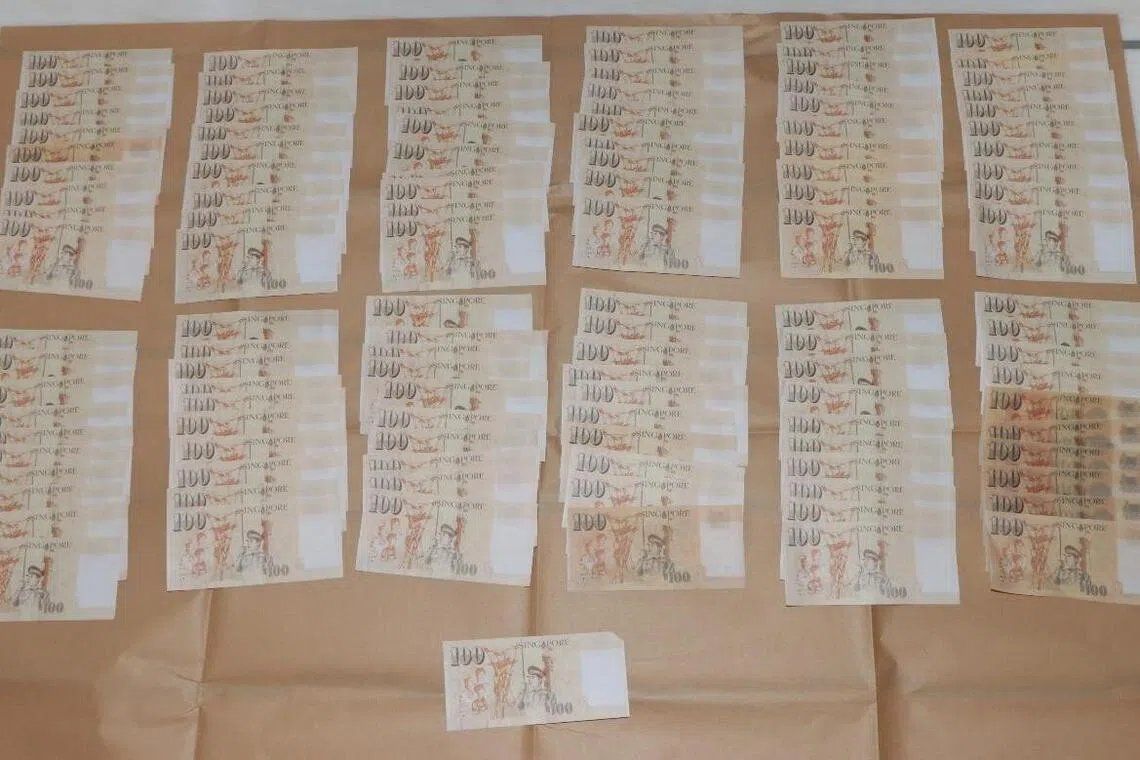
The physical evidence seized from the hotel room painted a comprehensive picture of an active counterfeiting laboratory. Officers recovered 121 counterfeit S$100 notes, representing a substantial quantity of fraudulent currency capable of circulating through legitimate transactions. Beyond the finished counterfeit notes themselves, investigators secured the operational infrastructure of the enterprise: bottles of specialised ink, sheets of paper suitable for counterfeiting, and a paper cutter used to trim notes to precise dimensions. This equipment bundle demonstrates the level of technical sophistication required to produce convincing fakes, though the presence of the word "COPY" on at least one note suggests imperfect execution.
The legal framework Singapore has established for such offences reflects the severity with which the city-state treats threats to its monetary system. Those found guilty of conspiracy to counterfeit currency face imprisonment of up to 20 years and substantial financial penalties. These penalties are among the harshest in the world and underscore how seriously Singapore protects its economic foundations. For regional observers, the swift response and robust legal consequences serve as a reminder of Singapore's commitment to maintaining the integrity of its financial institutions.
The incident carries particular significance for the broader Southeast Asian context. Singapore serves as a regional financial hub with extensive cross-border transactions and tourism. Counterfeiting operations targeting Singapore currency could potentially extend their reach throughout the region if not contained promptly. The fact that the perpetrators were foreign nationals suggests networks that may operate across multiple jurisdictions, necessitating coordination between law enforcement agencies across the region.
The casino where the notes were discovered represents one of Singapore's most iconic establishments and a major draw for international visitors. Its security protocols and vigilant staff prevented the fraudulent notes from entering circulation, a critical outcome that reflects the high standards maintained by major financial institutions. The incident demonstrates that even in a first-world financial system with advanced security measures, human awareness and careful scrutiny remain essential components of fraud prevention.
Singapore's police have issued formal warnings to the public regarding counterfeit currency, advising citizens who encounter suspicious banknotes to contact authorities immediately at 999. Importantly, law enforcement guidance emphasises the importance of minimising physical contact with suspected counterfeit notes to preserve evidence. Members of the public are also encouraged to recall and communicate the physical appearance and identifying details of any individual who may have provided fake currency, recognising that community vigilance forms an important layer of detection for such crimes.
The charges against the two Chinese nationals represent the culmination of rapid investigative work spanning less than two days from initial discovery to formal prosecution. The efficiency of Singapore's law enforcement response demonstrates institutional strength in combating financial crimes. For Malaysia and other regional economies, the case serves as both a cautionary tale about organised counterfeiting networks and a positive example of how swift action and coordinated responses can neutralise threats before they metastasise into larger problems affecting the wider financial ecosystem.

