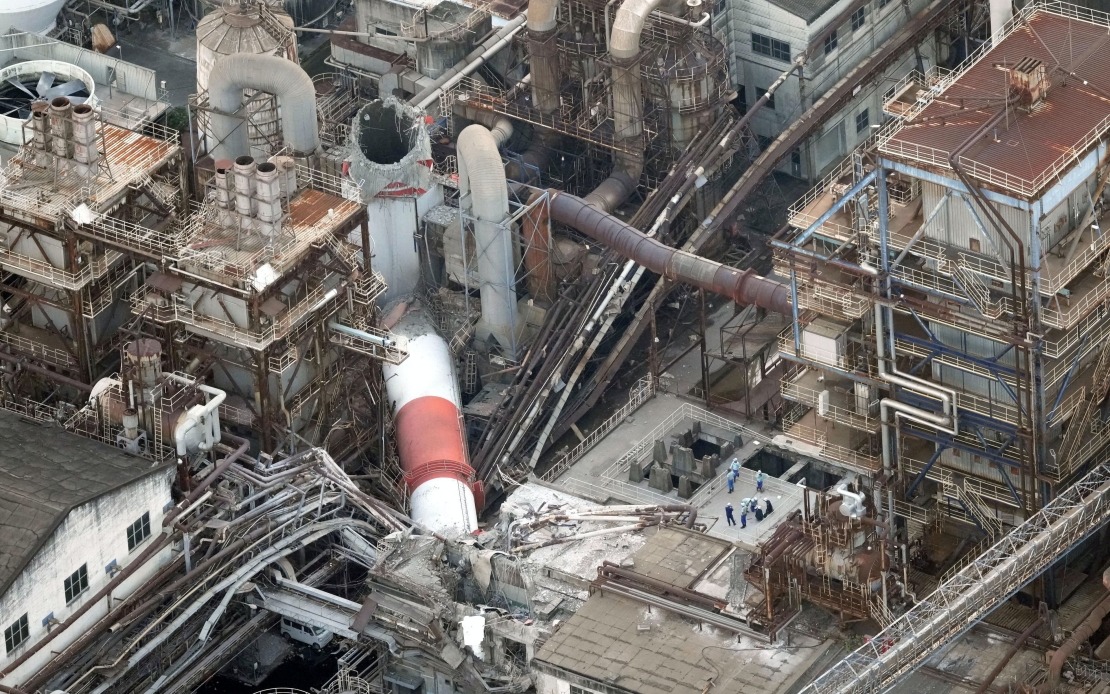
A structural disaster unfolded at a major Japanese paper manufacturing plant on Tuesday when a smokestack at the Nippon Paper facility in Yatsushiro City, Kumamoto Prefecture, gave way following a significant earthquake that had just rattled southwestern Japan. The collapse has created an immediate humanitarian crisis, with two workers reported to be in cardiac arrest and nine others unaccounted for, according to updates from public broadcaster NHK.
The incident highlights the vulnerability of industrial infrastructure to seismic activity in Japan, a nation that frequently experiences tremors and earthquakes. The Kumamoto region has been particularly prone to seismic events in recent years, making industrial safety protocols and structural reinforcement critical concerns for plant operators and local authorities. The smokestack failure at this major manufacturing site underscores how earthquakes can trigger cascading failures even after initial shaking subsides, as structural weaknesses become apparent when facilities experience lateral forces.
Police in Yatsushiro initially received distress calls reporting that the smokestack had collapsed and that employees were missing from the site. The Nippon Paper factory, like most modern industrial facilities in Japan, employs substantial numbers of workers across multiple shifts. The unaccounted status of nine individuals raises serious concerns about the possibility that workers may be trapped beneath debris or within damaged structures, requiring urgent search and rescue operations.
Rescue operations have been severely hampered by the scale of the disaster response currently underway across the broader affected region. Local emergency services and first responder teams have been overwhelmed with calls coming in simultaneously from throughout the earthquake-damaged area, creating a bottleneck in coordinating rescue efforts. This congestion in emergency services illustrates the challenge that disaster response networks face when a single major event generates hundreds or thousands of simultaneous calls for assistance across a wide geographic area.
The delay in initiating formal rescue operations is particularly concerning given that time is typically critical in such situations. The first hours and days following a structural collapse are usually when survivors trapped in rubble or enclosed spaces have the highest chances of rescue. Extended delays in commencing search operations can significantly reduce survival rates, though trained rescue personnel often conduct triage assessments to prioritize efforts based on probability of finding survivors in specific zones.
For Malaysian readers and Southeast Asian observers, this incident carries implications for workplace safety standards in industrial facilities across the region. While Japan maintains stringent building codes and safety regulations, this event demonstrates that even technologically advanced nations with sophisticated infrastructure standards cannot entirely eliminate risks posed by natural disasters. As Southeast Asian countries continue to develop their industrial sectors and manufacturing bases, particularly in earthquake-prone areas such as Indonesia, Philippines, and parts of Malaysia, ensuring that industrial facilities meet or exceed seismic safety standards remains paramount.
The Nippon Paper company is among Japan's largest pulp and paper manufacturers, with facilities distributed across multiple prefectures. The Yatsushiro facility plays a role in Japan's domestic paper production capacity, which supplies various industries and export markets. Any prolonged disruption at such a facility could have ripple effects throughout supply chains, potentially affecting paper-dependent industries across East Asia and beyond.
The broader earthquake that triggered this collapse has triggered significant emergency response activation throughout Kumamoto Prefecture and neighboring areas. Regional authorities have activated disaster protocols, emergency shelters, and medical response facilities. The simultaneous nature of earthquake impacts—affecting multiple facilities, infrastructure, and population centers at once—creates extraordinary demands on rescue, medical, and logistical resources that frequently prove inadequate in the immediate aftermath.
Japan's Meteorological Agency and local prefectural governments will likely conduct thorough investigations into both the earthquake's characteristics and the structural failure of the smokestack once immediate rescue operations conclude. Understanding why this particular structure failed can inform future retrofitting decisions and design standards for similar industrial installations. The findings may also become case studies for engineers and safety professionals throughout Asia examining how existing facilities should be evaluated and upgraded to withstand seismic forces.
The incident serves as a sobering reminder of the human cost of industrial disasters, particularly when natural phenomena overwhelm safety systems and structural designs. The two workers in cardiac arrest and nine missing individuals represent families and communities affected by an unforeseen but, in seismic zones, not entirely unexpected catastrophe. As rescue efforts progress and more information emerges about the cause and extent of the collapse, attention will increasingly focus on whether additional measures could have prevented this outcome and what lessons should be applied to other industrial sites throughout Japan and the broader region.

