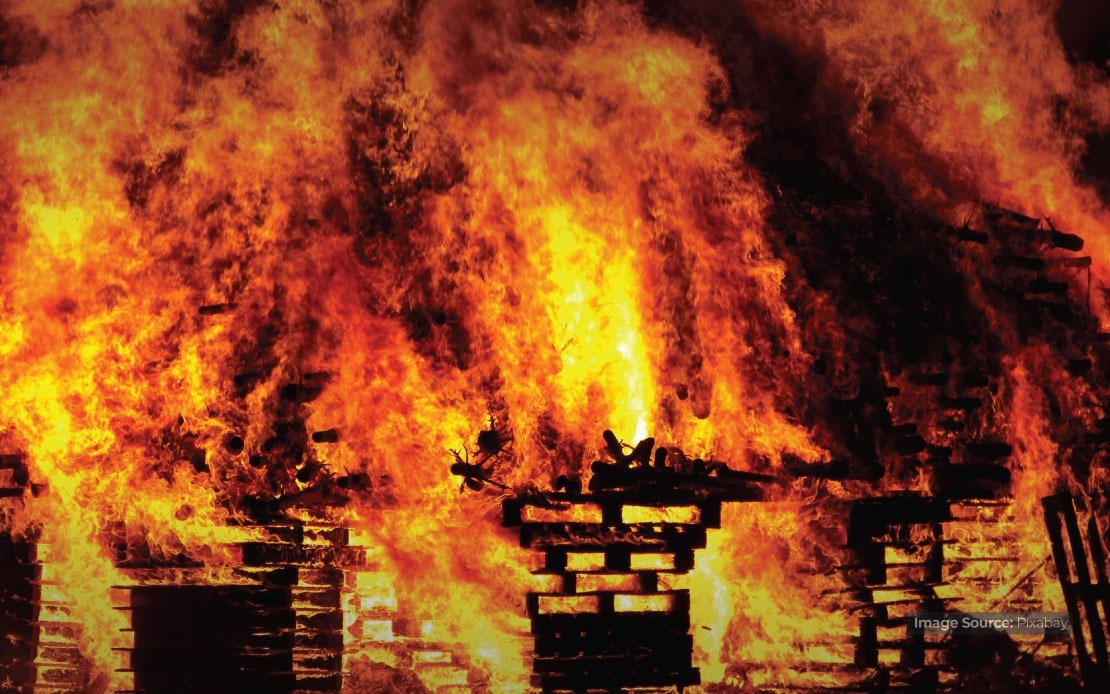
Two members of France's firefighting service lost their lives on Tuesday while tackling a fire that broke out in the vicinity of Bordeaux Airport in the country's southwestern region. French Interior Minister Laurent Nuñez announced the tragic loss to parliament in Paris, confirming that both individuals died while engaging with flames that consumed two separate structures. The incident represents a somber reminder of the hazards emergency personnel face, particularly during periods of heightened fire risk across Europe.
The fire originated on an expanse of land situated adjacent to the airport's extended parking zone, according to reports from Sud Ouest, a prominent regional newspaper covering the Gironde area. The conflagration spread with sufficient intensity to draw the attention of authorities and generated considerable concern for airport operations and public safety. Emergency responders mobilized quickly to the scene, though their efforts proved insufficient to prevent the fatalities that would ultimately result from the disaster.
The timing of this incident carries particular significance given that the Gironde region, of which Bordeaux serves as the administrative centre, currently operates under the highest level of wildfire alert. French authorities have categorised conditions across the territory as presenting extreme risk for the spread of forest fires, a designation reflecting unseasonably high temperatures, low humidity levels, and vegetation conditions that create ideal circumstances for rapid fire propagation. This elevated alert status underscores how climate patterns and seasonal weather variations continue to intensify challenges facing emergency services throughout southern France.
Responses to the airport fire extended beyond the immediate local fire service, which received substantial reinforcement from the airport's dedicated firefighting personnel and equipment. Authorities deployed a specialist firefighting aircraft to assist ground crews in containing the blaze, a measure that demonstrates the scale and severity of the situation. Such aerial support proves invaluable in combating large fires, particularly in proximity to critical infrastructure where traditional ground-based approaches alone may prove insufficient. The involvement of multiple agencies highlighted the coordinated nature of France's emergency response systems.
Visualization of the fire's intensity became apparent to residents across Bordeaux itself, as massive plumes of smoke ascended skyward, visible from significant distances away from the actual fire site. These dramatic columns served as evidence of the considerable heat and volume of burning material involved, while simultaneously serving as a visual indicator to the broader urban population that major emergency operations were underway. Such visible manifestations of disaster often contribute to public concern and media attention, though they also demonstrate the transparency of emergency response in an urban setting.
Airport operations suffered partial disruption as a result of the incident, though authorities managed to maintain certain functions despite the emergency. Departures from Bordeaux Airport faced temporary suspension, reflecting precautions necessary to ensure safety and prevent aircraft from launching during conditions when smoke and other hazards might compromise flight safety. Landing operations, however, continued to proceed without interruption, a distinction that allowed the facility to maintain some operational capacity. An evening service scheduled for Munich was anticipated to depart according to its original timeline, suggesting that suspension measures remained limited in scope and duration.
The incident raises broader questions about airport emergency preparedness and the adequacy of fire response infrastructure at major transportation hubs. Bordeaux Airport's possession of its own dedicated firefighting unit demonstrates recognition of the specialized requirements that aviation facilities entail, yet the severity of this particular fire tested those capabilities substantially. The decision to augment local resources with aircraft support and personnel from surrounding communities illustrates how even well-equipped facilities sometimes require external assistance when circumstances escalate beyond normal parameters.
For Malaysia and the broader Southeast Asian region, this tragedy offers pertinent lessons regarding emergency management during periods of elevated environmental risk. Many countries within the region experience seasonal conditions—particularly during dry seasons and times of climatic anomalies—that create comparable fire hazards. The French experience demonstrates how fires near critical infrastructure can disrupt essential services and impose human costs that extend well beyond direct property damage. Southeast Asian nations managing major airports and transportation facilities should examine whether their own emergency protocols align with contemporary standards for airport fire response.
The loss of life among emergency personnel carries particular poignancy, as it underscores the genuine dangers that firefighters encounter in their professional duties. Both the French state and international firefighting communities will likely engage in systematic review of the circumstances surrounding this incident to identify lessons applicable to future operations. Such post-incident analysis forms a crucial component of professional development within emergency services, ensuring that knowledge gained through tragic events contributes to enhanced safety protocols and procedures across the sector.
The incident also reflects broader environmental trends affecting southern Europe, where shifting climate patterns have extended fire seasons and intensified conditions that promote rapid fire spread. Scientists observing European weather systems have documented how warming temperatures interact with precipitation patterns to create landscape conditions increasingly conducive to major fires. This environmental context, while distinct from individual incidents, shapes the operational environment within which emergency services must work, suggesting that adaptation and resource allocation decisions made today will influence fire response capabilities for years ahead.

