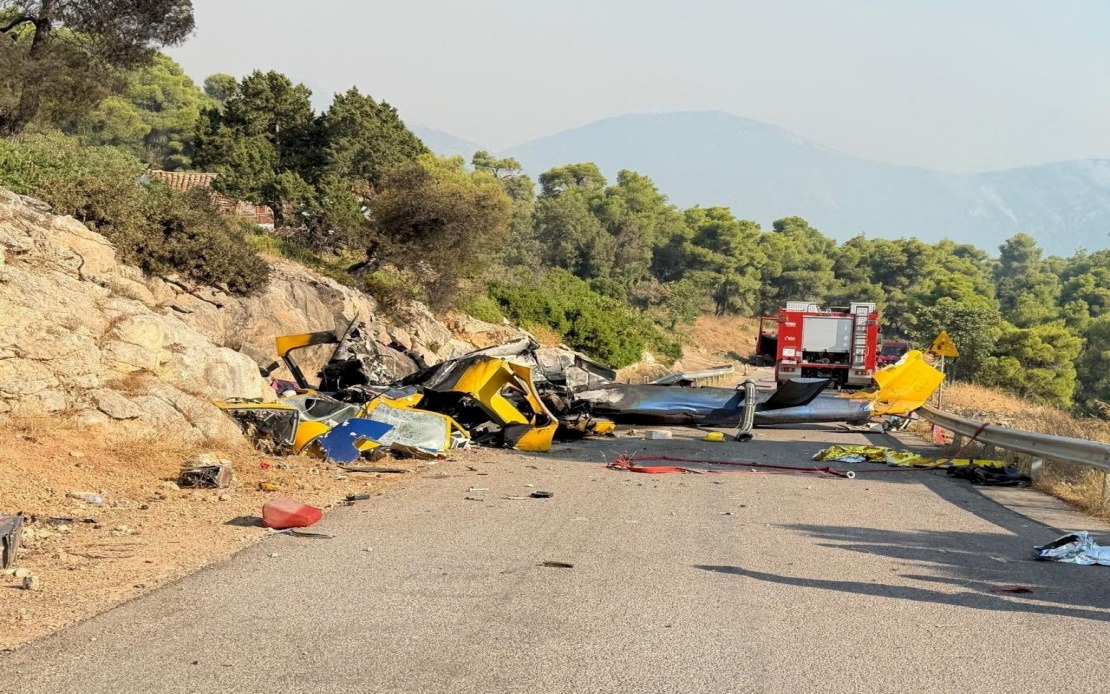
A tragic mid-air collision between two firefighting helicopters has claimed two lives in Greece, with authorities confirming fatalities among the aerial crew deployed to combat raging wildfires sweeping across the country. The incident underscores the inherent dangers faced by personnel engaged in emergency response operations, particularly during Greece's summer fire season when resources are stretched to their limit.
Greek Fire Service spokesperson Vassilis Vathrakogiannis announced at a press briefing that a Danish pilot and a Greek firefighting coordinator perished in the accident near the coastal settlement of Psatha in western Attica on Sunday. The two fatalities occurred despite the presence of two additional crew members aboard the aircraft who managed to survive the impact and subsequent crash landing. A British pilot and another Greek firefighting coordinator were rescued from the wreckage, though one of the survivors sustained injuries requiring medical attention.
The collision occurred during active aerial operations to suppress a major wildfire engulfing areas of Attica and Boeotia. Both aircraft were rented Bell helicopters, each designed to carry four personnel including flight and ground crews. The helicopters were coordinating water-bombing and reconnaissance missions when they struck each other while navigating the same airspace, creating an immediate emergency that triggered search and rescue operations in the region.
Greek authorities have initiated a formal investigation into the precise causes and circumstances surrounding the collision. Preliminary assessments point to the challenging operational environment—wildfires generate severe thermal updrafts, poor visibility from smoke, and unpredictable wind patterns that complicate aerial maneuvering. However, officials have not yet determined whether weather conditions, visibility limitations, communication failures, or other factors contributed to the tragic event.
The accident reflects the mounting pressures on Greece's firefighting infrastructure as the nation grapples with multiple simultaneous large-scale wildfires. The hot, dry, and windy conditions characteristic of Mediterranean summer weather create ideal conditions for rapid fire spread, compelling authorities to deploy helicopters for aerial suppression. These aircraft provide critical capability for water delivery to terrain inaccessible by ground crews, yet their operation carries significant operational risk, particularly when multiple aircraft operate in proximity during active fire zones.
Southeast Asian nations including Malaysia face analogous challenges during dry seasons when transboundary haze and localized forest fires demand intensive aerial response. The incident in Greece offers sobering lessons regarding the coordination protocols necessary when multiple aircraft operate simultaneously in constrained airspace. Malaysia's own experience with aerial firefighting during regional haze events—such as the devastating 2015 incident—demonstrates how coordination failures can compound existing dangers.
The fatality of a Danish pilot highlights the international dimension of modern firefighting operations. Many countries, including those in Southeast Asia, rely on contracted foreign crews and aircraft when domestic resources prove insufficient. This dependency, while necessary, introduces additional complexity to training standardization, communication protocols, and coordination procedures that must function seamlessly even under extreme stress.
Greece's ongoing battle with multiple wildfires demonstrates how climate-related factors increasingly strain emergency response systems. Rising temperatures, extended drought periods, and shifting weather patterns have lengthened fire seasons across the Mediterranean region. Similar trends affect Malaysia and Southeast Asia, where climate variability intensifies seasonal fire hazards, particularly in Kalimantan and Sumatra during prolonged dry periods.
The survivors' extraction from the crash site indicates that despite the collision's severity, emergency protocols functioned adequately at the response stage. However, the accident underscores that preventing incidents before they occur—through enhanced communication systems, real-time collision avoidance technology, and improved airspace deconfliction procedures—represents the most effective safeguard against such tragedies.
Authorities have committed to a thorough investigation that will examine all aspects of the operation. The findings will likely inform procedural revisions affecting not only Greek firefighting operations but potentially wider aviation safety protocols across international firefighting networks. Such investigations contribute to the global knowledge base regarding safe aerial operations in challenging environmental conditions.
The incident arrives amid escalating concerns about extreme weather events driven by climate change. Regional fire seasons are intensifying across multiple continents, placing ever-greater demands on emergency services. For Malaysia and other Southeast Asian nations, the Greek tragedy serves as a reminder that investment in advanced coordination technology, comprehensive crew training, and robust safety protocols represents essential infrastructure rather than optional expenditure.
As Greece continues suppressing its summer wildfires, the focus has shifted to preventing similar accidents. Recommendations emerging from investigations typically address airspace management, enhanced radar or communication systems, and revised flight coordination procedures. These improvements will be critical as Mediterranean nations increasingly rely on aerial firefighting during extended and intensifying fire seasons.

