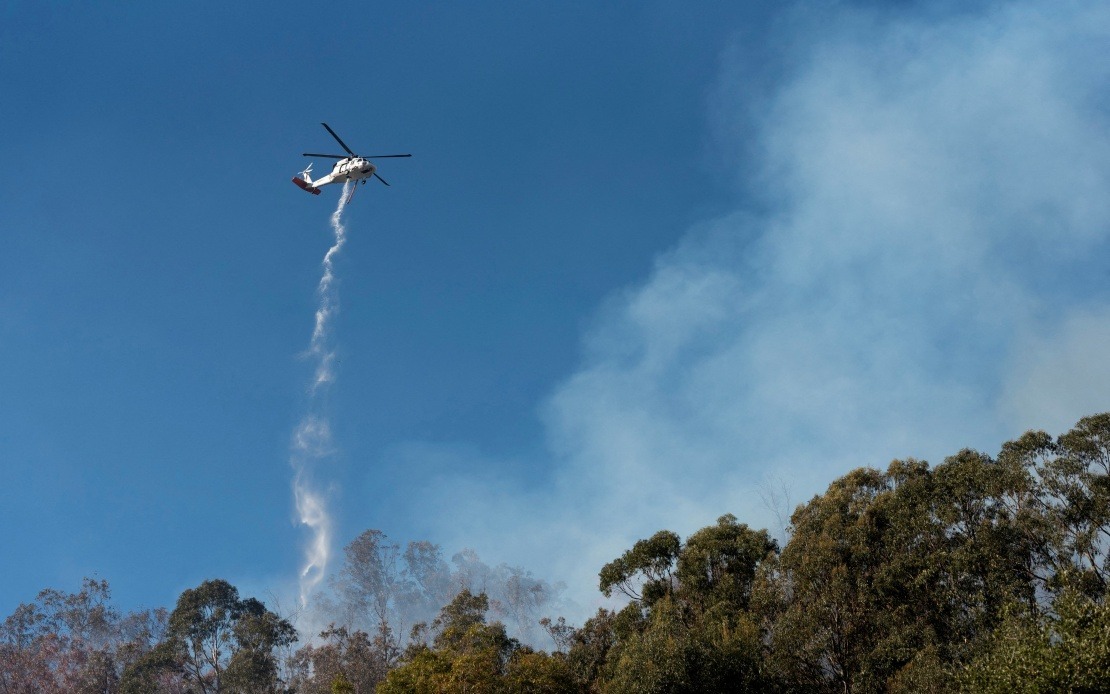
A helicopter supporting firefighting operations in central Utah crashed Friday morning, resulting in the deaths of two crew members as authorities grappled with accessing the remote crash site and investigating the circumstances of the accident. The Sikorsky S-64 aircraft, operating under contract with the US Forest Service, went down near Richfield at approximately 10 am local time whilst engaged in aerial firefighting support, according to the Federal Aviation Administration. The National Interagency Fire Centre confirmed that the pilot and one additional crew member perished in the incident, though their identities remained undisclosed at the time of reporting.
The investigation into the crash has been assumed by the National Transportation Safety Board, which indicated that preliminary findings suggest the helicopter descended in remote terrain under circumstances that remain unclear. The aircraft was actively supporting suppression efforts on the Widemouth 2 Fire, one of Utah's most significant wildfires this season, when the accident occurred. Initial assessments by authorities revealed that the challenging topography and active fire conditions substantially hindered rescue and recovery operations, creating a complex scenario for emergency responders attempting to reach the wreckage site.
The crash site itself became a secondary fire concern when the impact ignited additional flames in the vicinity, further restricting access for ground crews and raising considerable safety risks for personnel attempting to conduct recovery operations. Fire officials acknowledged that the combination of ongoing firefighting activity and the rugged, inaccessible terrain surrounding the crash location presented formidable obstacles to reaching the helicopter and securing the area. This convergence of hazards typifies the extreme operational environment in which aerial firefighting crews function during major wildfire suppression efforts.
Utah Governor Spencer Cox responded to the tragedy by emphasizing the inherent dangers associated with wildland firefighting operations. In a formal statement, Cox noted that "Wildland firefighting is among the most dangerous jobs in the world," and characterized the incident as "a painful reminder of the extraordinary risks these brave men and women accept to protect us." The governor called upon residents to provide investigators and emergency responders adequate time and space as ongoing response and recovery efforts continued. His comments reflected broader acknowledgement within state leadership of the sacrifices made by firefighting personnel operating in extreme conditions.
The Widemouth 2 Fire originated on July 27 following a lightning strike that ignited vegetation across the Fishlake National Forest near Kanosh, a modest community situated in central Utah. The fire's rapid expansion occurred during an unusually severe weather pattern characterized by persistent drought conditions, elevated temperatures, and unpredictable wind behaviour. These atmospheric factors combined to create ideal conditions for accelerated fire spread, ultimately forcing evacuations across affected communities and resulting in substantial property damage throughout the region.
As of the latest reporting, the Widemouth 2 Fire had consumed more than 114,000 acres, equivalent to approximately 461 square kilometres of forested and vegetated terrain. Containment efforts had achieved partial success, with officials reporting that roughly 24 per cent of the fire's perimeter had been secured. The extent of the conflagration underscores the severity of Utah's wildfire situation and the critical importance of aerial support operations in combating large-scale fire incidents.
The destroyed structures attributed to the fire totalled at least six buildings, representing significant losses for local residents and landowners. The combination of residential and property impacts demonstrates how major wildfires extend their destructive consequences far beyond the immediate fire line, affecting community infrastructure and individual livelihoods across affected regions. The incident highlights the cascading effects of major fire events on Utah's central communities.
For Malaysian and Southeast Asian observers, this incident provides perspective on the operational hazards faced by wildfire suppression personnel in regions prone to large-scale fire events. While Malaysia and Southeast Asia contend with different wildfire dynamics, often driven by land-clearing activities and transboundary smoke pollution rather than natural vegetation fires, the underlying message regarding occupational risk remains universally relevant. The sophisticated aerial firefighting infrastructure deployed in the United States, including contracted helicopter operations, represents substantially different capabilities from typical Southeast Asian wildfire management approaches.
The crash also raises questions about equipment maintenance, operational protocols, and risk assessment procedures governing aerial firefighting missions. Such high-profile incidents typically prompt comprehensive reviews of safety procedures within aviation and firefighting agencies, potentially influencing how similar operations are conducted across different jurisdictions. The investigation's findings may inform broader discussions about acceptable risk levels in extreme-environment aviation operations.

