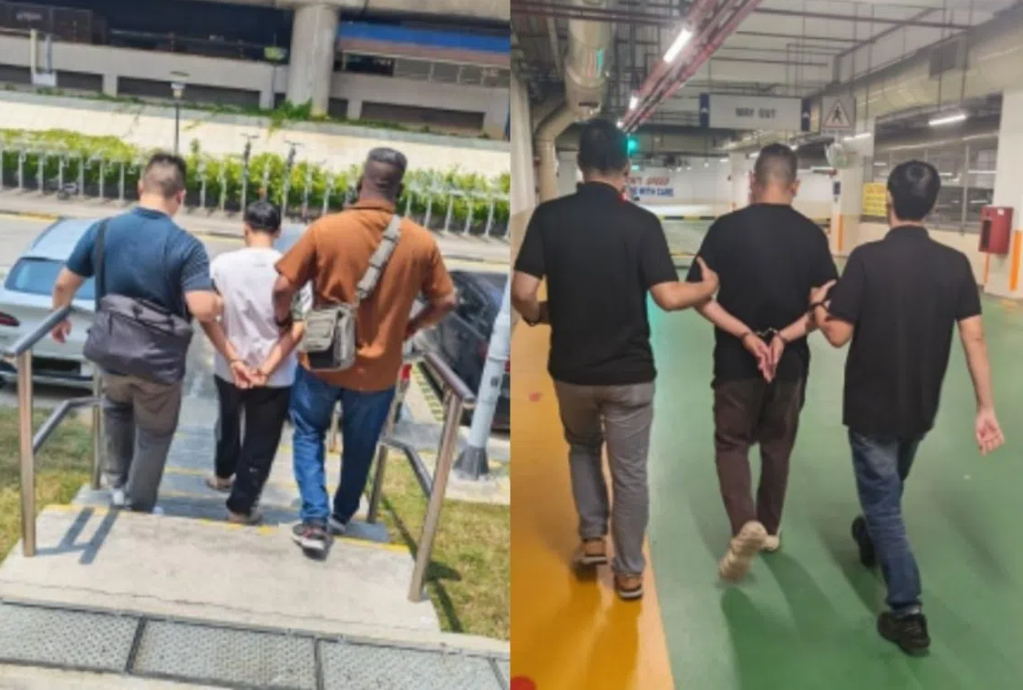
Singapore's police force has made arrests in a sophisticated identity fraud operation that exploited government digital credentials to facilitate money laundering through e-payment platforms. Two Malaysian nationals employed at mobile phone retail outlets were detained on Tuesday, August 25, in connection with a scheme that authorities say compromised the Singpass login details of more than 170 individuals to establish unauthorized digital wallet accounts.
The arrested men, aged 25 and 47, allegedly operated within a larger criminal network that systematised the theft of Singpass credentials—the secure government authentication system used by Singapore residents to access public services and digital transactions. According to police statements released the following day, the pair weaponized their positions in retail establishments to gain access to customer information, subsequently leveraging those credentials without consent to register accounts on LiquidPay, a digital payment platform operated by Singapore-based fintech company Liquid Group.
The investigation uncovered a chilling operational pattern in which the suspects exploited routine customer interactions to extract sensitive login information. In a particularly brazen instance documented by authorities, one of the men offered assistance to a customer updating Singpass credentials while purchasing a mobile SIM card—using that moment of trust to simultaneously establish a fraudulent payment account. This calculated approach suggests the operation extended beyond opportunistic fraud into deliberate, premeditated exploitation of customer relationships and their vulnerable moments.
Police inquiries revealed the scope of the compromise was far larger than the initial arrests suggested. Beyond the 170-plus Singaporeans and migrant workers whose Singpass accounts showed evidence of unauthorized manipulation, investigators documented the creation of more than 160 additional LiquidPay accounts derivative from these stolen credentials. The fraudulent accounts functioned as collection points for proceeds generated through separate scam operations, creating a critical infrastructure for criminal money flow within Singapore's digital economy.
Since early March 2026, Singapore authorities have investigated at least 20 citizens and work permit holders implicated in the registration and operation of compromised LiquidPay accounts. These accounts received a combined $110,063 traced to various scam schemes, demonstrating how identity fraud facilitates downstream money laundering. The figure, while substantial, likely underestimates the true loss given that detection typically occurs weeks or months after initial fraudulent transactions.
The investigation's emergence reflects Singapore's intensified focus on Singpass security vulnerabilities—a critical concern given the platform's centrality to government service delivery and digital transactions. The operation was spearheaded by the police's Cyber Command unit, working in coordination with Singpass's Trust & Safety team at the Government Technology Agency of Singapore, indicating the seriousness with which authorities treated the breach. Such inter-agency cooperation has become standard in countering sophisticated cyber-enabled crime.
The Malaysian suspects face prosecution under Singapore law for assisting others in retaining benefits derived from criminal conduct, an offence carrying potential imprisonment up to 10 years, fines reaching $500,000, or both. Their scheduled court appearance on August 27 marks the formal commencement of proceedings that may establish important precedent regarding cross-border liability in credential fraud cases.
Parallel investigations continue into Singaporean Singpass holders who may have voluntarily surrendered their account credentials to criminals, suggesting either coercion, deception, or participation in the scheme. This investigative strand carries its own legal implications: individuals knowingly providing government credentials to unauthorized parties face penalties including three years imprisonment and $10,000 fines. The existence of willing participants within the victim population complicates the threat landscape and suggests the syndicate may have employed social engineering or intimidation alongside credential theft.
The case carries significant implications for Malaysia-Singapore cross-border security cooperation. As the perpetrators are Malaysian nationals operating from within Singapore's jurisdiction, the incident highlights how organised crime networks exploit employment mobility across the region. Mobile phone retail outlets, offering legitimate reasons for handling customer information and processing SIM cards requiring identity verification, represent an attractive operational base for credential harvest operations. Similar vulnerabilities may exist across Southeast Asian fintech ecosystems where customer onboarding processes remain vulnerable to insider exploitation.
For Malaysian authorities, the arrests underscore growing regulatory attention to how nationals may be instrumentalised in transnational fraud schemes. The perpetrators' employment status suggests they operated with awareness of Singapore's commercial environment while potentially hiding their involvement behind the relative anonymity of foreign worker status. This pattern—foreign workers recruited into or launching criminal operations from host countries—represents an emerging security concern across Southeast Asia as digital commerce expands.
The broader context reveals how credential compromise connects to the region's fintech expansion without corresponding security maturation. Payment platforms like LiquidPay, designed to improve financial inclusion and transaction convenience, become liabilities when identity verification systems rely on credentials compromised through retail-level social engineering. The incident suggests Singapore's digital infrastructure, despite sophistication, remains penetrable through human vulnerability at operational frontlines.
Liquid Group and Singapore's financial regulators will likely face scrutiny regarding account verification protocols. The creation of 160 accounts from 170 compromised credentials indicates minimal friction in account establishment, raising questions about whether platform-level verification measures adequately supplement government credential security. Fintech companies across Southeast Asia may now face pressure to implement additional authentication layers beyond Singpass integration.
As investigations conclude and prosecutions proceed, the case will illuminate how regional criminal networks exploit the friction between advanced digital government services and inconsistent commercial security practices. The Malaysian connection underscores how Southeast Asian crime increasingly operates across borders, leveraging employment mobility and regulatory gaps to conduct sophisticated fraud. For Malaysia and the broader region, the case provides urgent lessons regarding credential management, cross-border workforce vetting, and the coordination necessary to combat digitally-enabled organised crime.

