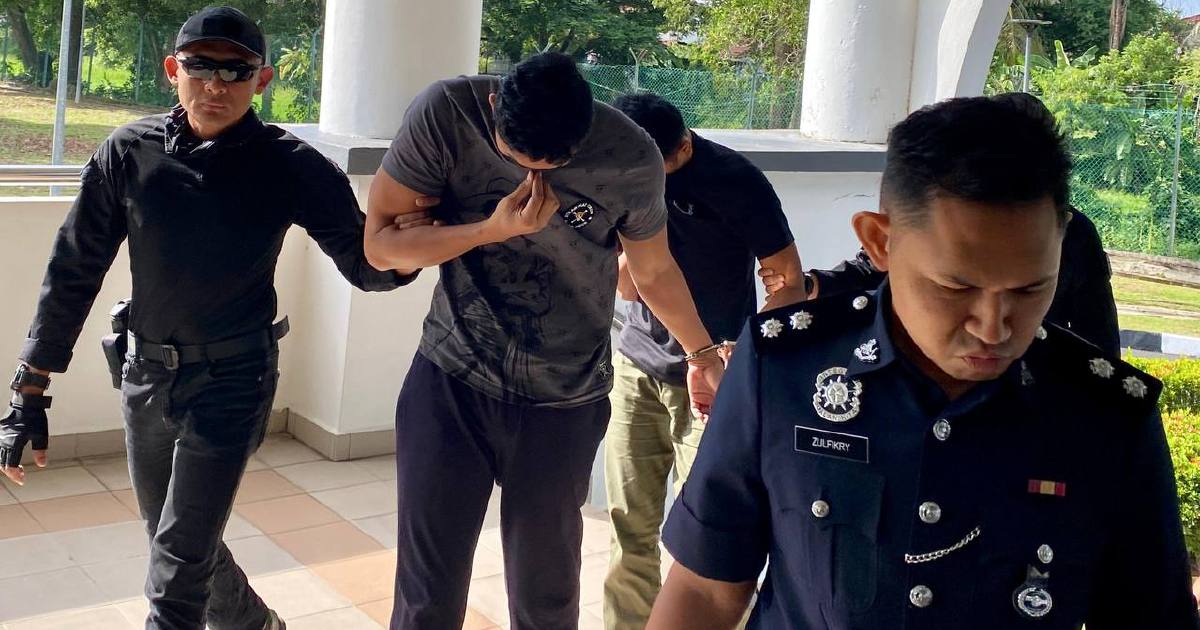
At the Sessions Court in Alor Star, two military service members faced charges today relating to their alleged involvement in facilitating the unlawful transit of three Myanmar nationals through the Malaysia-Thailand frontier during the previous month. The prosecution's case represents another instance of security personnel allegedly abusing their access and authority at sensitive border zones, an issue that has periodically surfaced across Southeast Asia.
The incident reflects the complex challenges Malaysia confronts in managing its porous international boundaries, particularly along the northeastern corridor where the Malaysia-Thailand border remains notoriously difficult to monitor effectively. Despite substantial investment in surveillance infrastructure and personnel deployment, transnational people-smuggling operations continue to exploit vulnerabilities in enforcement, often with the assistance of individuals positioned within state security apparatus. The involvement of uniformed military personnel in such activities compounds concerns about institutional integrity and the effectiveness of existing oversight mechanisms.
Border smuggling operations targeting Myanmar nationals have intensified amid the political instability and humanitarian crises in Myanmar since the 2021 military coup. Thousands of individuals from Myanmar have sought refuge or economic opportunities in neighbouring countries, creating significant demand for smuggling networks willing to facilitate illegal border crossings. Malaysia, as a relatively developed neighbouring nation, represents an attractive destination despite its own immigration restrictions and deportation policies.
The alleged role of military personnel in this case raises particular questions about screening, supervision, and accountability within security services. Soldiers stationed at border posts occupy positions of critical trust, equipped with detailed knowledge of crossing routes, patrol schedules, and checkpoint procedures that remain invaluable to smuggling syndicates. When such individuals compromise their duties through participation in illegal activities, the entire integrity of border control becomes compromised, potentially enabling larger criminal networks to operate with greater impunity.
Myanmar migration patterns significantly affect Malaysia's domestic security calculations and resource allocation. The country hosts substantial communities from Myanmar, ranging from registered migrant workers to undocumented populations, creating complex administrative and social integration challenges. Uncontrolled migration through smuggling networks circumvents background checks and registration procedures that authorities rely upon to monitor potential security threats and ensure public health compliance.
The prosecution of military personnel involved in smuggling carries symbolic importance beyond the immediate facts of the case. Successful prosecutions signal institutional commitment to maintaining operational integrity and deterring future misconduct among security rank-and-file who might otherwise view border posts as opportunities for illicit profit. Conversely, inconsistent enforcement or lenient sentencing can embolden further corruption and undermine public confidence in institutional effectiveness.
Thailand, Malaysia's northern neighbour, faces similar challenges with military corruption and border security. The region's broader geopolitical context—including China's Belt and Road initiatives, strategic competition for influence, and transnational criminal networks—makes border integrity a matter extending beyond bilateral migration concerns into questions of national strategic interest.
The forensic investigation underlying these charges presumably documents specific instances of the soldiers' participation, whether through accepting bribes, directly escorting migrants across borders, or deliberately overlooking checkpoint procedures. Such investigations typically require coordination between military authorities, civilian police, and immigration enforcement, reflecting the multi-institutional complexity of addressing corruption within security services.
Sentencing in such cases carries implications beyond punishment of individual wrongdoing. Judicial decisions regarding military personnel convicted of corruption tend to establish precedential guidance for future cases, signalling to potential offenders whether institutional positions provide meaningful protection or genuine legal exposure. The court's approach at the Sessions Court in Alor Star will likely influence deterrence calculations among other security personnel positioned at vulnerable border zones.
Malaysia's broader immigration policy framework emphasizes deportation and border enforcement, yet the persistent involvement of smuggling networks—particularly those with inside assistance—suggests that enforcement capacity continues lagging behind operational demand. Enhanced vetting, internal affairs monitoring, and inter-agency information-sharing might reduce corruption opportunities, though such measures require sustained institutional commitment and resource allocation that often competes with other security priorities.
The case also intersects with humanitarian considerations. While smuggling operations clearly violate Malaysian immigration law and border sovereignty, the Myanmar nationals involved often flee genuine persecution or economic desperation. Distinguishing between enforcement against criminal smuggling networks and compassionate consideration of asylum claims remains an enduring tension within regional migration governance, one that this prosecution necessarily sidelines to focus narrowly on criminal liability of the soldiers involved.
Longer-term solutions require addressing not merely individual corruption but the structural incentives that make border posts attractive venues for illegal activity. Improving soldier compensation, implementing rotational posting protocols, strengthening internal oversight, and enhancing detection capabilities through technology could collectively reduce the vulnerability of military personnel to recruitment by smuggling syndicates. Regional cooperation with Thailand and Myanmar, though complicated by political considerations, might also establish shared standards for border security personnel integrity.
%22%2F%3E%3C%2Fpattern%3E%3C%2Fdefs%3E%3Crect%20width%3D%22100%25%22%20height%3D%22100%25%22%20fill%3D%22url(%23ph3o9rig)%22%2F%3E%3Crect%20width%3D%22100%25%22%20height%3D%22100%25%22%20fill%3D%22url(%23ph3o9rip)%22%2F%3E%3Ctext%20x%3D%2250%25%22%20y%3D%2250%25%22%20text-anchor%3D%22middle%22%20dominant-baseline%3D%22central%22%20fill%3D%22rgba(255%2C255%2C255%2C0.95)%22%20font-family%3D%22Georgia%2C%20'Times%20New%20Roman'%2C%20serif%22%20font-weight%3D%22700%22%20font-size%3D%22320%22%20letter-spacing%3D%22-0.02em%22%3EPAS%3C%2Ftext%3E%3C%2Fsvg%3E)

%22%2F%3E%3C%2Fpattern%3E%3C%2Fdefs%3E%3Crect%20width%3D%22100%25%22%20height%3D%22100%25%22%20fill%3D%22url(%23ph1nzvog)%22%2F%3E%3Crect%20width%3D%22100%25%22%20height%3D%22100%25%22%20fill%3D%22url(%23ph1nzvop)%22%2F%3E%3Ctext%20x%3D%2250%25%22%20y%3D%2250%25%22%20text-anchor%3D%22middle%22%20dominant-baseline%3D%22central%22%20fill%3D%22rgba(255%2C255%2C255%2C0.95)%22%20font-family%3D%22Georgia%2C%20'Times%20New%20Roman'%2C%20serif%22%20font-weight%3D%22700%22%20font-size%3D%22320%22%20letter-spacing%3D%22-0.02em%22%3EOnn%3C%2Ftext%3E%3C%2Fsvg%3E)