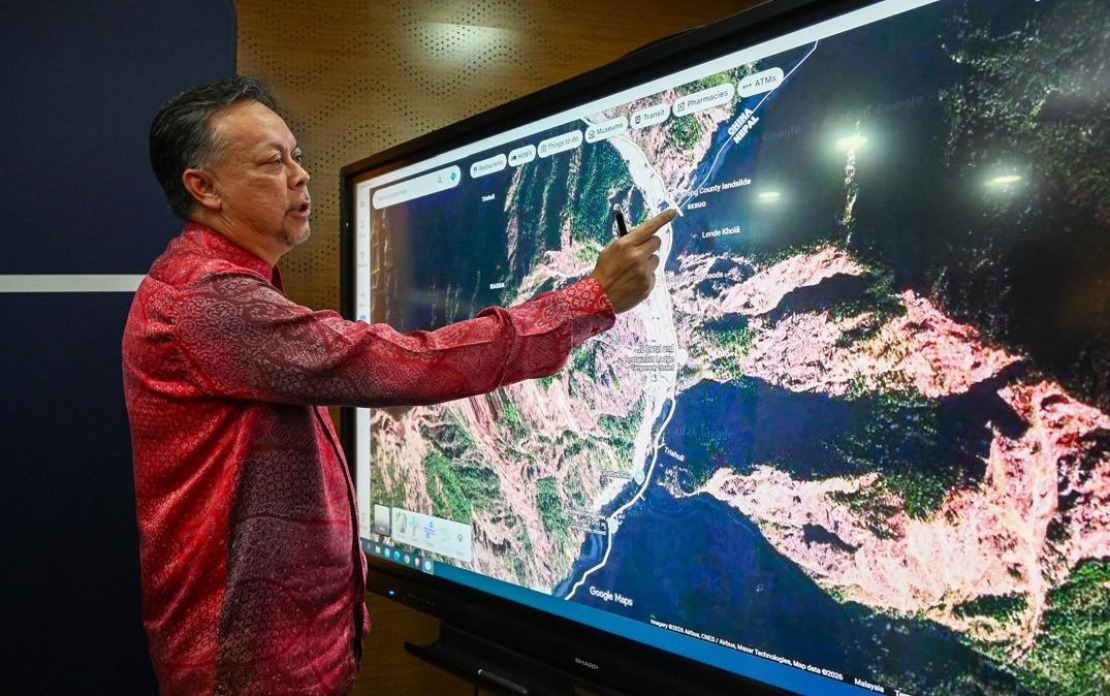
Malaysia's Foreign Ministry has announced that two of the 57 Malaysians initially reported as untraced following devastating flash floods and landslides in Nepal have been successfully located, though 55 citizens remain beyond contact as of Wednesday afternoon. According to Datuk Syed Mohamad Hasrin Tengku Hussin, Deputy Secretary-General for Bilateral Affairs, the identified individuals are undergoing verification procedures to establish their exact whereabouts and confirm their welfare status.
The verification process is essential to Malaysia's overall response strategy, as officials seek to prevent data duplication and establish accurate accountability of nationals in the affected region. The official emphasised that cross-checking against multiple databases—including records from Nepalese authorities and Malaysia's own citizen registers—remains integral to the operation's integrity. The figure of 55 unaccounted Malaysians continues to be refined as new information arrives from Nepalese government agencies and cooperating organisations on the ground.
Foreign Minister Datuk Seri Mohamad Hasan has directed the ministry to intensify its tracking operations, prompting the deployment of additional diplomatic resources to accelerate efforts. A representative from the Malaysian High Commission in Dhaka has been sent to Kathmandu to strengthen the embassy's coordination capacity. This official is now managing information compilation, maintaining liaison with Nepalese authorities, and overseeing real-time monitoring of developments—a critical move reflecting the scale and complexity of the search operation.
The Malaysian Embassy in Kathmandu has established a collaborative network encompassing Nepalese government bodies, including the Foreign Ministry's emergency response division, the Nepal Tourism Board, and local tour operators. This multi-agency approach recognises that tracing Malaysians scattered across an affected region requires pooling intelligence from diverse sources familiar with tourist movements, travel patterns, and local communications infrastructure. The coordination underscores how bilateral disaster response has become increasingly sophisticated in managing missing persons across borders.
The catastrophe originated on August 26 when the Bote Koshi River overflowed in Rasua district, triggering a cascade of destructive events that compromised critical infrastructure. Roads and bridges have been rendered impassable, electricity networks are down, and telecommunications systems have been severely disrupted. These infrastructure failures compound the search challenge considerably, as they isolate affected populations from rescue teams and prevent the verification of survivors. Nepalese authorities have reported that 528 individuals have been recovered to date—490 Nepalese nationals and 38 foreigners—though no Malaysians have been identified among those rescued, raising concerns about whether affected Malaysians remain stranded in isolated zones.
The topographical and logistical realities of operating in mountainous Nepal during a disaster have created substantial obstacles to information gathering. Syed Mohamad Hasrin acknowledged that weather deterioration and continued infrastructure damage present ongoing constraints for search and rescue teams. Nepalese authorities themselves are managing competing demands, prioritising their own displaced citizens while coordinating with international partners. The rapid-onset nature of the flooding, combined with continued overflow risks from border waterways, means operational conditions remain volatile and recovery efforts cannot proceed at optimal speed.
Malaysia's Foreign Ministry has activated a round-the-clock operations centre in Putrajaya dedicated exclusively to coordinating intelligence, providing family support, and distributing updates to relatives. This facility has already fielded between twelve and fifteen calls from anxious family members within the first few hours of its launch. Every contact is systematically recorded and cross-referenced against official lists maintained by both Malaysian and Nepalese authorities to eliminate confusion and ensure accurate tracking. The ministry is treating each piece of information received as potentially significant, recognising that in a disaster environment, communication is fragmented and corroboration is essential.
The identification of unreachable Malaysians has drawn on multiple channels: direct reports from Nepalese government sources, intelligence from Tourism Malaysia's registry, information from travel operators, and family notifications. This dispersed sourcing acknowledges that Malaysians in the region may have been registered with various agencies or may not have maintained formal documentation with authorities. Some may have been independent travellers using informal accommodation; others may have been on organised tours. The diversity of potential victim profiles has required the ministry to cast a wide net when soliciting information and to exercise care in verification to avoid false positives that could mislead families or waste investigative resources.
The ministry has issued specific guidance for next-of-kin and others possessing relevant information, requesting they provide comprehensive details including full names, passport identification numbers, itinerary specifics, last confirmed locations, and active contact telephone numbers. This data collection protocol enables officials to cross-match information against Malaysian immigration records, tour operator manifests, and Nepalese authority reports with greater precision. The Putrajaya Operations Room remains accessible via telephone at +603 8887 4570 and email at [email protected], functioning as the central nexus for all inquiries and intelligence submission.
For Malaysian readers, the unfolding situation in Nepal illustrates both the vulnerabilities and resilience mechanisms embedded in contemporary disaster response architecture. Despite being geographically remote from Malaysia, the region continues to attract significant tourist traffic, making it essential that government maintains robust protocols for managing citizens abroad during crises. The methodical approach adopted by the Foreign Ministry—emphasising verification, inter-agency coordination, and family communication—reflects lessons learned from previous international disasters. However, the scale of physical destruction and ongoing environmental risks in Nepal highlight how climate-driven hazards increasingly threaten travel destinations across Asia, warranting greater attention to pre-event planning and real-time information systems that can function when conventional infrastructure fails.

