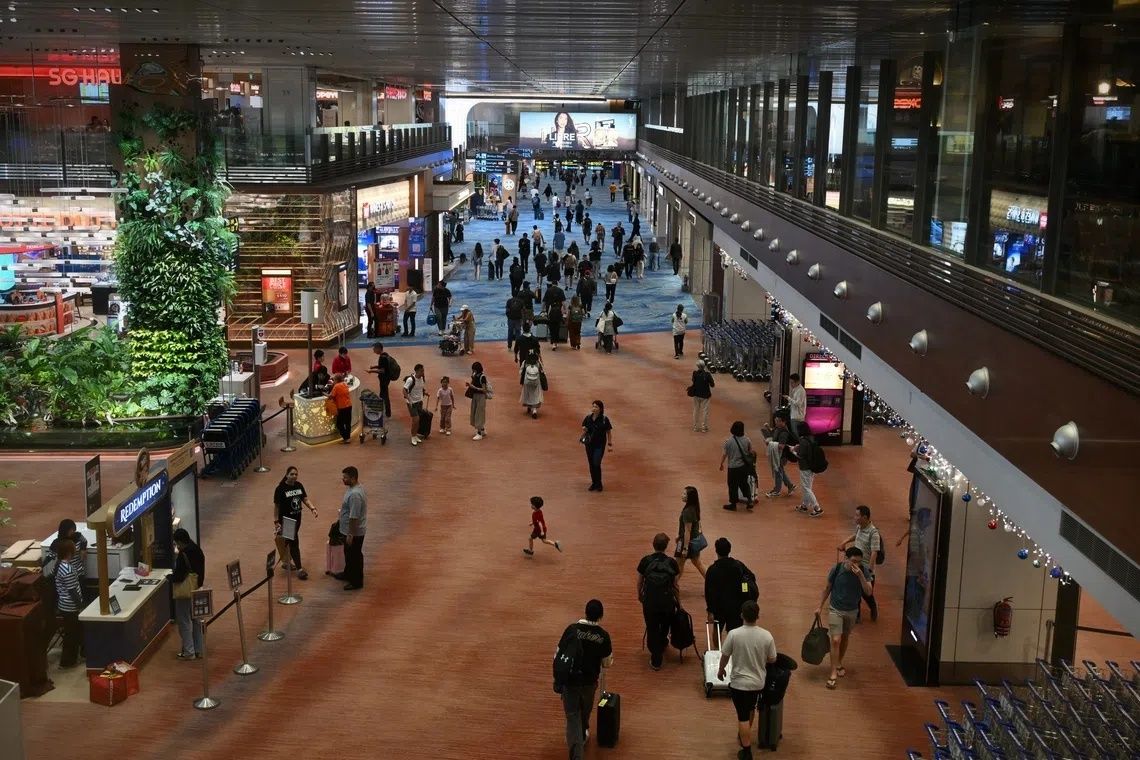
Authorities in Singapore have apprehended two foreign nationals in connection with high-value perfume thefts at Changi Airport, underscoring how modern surveillance technology continues to track down retail crime suspects even after considerable delays. The 37-year-old Australian man and the 50-year-old American man face charges in court on August 17 following their respective arrests, with their cases highlighting the persistent challenges posed by transient offenders in busy international aviation hubs across the region.
The incident involving the Australian traveller unfolded on November 19, 2025, when staff at a perfume retailer in the transit zone of Terminal 2 discovered two boxes of merchandise missing from display shelves. Security recordings revealed that the man had removed the items, valued at approximately $430, around 4.50 p.m. and exited the store without completing any transaction. Despite immediate investigations, the suspect managed to leave Singapore before law enforcement could identify and locate him, presenting a common difficulty in airport retail crime where perpetrators quickly depart the jurisdiction.
The breakthrough in tracking this elusive offender came more than eight months later when he transited through the airport again. Police officers, armed with facial recognition data and CCTV imagery from the original November incident, arrested him on August 4 as he moved through the terminal. This extended investigation demonstrates the determination of Singapore's airport policing unit to pursue cases regardless of time lapses, a strategy that carries particular relevance for other Southeast Asian aviation authorities grappling with similar challenges at busy regional hubs like Kuala Lumpur International Airport and Bangkok's Suvarnabhumi.
In the second case, airport personnel detected theft much more swiftly, enabling authorities to intercept the suspect before departure. On August 5, retail staff working the early morning shift at a store in Terminal 1's transit area discovered missing merchandise and immediately alerted security. Surveillance footage documented the American man removing a perfume box valued at over $310 around 12.40 a.m. without making payment. Quick coordination between retail security and airport police proved decisive—officers arrested him before he could board his connecting flight, preventing his escape across international borders.
Further examination of recorded footage in the American man's case revealed a more extensive pattern of offences. Beyond the single incident initially reported, investigators identified two additional thefts from separate retail locations within the transit area. These comprised another perfume box worth approximately $170 and a perfume testing bottle valued at more than $230. The cumulative value of all three items exceeded $717, and notably, airport authorities recovered all stolen goods, enabling them to return merchandise to affected retailers and strengthen evidence for prosecution.
The distinction between these two cases illustrates divergent criminal outcomes shaped by operational timing and detection responsiveness. The Australian man's ability to depart before identification occurred reflects the vulnerability of airport retail environments to swift, calculated theft during peak travel periods. Conversely, the American suspect's apprehension during the commission of his crimes, and the subsequent discovery of his repeat offences through systematic CCTV review, demonstrates the protective value of comprehensive surveillance infrastructure and trained personnel who recognise suspicious behaviour patterns.
Legislatively, both men face potential penalties under Singapore's theft statutes, with the charge of theft in dwelling carrying maximum sentences of seven years imprisonment, substantial fines, or both. This severity reflects the jurisdiction's firm position against retail crime and the broader principle that property crime at critical infrastructure sites demands robust deterrence. For Malaysian and other Southeast Asian readers, the cases underscore how legal frameworks across the region treat airport theft as a serious offence deserving substantial consequences, particularly when luxury goods with high resale value are targeted.
Commissioner M. Malathi's public statement regarding these arrests carries significant operational and strategic weight. His emphasis on CCTV technology's role in detection and eventual identification—even when initial apprehension proves impossible—sends a deliberate message to potential offenders that temporal escape does not guarantee immunity. The official acknowledgement that investigations persist indefinitely, coupled with technological capability to recognise offenders upon re-entry, effectively narrows the operational window for airport retail criminals across international networks. This message resonates particularly in Southeast Asia, where the interconnected nature of regional aviation means that offenders may cycle through multiple airports, increasing their eventual probability of detection.
The police's commitment to sustained coordination with retail partners and airport stakeholders reflects a modern approach to loss prevention that extends beyond reactive response. Formal partnerships between law enforcement and commercial entities enable systematic CCTV review, staff training on suspicious activity recognition, and rapid information-sharing protocols. At Changi, this integration has apparently yielded rapid detection of the American suspect's multiple thefts and the eventual apprehension of the Australian traveller despite his months-long absence from the jurisdiction.
For travellers and commercial operators throughout the region, these cases serve as a practical reminder of surveillance prevalence at major airports. The deterrent effect of knowing that retailers maintain archived footage capable of identifying offenders retrospectively, combined with police willingness to pursue investigations across months or even years, fundamentally alters the risk calculus for would-be shoplifters. The recovery of all stolen items and the swift identification of repeat patterns in the American suspect's case demonstrate that modern airport security systems increasingly function as comprehensive monitoring ecosystems rather than simple incident recorders.
The August 17 court appearances will provide clarity on how Singapore's judicial system addresses these offences and whether additional charges emerge during proceedings. For Malaysian authorities managing similar challenges at KLIA and secondary airports, the Changi cases offer instructive precedent regarding investigation methodology, technology deployment, and inter-agency coordination. As regional aviation continues expanding and passenger volumes increase, sophisticated retail crime prevention strategies utilising advanced surveillance and sustained investigative commitment appear increasingly essential to protecting both commercial interests and passenger confidence in airport retail environments.

