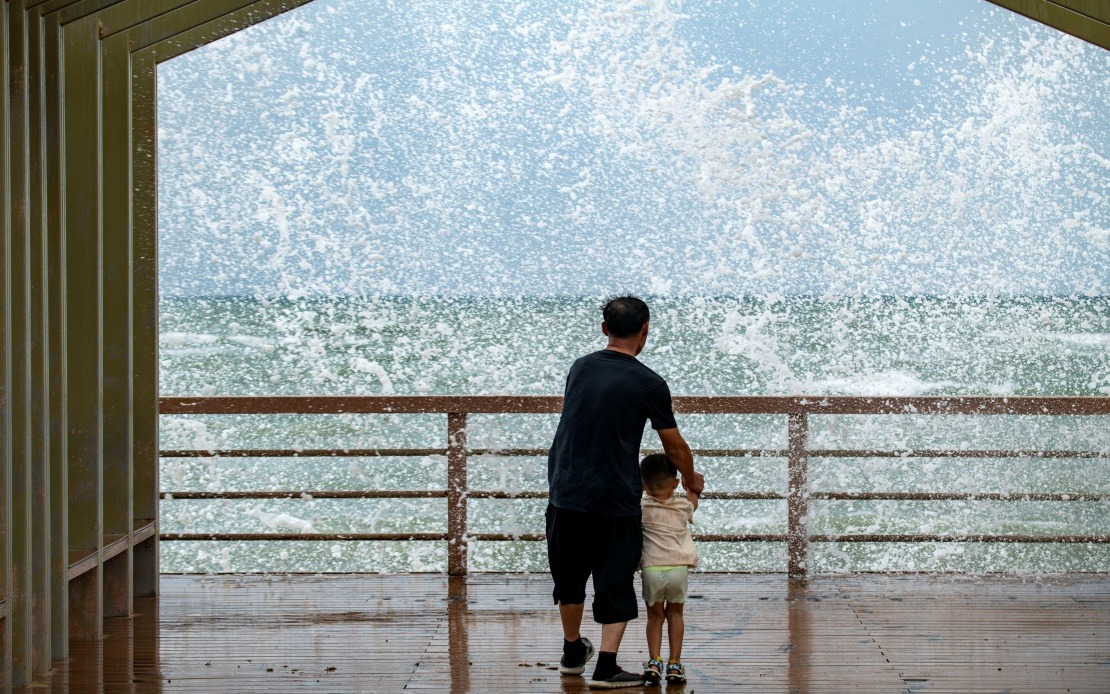
Typhoon Maysak made its entry into Hainan Province on Friday evening, bringing the 2020 Atlantic and Northwest Pacific typhoon season to its 10th named system. The storm came ashore at approximately 6.20 pm in Yelin Township, situated within Lingshui Li Autonomous County, according to readings from the Hainan provincial meteorological bureau. Upon contact with land, the system carried maximum sustained winds of 23 metres per second near its core, creating hazardous conditions across the island province.
The arrival of Typhoon Maysak triggered an immediate cascade of transport disruptions across one of China's southern gateways. All railway connections serving the island, both inbound and outbound, were suspended for Friday and Saturday as provincial authorities prioritised public safety over operational schedules. This decision affected thousands of travellers and goods movement across the Qiongzhou Strait, which normally facilitates crucial transport links between Hainan and mainland China. For a province that has invested heavily in developing its transport infrastructure as part of broader economic development initiatives, such suspensions represent significant economic consequences, even if temporary in nature.
Aviation services ground to a halt as well, with Sanya Phoenix International Airport implementing a complete flight suspension beginning at 5 pm on Friday. This closure affected both domestic and international routes, isolating the popular tourist destination at a time when summer holiday travel typically peaks. The airport's decision reflected the unpredictability and intensity of the incoming system, which meteorologists had been tracking with increasing concern as it approached landfall. For passengers stranded across Sanya and the surrounding region, the disruption compounded travel difficulties already exacerbated by the need to coordinate alternative routes through congested mainland airports.
Maritime operations experienced comparable disruption, with ferry crossings suspended across the Qiongzhou Strait from 2 am on the day of landfall. Both passenger and vehicle ferry services halted operations, with authorities estimating the suspension would persist for one to two days pending atmospheric stabilisation. The Qiongzhou Strait represents one of Asia's busiest maritime corridors, facilitating the movement of commercial goods, personal vehicles, and travellers between the island and mainland territories. The temporary closure placed strain on supply chains and demonstrated how tropical cyclones, despite their seasonal predictability, continue to pose genuine infrastructure challenges for even well-developed regions.
The social impact extended beyond transport networks to educational institutions across the affected areas. Schools and child-care facilities throughout Sanya and Ledong Li Autonomous County ceased operations as a precautionary measure. This decision reflected the broader acknowledgment among provincial authorities that Typhoon Maysak posed sufficient threat to warrant community-wide protective measures, not merely those affecting major infrastructure. Families scrambled to arrange alternative childcare, while educators faced the familiar challenge of rescheduling curricula disrupted by weather events that, while periodic, remain difficult to predict with absolute precision regarding their exact intensity and track path.
Meteorological authorities projected that Typhoon Maysak would advance in a northwesterly direction following its initial landfall, tracking across several interior municipalities including Baoting, Wuzhishan, Baisha, and Danzhou. Rather than remaining as a coastal phenomenon, the system threatened to penetrate inland across Hainan's interior, potentially bringing sustained wind and rainfall to areas less accustomed to direct typhoon impacts. The projected course through multiple administrative divisions suggested that the disruption would not remain concentrated in coastal zones but would disperse across wider geographic areas, affecting rural and urban communities alike.
The storm's eventual trajectory indicated it would emerge from Hainan's western reaches to enter the Beibu Gulf, the body of water shared by China, Vietnam, and potentially affecting broader Southeast Asian shipping lanes and coastal regions. This transition from island system to gulf-crossing cyclone raised concerns for neighbouring jurisdictions, particularly Vietnam, which maintains extensive maritime interests and densely populated coastal communities vulnerable to tropical cyclone impacts. For Malaysian observers monitoring regional weather developments, the system's progression through Southeast Asian waters serves as a reminder of how atmospheric disturbances originating in the Pacific and East China seas can propagate southward, occasionally threatening Malaysian maritime operations and occasionally bringing indirect precipitation impacts to northern Malaysian states.
The designation of Maysak as the year's 10th typhoon reflected the intensity of the 2020 typhoon season, a period characterised by above-average cyclonic activity across the Western Pacific basin. This elevated frequency of tropical systems demonstrated how climate patterns and sea surface temperatures create conditions favouring cyclogenesis across the region. For China's coastal provinces and broader Southeast Asia, the recurrence of multiple strong typhoons annually necessitates sustained investment in early warning systems, evacuation infrastructure, and community resilience programmes. The response demonstrated by Hainan authorities, while disruptive to commerce and daily life, represented the application of hard-won experience from previous typhoon seasons.
The economic ramifications of such transport suspensions extend beyond the immediate disruption period. When major transport corridors cease operations, businesses relying on just-in-time supply chains experience cascading delays affecting manufacturing, retail, and hospitality sectors. For Hainan, which has positioned itself as a leisure and tourism destination, the suspension of aviation and marine services during peak travel season translates into lost revenue for hotels, restaurants, and attractions. The broader question for regional policymakers involves balancing the imperative to maintain operational continuity against the safety obligations that typhoon systems unquestionably impose, creating tension between economic and humanitarian priorities that persists across Southeast Asia.

