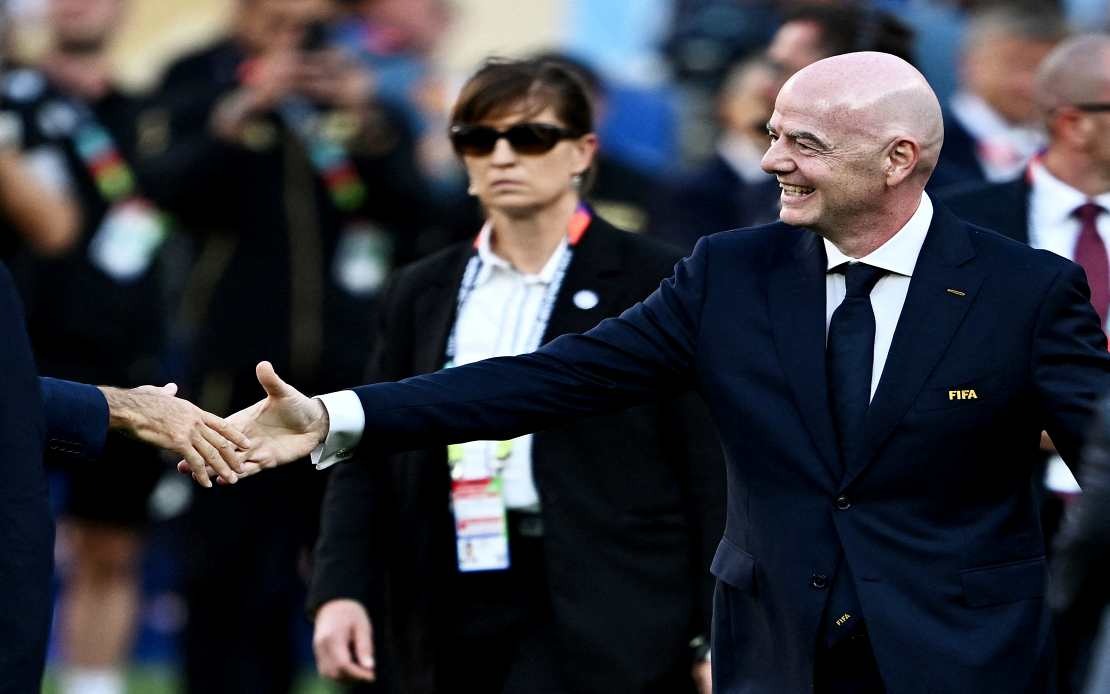
The Union of European Football Associations has escalated its confrontation with FIFA leadership by formally notifying President Gianni Infantino of its intention to pursue legal proceedings, arbitration, and regulatory complaints connected to a controversial scheme to monetise the global football body's media and commercial assets. The written notice, delivered in early August, represents a significant shift from rhetoric to legal action as European football's governing body seeks accountability for what it views as a misguided governance failure that threatened the sport's institutional integrity.
At the heart of the dispute lies FIFA's announcement of plans to raise US$4.2 billion by offloading approximately 20 per cent ownership of a newly created entity controlling FIFA's extensive commercial and media rights, including all World Cup broadcasting and sponsorship revenues. The proposal triggered immediate industry speculation that the shares would be acquired by the foundation of Joshua Kushner, whose family connections to United States President Donald Trump through marriage raised questions about American private equity influence over international sports governance. The concentration of such lucrative rights in private hands posed fundamental risks to the independence of football administration globally.
UEFA's response was swift and uncompromising. Within days of FIFA's announcement, the continental confederation declared its intention to orchestrate a comprehensive boycott of all FIFA competitions involving its member associations unless the commercial rights sale was completely abandoned. This ultimatum carried genuine weight—European football clubs and national teams generate substantial revenues through FIFA tournaments, making such a boycott economically devastating to the global football federation. The threat of European non-participation in international competitions would have crippled FIFA's commercial model and tarnished the legitimacy of any World Cup or other major tournament.
Faced with this coordinated resistance, Infantino reversed course and announced the abandonment of the commercial rights sale, citing the surrounding controversy as his rationale. However, the retreat came too late to satisfy UEFA's leadership, who view the entire episode as symptomatic of governance dysfunction at FIFA. Behind-the-scenes reporting suggested that the proposed arrangement would have dramatically increased Infantino's annual compensation from three million euros to thirty million euros, creating perceptions that the FIFA president was engineering the transaction to enrich his own position while ostensibly benefiting the broader football community.
UEFA's formal legal notice demands that Infantino and FIFA immediately identify, locate, and preserve all documents and electronically stored information relating to the failed commercial rights scheme. This preservation order serves a dual purpose—it creates a legal record of the decision-making process while preventing the destruction of evidence that could support UEFA's anticipated claims. The specificity of UEFA's language, referencing "all related matters," suggests the confederation is pursuing not merely the commercial rights proposal itself but examining the broader context of FIFA decision-making and potentially questioning whether proper governance procedures were followed.
The document preservation demand indicates that UEFA intends to pursue discovery into FIFA's internal deliberations, communications between Infantino and his advisors, and the role played by private equity firms and their representatives in shaping the proposal. Such discovery could expose the decision-making rationale, the involvement of external parties in structuring the deal, and communications that might reveal whether Infantino was primarily motivated by institutional modernisation or personal financial gain. For Malaysian and Southeast Asian football administrators, this dispute underscores the importance of transparent governance structures and the dangers of allowing executive compensation to become entangled with major commercial transactions.
UEFA's loss of confidence statement, issued contemporaneously with the legal notice, signals that the confederation is preparing for a prolonged institutional struggle. The language of holding "those responsible for the plan accountable" extends beyond Infantino himself and suggests potential investigations into the roles of other FIFA officials, advisors, and board members who endorsed or facilitated the commercial rights proposal. This broader accountability framework could reshape FIFA's governance structure if UEFA's legal action succeeds in establishing that fiduciary duties were breached or that decision-making procedures were compromised.
The implications of this dispute extend throughout Asian and Southeast Asian football governance. As national football associations across the region expand their commercial operations and consider privatisation or partial asset sales, the FIFA-UEFA confrontation provides a cautionary tale about the risks of allowing private equity interests to gain influence over essential sports infrastructure. Malaysia's football authorities, like their counterparts throughout the Association of Southeast Asian Nations, depend heavily on FIFA's commercial arrangements and World Cup participation to generate revenues that sustain domestic football development.
Infantino's initial proposal represented a fundamentally new model of football governance—one in which private capital holders would exercise ongoing influence over how FIFA manages its most valuable assets. The abandonment of the scheme demonstrates that even the FIFA president cannot unilaterally restructure the organisation's financial architecture without consensus from major stakeholders, particularly UEFA, which represents the world's wealthiest and most commercially developed football confederation. This balance of power, however fragile, has now been tested and found to restrain executive overreach.
The legal proceedings that UEFA is threatening could consume years and generate extensive public disclosure of FIFA's internal operations, compensation structures, and commercial strategies. Such transparency, while potentially uncomfortable for FIFA leadership, may ultimately strengthen the organisation's governance credibility. For football administrators across Southeast Asia, the episode demonstrates that institutional checks and collective action by regional confederations can effectively constrain the concentration of power within international sports organisations.
As UEFA pursues its legal claims, the financial and reputational costs to FIFA will mount. Beyond the immediate expenses of defending against arbitration and regulatory complaints, the organisation faces potential restrictions on its commercial flexibility and heightened scrutiny of future executive compensation decisions. Infantino and his successor administrations will operate under the shadow of this dispute, knowing that major unilateral initiatives are likely to face coordinated coalition resistance from regional confederations that possess sufficient leverage to enforce their preferences.

