Three major Western and Indo-Pacific defence allies have cemented their technological partnership by committing £4.6 billion (US$6.1 billion) to accelerate development of a next-generation stealth fighter aircraft. The agreement, sealed by the United Kingdom, Italy, and Japan, represents a significant deepening of defence cooperation among nations increasingly focused on maintaining technological superiority in the Asia-Pacific and European theatres amid shifting geopolitical tensions.
The contract constitutes a watershed moment for the Global Combat Air Programme, an ambitious initiative seeking to deliver a sixth-generation combat aircraft capable of revolutionary operational capabilities. According to the British government, the new fighter is engineered for service entry in 2035, positioning it at the forefront of aerial combat technology for decades to come. This timeline reflects the lengthy development cycles required for cutting-edge military aviation, with designs typically requiring years of refinement before reaching operational squadrons.
The programme represents a striking convergence of strategic interests. For Britain and Italy, both NATO members with deep roots in European defence architecture, the initiative demonstrates continued commitment to sophisticated indigenous capability development rather than sole reliance on American platforms. For Japan, participation signals confidence in collaborating with allies beyond its traditional sphere while developing advanced defence technologies in response to regional security challenges, particularly given the strategic importance of maintaining air superiority over contested waters in East Asia.
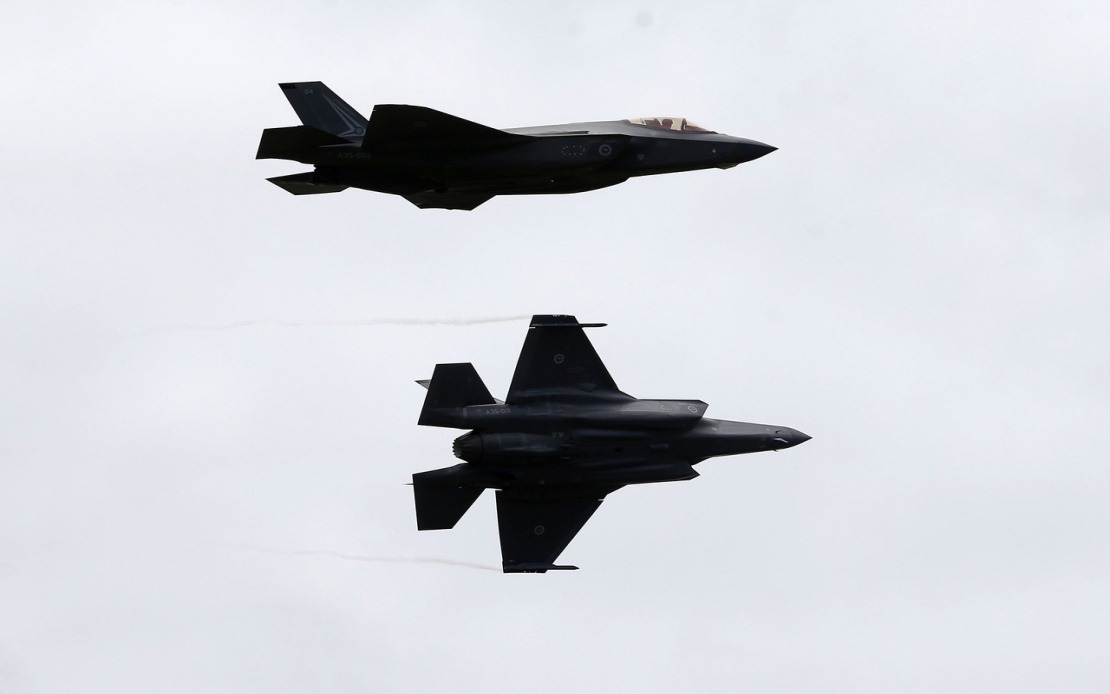
Design sophistication forms the cornerstone of the initiative. The forthcoming aircraft will incorporate artificial intelligence systems, advanced digital engineering methodologies, and yet-to-be-disclosed breakthrough technologies intended to establish new performance benchmarks. Rather than operating in isolation, the new fighter is explicitly conceived as complementary to existing fleets—the Royal Air Force Typhoon, the American F-35 Lightning II, and emerging autonomous systems—suggesting a vision of integrated, networked air operations where manned and unmanned platforms work in coordinated fashion.
Edgewing, the joint venture entity established in 2025 to oversee the programme, brings together three defence industrial powerhouses with distinct strengths. Britain's BAE Systems contributes formidable capabilities in aircraft systems integration and advanced avionics, having delivered numerous platforms to allied air forces. Italy's Leonardo provides substantial expertise in radar systems, electronics, and combat management architecture honed through decades of European defence collaboration. Japan Aircraft Industrial Enhancement Co. Ltd. (JAIEC) contributes precision manufacturing excellence and systems integration experience cultivated through co-development of advanced military platforms.
The financial commitment reflects the staggering costs inherent in developing contemporary military aircraft. The £4.6 billion allocation targets the next developmental phase, focusing particularly on detailed design work and comprehensive testing protocols. This phase typically involves establishing performance parameters, validating design choices against operational requirements, and executing preliminary testing of critical systems—work that proceeds deliberately to prevent costly errors in subsequent manufacturing phases.
For Southeast Asian defence establishments, the programme's progression carries implications for regional security dynamics. The demonstrated capability of Britain, Italy, and Japan to collaborate on cutting-edge defence technology underscores the interconnectedness of security partnerships spanning Europe and the Indo-Pacific. Nations in the region monitoring technological developments will observe how the programme unfolds, potentially influencing future procurement decisions and defence partnerships.
The 2035 service entry target positions the aircraft during a period when global security architecture could differ markedly from today. Planning for a platform operational for four decades necessitates designing flexibility into systems to accommodate technological evolution and shifting threat perceptions. The emphasis on artificial intelligence and digital systems suggests recognition that future air combat may differ fundamentally from current doctrine, with human operators collaborating extensively with autonomous systems rather than exclusively controlling platform operations.
Industrial participation patterns also merit attention from regional observers. The three-nation consortium demonstrates that sophisticated defence development no longer requires American technological leadership, though NATO members remain closely integrated with American systems architecture. This independence may influence how other nations evaluate defence partnerships, particularly regarding indigenous versus imported platform development.
The contract formalises commitments that emerged from earlier political agreements and technical consultations among defence ministries. Moving from announcement to binding financial commitment represents genuine governmental confidence in the programme's viability and strategic importance. The joint funding structure requires each nation to maintain commitment through the lengthy development cycle ahead, creating institutional momentum difficult to reverse despite potential political changes.
Successful delivery would represent a historic achievement in multinational defence development, comparable to major European platform collaborations. The complexity of integrating design practices, manufacturing standards, and operational requirements across three nations with distinct defence cultures creates management challenges extending beyond typical single-nation programmes. However, established frameworks for NATO cooperation and bilateral defence relationships provide institutional scaffolding supporting such complex undertakings.
The programme's progression will likely influence broader debates about defence technology development across allied nations. Questions regarding technology sovereignty, industrial competition, and interoperability between allied platforms continue shaping how nations evaluate collaborative ventures. The GCAP approach—concentrated on three committed partners rather than broader European involvement—reflects perhaps more focused decision-making, though potentially reduced industrial participation from other capable nations.
Observers in maritime Southeast Asia will particularly monitor technological achievements relevant to air operations over contested waters, where next-generation aircraft might operate during future regional disputes. The emphasis on advanced sensors, artificial intelligence, and networked operations directly addresses operational challenges anticipated in the Indo-Pacific theatre, where vast distances and contested airspace characterise potential conflicts. Regardless of where these aircraft ultimately operate, their development signals the technological trajectory shaping military capabilities across allied air forces throughout the coming decade.

