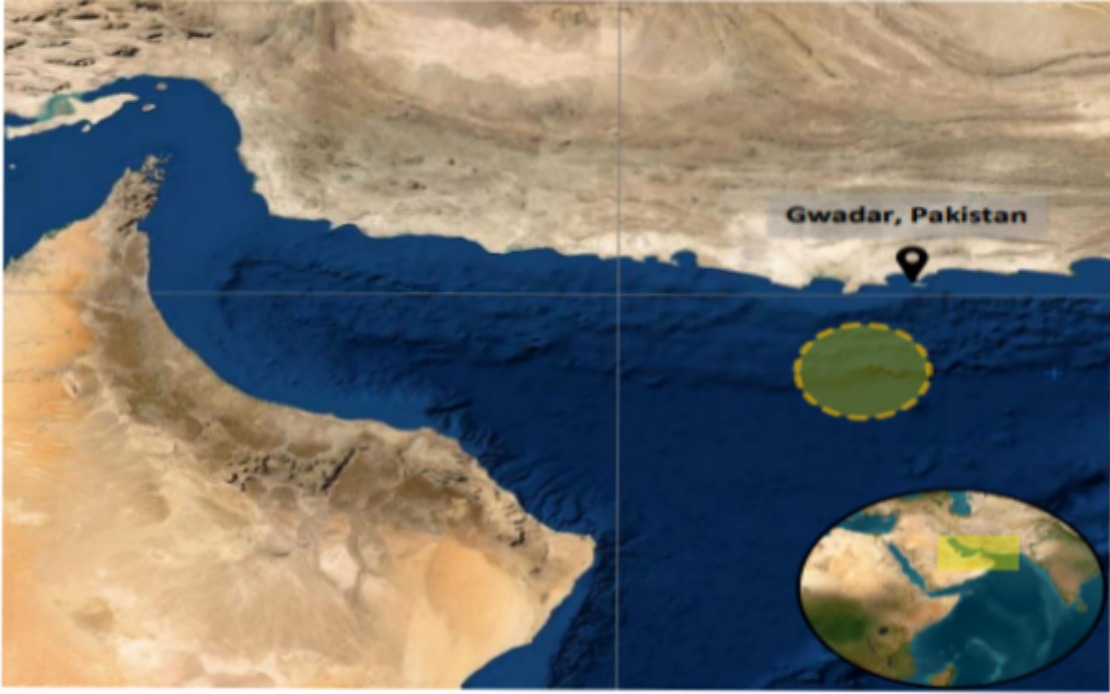
A security incident in the Gulf of Oman has prompted international maritime authorities to issue fresh warnings for shipping traffic traversing one of the world's most strategically critical waterways. The UK Maritime Trade Operations (UKMTO) agency reported the occurrence on Tuesday, involving a tanker and military forces operating near Gwadar on Pakistan's southwestern coast, drawing attention to the deteriorating security environment affecting commercial vessels in the region.
The advisory released by UKMTO urged all vessel operators to exercise heightened caution, instructing them to "consider the latest maritime security information and maintain awareness of the evolving operational environment." This measured but unmistakably serious guidance reflects the agency's assessment that conditions in the area warrant upgraded alert protocols for merchant shipping. The specific wording suggests maritime operators should review real-time intelligence about military activities and potential security threats before transiting the waterway.
Authorities monitoring the region indicated that investigations into the incident remain active, though neither UKMTO nor other official sources have released comprehensive details about what precisely occurred. The advisory notably refrained from identifying the affected tanker, its flag state, cargo type, or operational status. Similarly, no information has been disclosed regarding potential casualties, injuries to crew members, or damage sustained by the vessel or surrounding infrastructure. This lack of transparency is characteristic of maritime incidents involving military actors, where operational security concerns often restrict public disclosure.
The incident occurs within a broader context of escalating tensions centred on the Strait of Hormuz and surrounding waters. Recent months have witnessed a series of military confrontations between the United States and Iran, each incident raising the stakes and heightening the risk profile for neutral commercial shipping. These tensions have profound implications for global energy security, as the Gulf of Oman and Strait of Hormuz represent critical chokepoints through which approximately one-fifth of the world's crude oil transits annually. Any prolonged disruption to shipping lanes could trigger commodity price spikes and economic reverberations felt far beyond the region.
For Southeast Asian nations including Malaysia, developments in the Gulf of Oman warrant close attention. The region's stability directly affects energy supply chains and shipping costs for countries throughout Asia. Malaysia, as a major shipping hub and energy consumer, faces potential economic consequences if maritime insurance premiums spike or if vessel routing becomes more complex and costly. Regional ports may experience increased traffic if ships begin circumnavigating the troubled waters entirely, routing instead through the Indian Ocean and around Africa—a considerably longer and more expensive journey.
The location near Gwadar carries additional strategic significance. Pakistan's coastal development initiatives, particularly the China-Pakistan Economic Corridor infrastructure projects, have positioned Gwadar as an increasingly important commercial and strategic hub. Any security incidents in these waters directly affect Pakistan's regional ambitions and could influence the pace of infrastructure investments. The incident's proximity to this zone suggests that emerging great power competition in the Indian Ocean region intersects with traditional maritime security concerns in complex ways.
The broader military backdrop cannot be understated. The United States has maintained a substantial naval presence in the Persian Gulf and surrounding waters for decades, serving as self-appointed guarantor of maritime security in these vital passages. Iran, possessing legitimate strategic interests in its home waters, has periodically challenged this arrangement through naval exercises, confrontations with commercial vessels, and assertions of its maritime sovereignty. This long-standing dynamic has intensified in recent years as bilateral tensions have escalated over nuclear diplomacy, regional proxy conflicts, and broader geopolitical competition.
Maritime shipping companies operating in these waters face a genuine dilemma. The routes through the Gulf of Oman and Strait of Hormuz offer the most direct passage for trade between Europe, the Middle East, and Asia, making them economically attractive despite heightened risks. However, the frequency of security incidents and the unpredictable nature of military activities mean that insurance costs, vessel routing decisions, and crew safety protocols have all become more complicated. Shipowners must continuously balance commercial efficiency against operational safety considerations that have become increasingly difficult to calculate.
The UKMTO advisory represents an important step in information sharing, even if its contents remain deliberately vague. The agency serves as a critical node in the global maritime security network, aggregating incident reports, threat assessments, and intelligence from multiple sources to advise commercial shipping. Its warnings carry weight within the industry, influencing insurance underwriters, voyage planning decisions, and crew briefings. When UKMTO issues guidance, shipping companies take notice and adjust operations accordingly.
Longer-term implications for regional stability depend on how current tensions evolve. Military escalation in the Gulf of Oman could catalyse structural changes in global shipping patterns, diverting traffic away from traditional Middle Eastern routes. Insurance markets could price in a permanent risk premium for these waters, increasing the cost of international commerce. Alternatively, diplomatic interventions might reduce immediate tensions and restore more predictable operating conditions. For now, the maritime community remains in a holding pattern, alert to ongoing developments and prepared to adjust course—both literally and figuratively—as circumstances demand.

