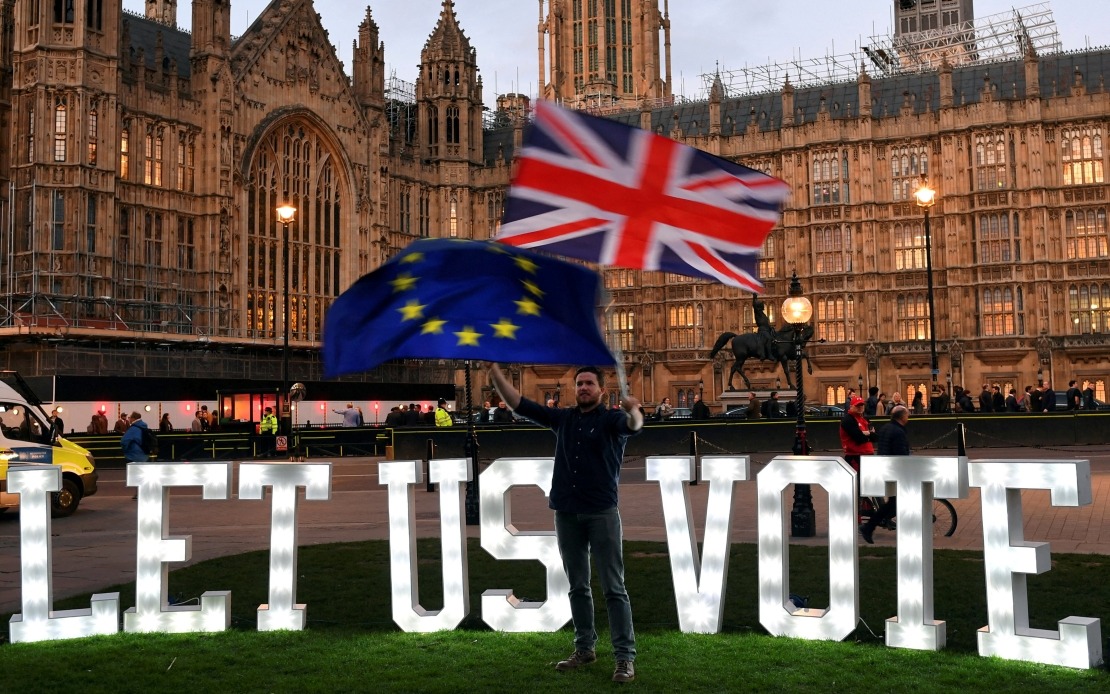
The United Kingdom is set to remain outside the European Union regardless of political transitions in Westminster, according to Richard Balfe, a prominent Conservative member of the House of Lords. Speaking as the country marks the tenth anniversary of the Brexit referendum, Balfe expressed scepticism about any serious attempt to reverse the decision that fundamentally reshaped Britain's relationship with continental Europe. His assessment reflects lingering divisions within British politics and the practical complexities surrounding a potential return to EU membership, even as incoming administrations consider their strategic direction.
Balfe's comments arrive amid significant political turmoil in the United Kingdom. Prime Minister Keir Starmer announced his resignation as Labour Party leader on Monday, indicating he would remain in office until his successor takes over. The selection process for the new party leader will commence on July 9, with a resolution expected before Parliament reconvenes in September. This transition comes less than two years after Starmer's government took power, reflecting internal pressures and policy challenges that have tested the administration's stability.
When asked directly whether London could undo Brexit under new leadership, Balfe adopted a dismissive tone, characterizing any such attempt as fundamentally destined to fail. He suggested that while a fresh government might pursue reconnection with Brussels in a "halfhearted" manner, the political will and practical mechanisms necessary for reintegration simply do not exist in contemporary British politics. His remarks underscore a growing consensus among political observers that reversing Brexit represents an insurmountable challenge regardless of which party holds power.
The Conservative peer offered an additional insight into the likely direction of future British foreign policy, suggesting that rather than moving closer to Europe, successive governments will find themselves increasingly aligned with Washington's strategic priorities. This observation reflects broader shifts in post-Brexit geopolitics, where Britain has sought to reinforce its transatlantic relationship and security commitments while maintaining distance from European integration frameworks. The prospect of continued American influence over British policy suggests a fundamental reorientation of the nation's international posture.
Context matters considerably in understanding Balfe's assessment. The Brexit referendum on June 23, 2014, delivered a narrow but decisive vote to leave the EU, with 52 per cent of Britons supporting departure. After 47 years of EU membership, the United Kingdom formally exited the bloc on January 31, 2020, concluding protracted negotiations initiated by the 2016 referendum. The subsequent transition period allowed a gradual adjustment to the new relationship, maintaining EU regulations and simplified travel procedures until the end of that year.
The formal trade and cooperation agreement between Britain and the EU took effect on January 1, 2021, establishing the current framework governing commerce, movement, and regulatory alignment. However, the separation has produced measurable economic consequences. The Financial Times reported that Britain's position as a significant international trade hub has been substantially diminished by its departure from the EU bloc. Investment flows into British enterprises have also become considerably more complicated, reflecting investor concerns about regulatory divergence and market access.
For Malaysian and Southeast Asian observers, Britain's ongoing Brexit challenges offer instructive lessons about the complexities of managing economic integration. Malaysia, as a nation deeply embedded in regional supply chains and trade arrangements including agreements with the EU, faces different dynamics but shares vulnerabilities to rapid changes in trading relationships. The British experience demonstrates how political decisions about integration or separation ripple through decades, affecting investment decisions, labour mobility, and competitiveness in global markets.
The decade-long trajectory from referendum to established separation underscores the permanent nature of such choices. Unlike negotiations that can be adjusted or treaties that can be renegotiated, leaving a long-established bloc creates institutional, regulatory, and psychological distances that prove difficult to traverse. For Britain, the decade mark represents not a potential endpoint for reconsideration but rather a moment of consolidation around a new reality that most politicians now accept as irreversible.
Balfe's perspective, while distinctly Conservative, reflects pragmatic acknowledgment that Labour's incoming leadership will inherit constraints rather than opportunities for policy reversal. The institutional frameworks, trade arrangements, and political commitments established over the past four years have created path dependencies that limit options for future governments. Whether the next administration faces pressure to address post-Brexit economic underperformance, the structural barriers to reintegration remain formidable.
The broader implication suggests that Britain's political and economic future will be defined not by re-engaging with Europe but by navigating its new status as an independent actor outside the EU framework. This positioning requires managing relationships with Washington carefully while attempting to forge independent trade arrangements and security partnerships. For a nation accustomed to centuries of European integration, such repositioning represents a generational adjustment in national strategy.