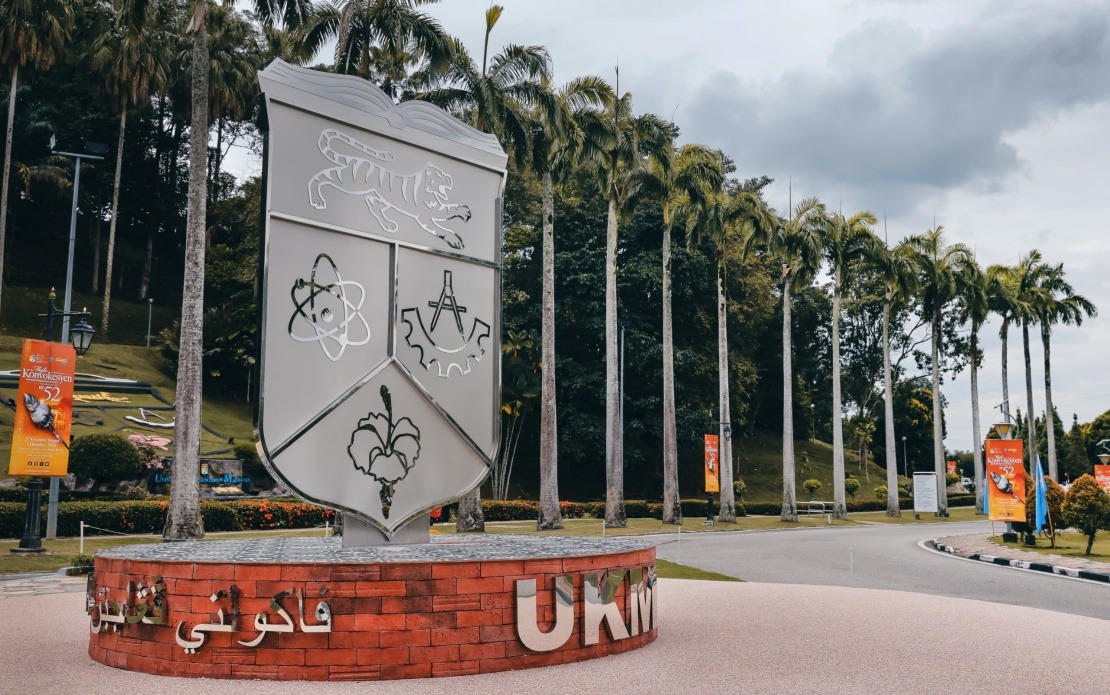
Universiti Kebangsaan Malaysia (UKM) has issued a categorical denial of allegations circulating on social media platforms that portray the institution as overwhelmingly populated by international students relative to Malaysians. The university moved swiftly to counter claims suggesting a 5:1 international-to-local student ratio, describing the assertion as entirely unfounded and potentially damaging to its standing and brand.
According to UKM's official statement released on July 4, the university's most recent enrollment figures paint a markedly different picture from the one being promoted online. Data compiled from the institution's Academic Management Centre and the Centre for Continuing Education and Professional Studies indicate a total student population of 46,151, with international undergraduates numbering just 3,917. This composition reveals that international undergraduates represent approximately eight per cent of UKM's overall student base—a proportion that translates to roughly one international student for every 12 Malaysian peers, considerably distant from the alleged 5:1 scenario.
The emergence of such claims on social media highlights an ongoing challenge facing Malaysia's research-intensive universities in the digital age. Viral misinformation, particularly regarding institutional composition and admissions policies, can rapidly corrode public confidence and shape perception even when contradicted by verifiable data. For a nationally-founded institution like UKM—established with an explicit mandate to serve Malaysian educational aspirations—such allegations strike at the heart of its institutional identity and mission. The timing and spread of such false narratives warrant investigation into their origins and the motivations behind their dissemination.
UKM's response demonstrates the university's commitment to transparency and factual accuracy in public discourse. By releasing detailed enrollment statistics, the institution has provided clear numerical evidence that international student admission remains a carefully managed component of its overall enrollment strategy rather than a dominant force reshaping campus demographics. This measured approach to fact-checking reflects broader efforts across Malaysia's higher education sector to maintain public trust through data-driven communication.
The university has signaled its willingness to pursue legal remedies against parties responsible for spreading defamatory or misleading information about its operations. This stance underscores the seriousness with which UKM views reputational threats and reflects growing institutional recognition that unchallenged falsehoods can accumulate damaging consequences. For other Malaysian universities facing similar online attacks, UKM's proactive response offers a template for rapid fact-checking and public clarification.
Beyond the immediate controversy, UKM's statement reaffirms its founding commitment to advancing education opportunities for Malaysians. The university emphasizes that international student recruitment operates as a complementary strategy rather than a replacement mechanism for domestic student admission. This distinction proves crucial in reassuring Malaysian families and policymakers that internationalization efforts do not compromise access for local applicants—a concern that periodically surfaces in public discourse surrounding higher education policy.
The controlled admission of international students, according to UKM, aligns with strategic direction provided by Malaysia's Ministry of Higher Education. The government has long pursued internationalization of the higher education sector as a means of enhancing institutional prestige, generating alternative revenue streams, and fostering cross-cultural engagement on Malaysian campuses. However, this agenda must be balanced against domestic expectations that universities remain primarily accessible to Malaysian citizens. UKM's position suggests this balance remains achievable within current enrollment frameworks.
The propagation of false enrollment ratios raises broader questions about information hygiene in Malaysian digital spaces and the vulnerability of educational institutions to coordinated misinformation campaigns. Universities increasingly face pressure to establish dedicated channels for combating online falsehoods while simultaneously managing authentic concerns about admissions policies and campus culture. UKM's appeal for the public to rely exclusively on official institutional communication channels reflects this reality.
For Malaysian higher education stakeholders, the incident underscores the importance of regular public communication regarding enrollment demographics and admissions practices. Transparency about international student numbers, sources of recruitment, and impact on domestic student opportunities helps preempt the emergence of such narratives. As Malaysian universities expand their global engagement, maintaining public confidence at home becomes increasingly vital to institutional sustainability and political support.
The controversy also reflects deeper anxieties within Malaysian society regarding globalization, cultural change, and the role of universities as guardians of national identity. Institutions like UKM must navigate tension between becoming genuinely international actors within higher education and maintaining credibility as distinctly Malaysian institutions committed to national development. This balancing act requires consistent messaging and demonstrated commitment to both international excellence and domestic service.

