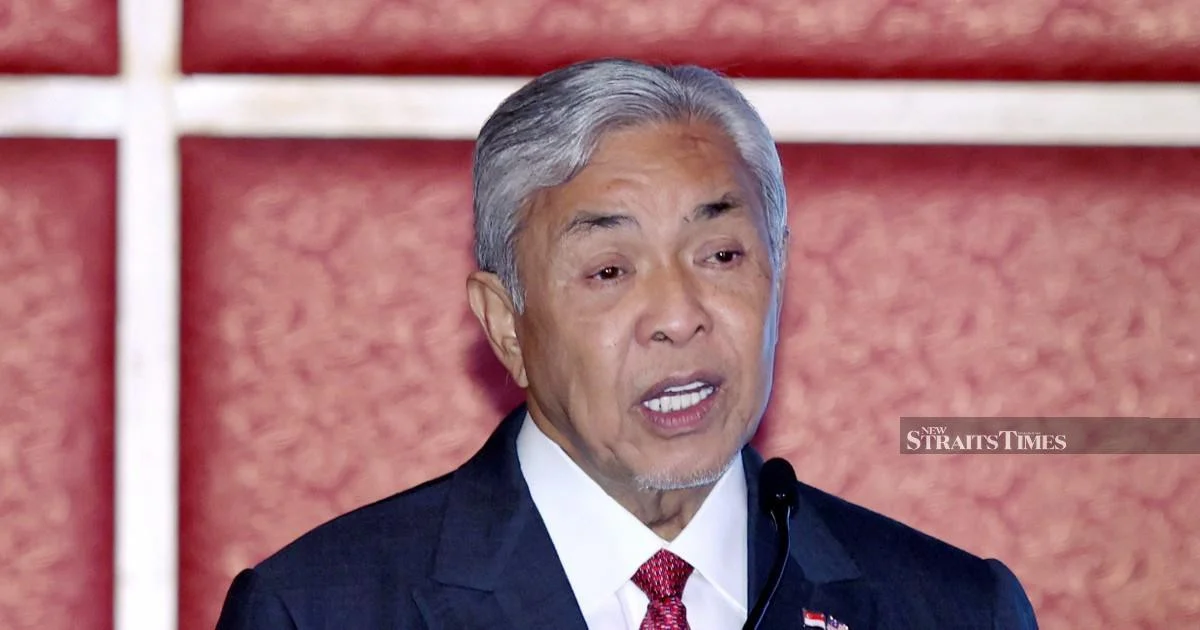
Umno president Datuk Seri Dr Ahmad Zahid Hamidi has categorically denied reports of an electoral agreement between his party and Pas regarding seat allocations for the Negri Sembilan state election. The clarification comes amid mounting speculation about political realignments within Malaysia's ruling coalitions and the extent to which smaller parties may coordinate their efforts in upcoming contests. Zahid's statement signals Umno's firm stance on maintaining independence in its electoral strategy, even as Malaysia's political landscape continues to shift following recent federal and state-level contests.
The denial reflects the ongoing complexity of coalition politics in Malaysia, where alliances between component parties remain fluid and subject to negotiation at both national and state levels. Umno, as the dominant Malay-Muslim party within the Barisan Nasional framework, has historically pursued different electoral strategies across states depending on local political dynamics and power-sharing arrangements with allies. The Negri Sembilan election represents a crucial contest where seat distribution between major coalition partners directly influences the outcome and subsequent government formation.
Pas, the Malaysian Islamic Party, has emerged as a significant political force following the 2022 general election, expanding its parliamentary representation and state-level influence considerably. In several states, Pas has positioned itself as both a potential coalition partner for Barisan Nasional and a formidable opposition force, depending on electoral opportunities and local political configurations. This dual positioning creates ambiguity about the party's intentions and relationships with established coalition partners, prompting frequent negotiations and clarifications from other parties.
Zahid's public disavowal of any seat-sharing agreement suggests that Umno intends to contest the Negri Sembilan election with considerable autonomy, though this does not necessarily preclude cooperation on specific candidates or constituencies at lower levels. The distinction between formal written agreements and informal understandings represents an important nuance in Malaysian political discourse, where public denials of formal pacts often coexist with behind-the-scenes coordination. This statement may therefore be interpreted as Umno protecting its negotiating position while leaving room for tactical cooperation if circumstances warrant.
The timing of Zahid's denial is significant given the electoral cycle and the increasing scrutiny of coalition mechanics by voters and political analysts. Negri Sembilan has historically been a mixed battleground between Barisan Nasional and opposition forces, with seat distribution and candidate quality playing decisive roles in determining the outcome. Any perceived weakness in Umno's electoral machinery or unclear positioning relative to coalition partners could potentially be exploited by opposition coalitions seeking to capture state government control.
For Malaysian voters, particularly in Negri Sembilan, such clarifications carry practical implications regarding which candidates and parties represent their interests in the upcoming contest. Electoral arrangements between coalition partners affect candidate selection, campaign intensity, and the likelihood of three-cornered contests that can splinter support among similarly-aligned voters. Understanding the genuine nature of inter-party relationships therefore becomes essential for voters attempting to predict likely post-election government formations and policy directions.
Pas's strategic positioning across multiple states creates complications for coalition coherence, as the party pursues divergent approaches in different electoral contexts. While Pas has been incorporated into certain state governments, it has simultaneously contested aggressively in other areas where coalition partners hold power, generating tension about party loyalty and coalition discipline. This inconsistency prompts periodic public statements from Barisan Nasional leaders clarifying the scope and nature of agreements with Pas, as occurred with Zahid's recent declaration.
The broader context involves ongoing negotiations between Umno, Barisan Nasional, and various other political forces about Malaysia's electoral future. Recent contests have demonstrated voter volatility and the unpredictability of coalition-based politics, encouraging all major parties to maintain flexibility in their electoral strategies while avoiding formal commitments that might constrain future maneuvering. Zahid's denial reflects this strategic calculation, preserving Umno's options even as the party prepares campaign machinery for what will likely prove a competitive election.
Regional observers note that Negri Sembilan elections carry significance beyond the state itself, serving as bellwethers for broader coalition stability and voter sentiment toward Malay-Muslim party dynamics. The state's demographic composition and urban-rural mix make it representative of broader Malaysian electoral trends, rendering the outcome influential for national coalition positioning. Clarity regarding seat negotiations therefore remains important not merely for Negri Sembilan voters but for political analysts seeking to understand the trajectory of Malaysian coalitional politics more broadly.
For Southeast Asian observers monitoring Malaysian political stability, statements such as Zahid's reflect the complex mechanisms through which multiethnic democracies manage competing interests and coalition formation. The careful public positioning combined with acknowledgment that negotiations may continue behind the scenes exemplifies the sophisticated dance of coalition politics that characterizes Malaysia's electoral system, where formal denials coexist with tactical flexibility and pragmatic cooperation when mutual interests align.

