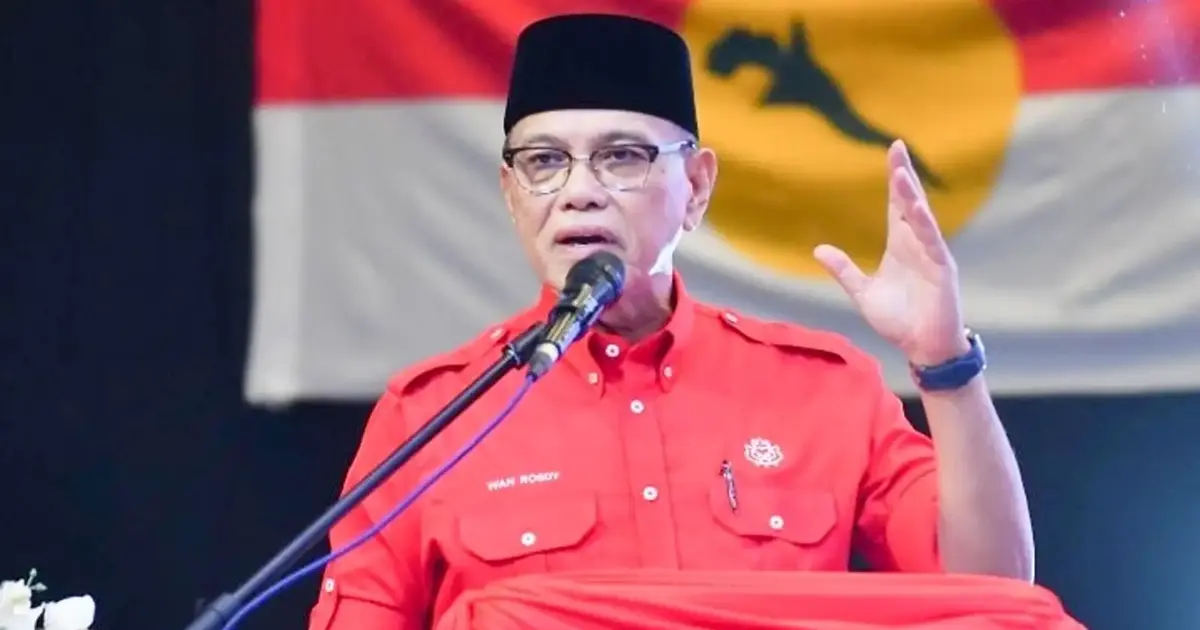
Umno vice-president Wan Rosdy Wan Ismail has clarified that discussions between Barisan Nasional and Perikatan Nasional concerning possible collaboration in the 16th general election remain dormant for now, with attention concentrated instead on consolidating the recently formed government in Negeri Sembilan. The remarks suggest that the two significant political coalitions have maintained a holding pattern as far as national-level electoral arrangements are concerned, despite the shifting political landscape in several Malaysian states over recent months.
The strategic silence on this matter reflects a measured approach by Umno leadership, which appears keen to avoid premature commitments or public declarations that could complicate internal party dynamics or upset existing alliances. With Negeri Sembilan having witnessed a recent change in its political administration, the immediate focus on strengthening governance at state level takes precedence over negotiating intricate national coalition arrangements. This prioritisation highlights how Malaysian politics continues to operate on multiple levels simultaneously, where state-level stability often serves as a foundation for broader national positioning.
The prospect of Barisan Nasional working alongside Perikatan Nasional in future electoral contests carries significant implications for Malaysia's political structure. Such an alignment would reshape the conventional three-way contest between Barisan Nasional, Pakatan Harapan, and Perikatan Nasional that has characterised recent elections. Understanding the timing of when such conversations might commence becomes crucial, as pre-election negotiations typically intensify only months before polling day, when parties have sufficiently tested grassroots sentiment and assessed their respective positions.
Negeri Sembilan's recent political developments have provided an immediate focal point for both coalitions. The state government's composition and ministerial appointments will serve as a testing ground for how effectively parties from different coalitions can govern together at the executive level. Success or friction in this arrangement could significantly influence willingness to pursue closer cooperation at the national level during the general election campaign period.
Wan Rosdy's comments must also be contextualised within Umno's broader strategic considerations. As the dominant component of Barisan Nasional, Umno carefully calibrates its public statements to maintain internal party cohesion whilst simultaneously keeping avenues open for advantageous political partnerships. Premature declarations of electoral cooperation could alienate factions within Umno that harbour reservations about aligning with Perikatan Nasional, a party that emerged partly from defections and has its own internal tensions.
The absence of formal dialogue on general election cooperation does not necessarily indicate fundamental incompatibility between the two coalitions. Rather, it reflects conventional political timing and the understanding that such negotiations typically occur once election parameters become clearer. Malaysian political parties have demonstrated considerable flexibility in forming electoral pacts when circumstances warrant, and the pathway remains theoretically open for Barisan Nasional and Perikatan Nasional to eventually collaborate.
For Malaysian voters and political observers, the continued uncertainty around national coalition arrangements underscores the fluid nature of contemporary Malaysian politics. The era of relatively predictable political blocs has given way to more dynamic and opportunistic configurations. This volatility creates both opportunities for electoral surprises and complications for voters attempting to assess clear policy alternatives before polling day.
The emphasis on strengthening the Negeri Sembilan government serves a dual purpose. Operationally, a stable state administration demonstrates competence and builds confidence for potential future collaboration. Strategically, it allows both Barisan Nasional and Perikatan Nasional to avoid contentious national-level negotiations while their respective leaderships assess shifting ground conditions across other states and test voter sentiment in local contests.
Regional implications extend beyond Negeri Sembilan, as developments in Malaysian coalition politics often influence electoral strategies elsewhere in Southeast Asia. Neighbouring countries observe how Malaysian political players navigate cooperation frameworks, particularly given the region's tendency toward coalition-based governance models. The eventual alignment or continued separation of Barisan Nasional and Perikatan Nasional could set precedents for inter-party arrangements in other democracies facing similar fragmentation dynamics.
Wan Rosdy's clarification essentially signals that whilst both coalitions maintain pragmatic openness to future cooperation, neither has deemed the moment opportune for intensive negotiations. This studied patience reflects political maturity and an understanding that premature commitments often collapse when circumstances shift. As Malaysia edges closer to the 16th general election timeframe, such clarifications will likely become more frequent as coalition partners gradually transition from state-level consolidation toward national electoral positioning.

