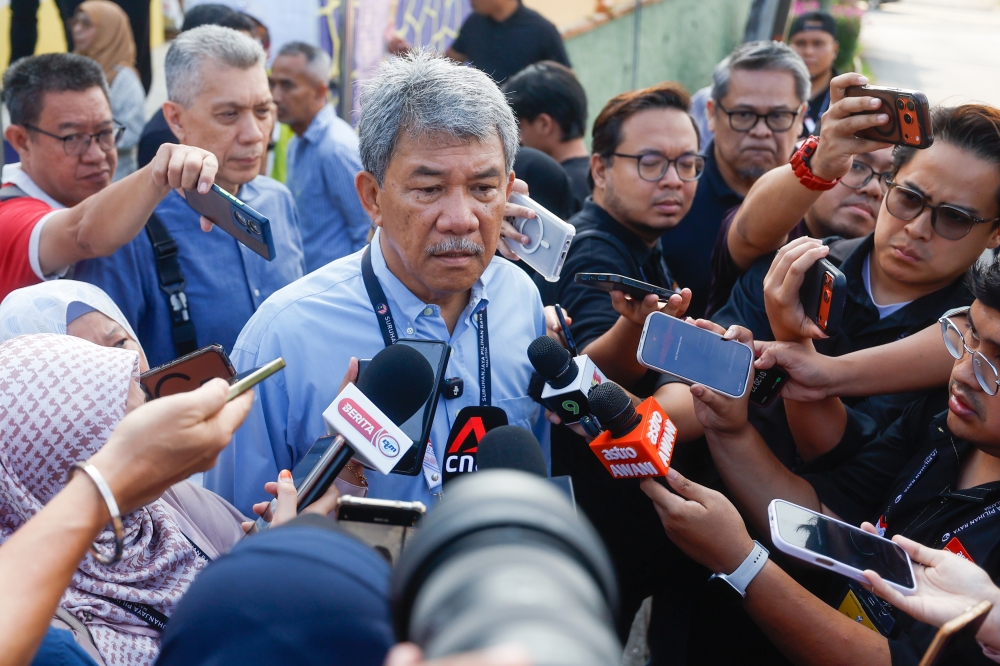
Negeri Sembilan's latest state election has produced an unusual statistical quirk that underscores the Barisan Nasional coalition's ability to win support across widely disparate age groups. The UMNO party, which dominates the coalition in the state, fielded candidates ranging from a 35-year-old woman at one end of the spectrum to an octogenarian at the other, with both securing decisive victories at the ballot box. This span of generational representation reflects both the party's established presence in the state and its efforts to recruit younger candidates capable of appealing to diverse voter demographics.
Siti Nur Umaira Hasim, the BN candidate who emerged as the youngest winning candidate, brought a relatively fresh face to state politics while carrying the considerable institutional backing of UMNO's machinery. At 35 years old, she represents the type of mid-career professional that the party has increasingly sought to position in electoral contests, aiming to rebut perceptions that Barisan Nasional relies predominantly on aging political figures. Her victory suggests that voters in her constituency responded positively to this strategy, or at minimum, that UMNO's organisational strength proved sufficient to carry her across the finish line regardless of her relative inexperience in elected office.
The contrast with her party colleague at the opposite end of the age spectrum creates a compelling narrative about political longevity and institutional memory. The octogenarian victor, whose experience spans decades of Negeri Sembilan politics, embodies the continuity and established networks that make Barisan Nasional formidable in certain constituencies. Such candidates often command loyalty rooted in long-standing community relationships, personal favours dispensed over decades, and deeply entrenched patronage networks that younger competitors struggle to replicate. Their electoral success frequently depends less on policy platforms than on accumulated social capital and the assumption that they deliver benefits to their communities through institutional channels.
This generational duality within UMNO's Negeri Sembilan lineup raises questions about the party's succession planning and its strategic approach to electoral competition. The recruitment of younger candidates could signal confidence that UMNO is preparing for a transition to the next generation of leaders, or it might reflect pragmatic accommodation to voter sentiment in certain areas where age becomes a liability. Simultaneously, retaining octogenarian candidates indicates that the party continues to value the institutional legitimacy and voter trust that come with political seniority, even as demographic shifts alter the electorate's composition.
Negeri Sembilan has historically been a Barisan Nasional stronghold, though this dominance has faced periodic challenges from opposition coalitions, particularly in recent electoral cycles. The state's political dynamics reflect broader Malaysian trends, where rural and semi-rural constituencies often prove more receptive to the coalition's traditional messaging around stability, development, and ethnic-communal representation, while urban areas have drifted toward opposition parties. The juxtaposition of a 35-year-old and an 80-plus candidate both winning in this context suggests that BN's victories transcended simple demographic patterns and reflected competitive strength across multiple terrains.
For Malaysian voters assessing UMNO's trajectory, these election results offer mixed signals. The party's ability to win with both youth and age suggests organisational vitality, yet it also raises concerns about whether meaningful policy innovation or leadership renewal is actually occurring beneath the surface. A party that succeeds with candidates separated by nearly fifty years in age may simply be relying on structural advantages rather than genuine electoral appeal based on vision or competence. The fact that both candidates ran under the same banner with ostensibly the same platform raises questions about how effectively UMNO is differentiating its appeal to younger versus older voters.
The regional implications extend beyond Negeri Sembilan's borders. Barisan Nasional's performance in state elections carries weight across Southeast Asia's political landscape, where Malaysia remains a significant economy and established democracy. UMNO's electoral resilience, despite various corruption scandals and leadership controversies, demonstrates that large political machines with deep institutional roots can maintain power even when facing significant headwinds. This pattern differs sharply from opposition coalition instability, which has been marked by leadership disputes and organisational fragmentation, making it difficult to mount sustained challenges to the government.
For younger Malaysian voters in particular, the emergence of politicians like Siti Nur Umaira Hasim offers at least symbolic representation within traditional power structures, even if it remains unclear whether such candidates genuinely influence policy direction or serve primarily as window dressing for an unchanging political establishment. The party's parallel reliance on octogenarians suggests that real power and decision-making may remain concentrated among senior figures regardless of who wins elections. This separation between electoral visibility and actual influence constitutes a persistent tension within UMNO and shapes how voters across age cohorts assess their stakes in electoral participation.
The immediate political challenge facing Negeri Sembilan's newly elected representatives involves translating their diverse backgrounds into coherent governance. Both the youngest and oldest winners now sit in the state assembly, their constituencies presumably expecting delivery of promised development projects, employment opportunities, or other tangible benefits. Whether a 35-year-old professional and an octogenarian mentor can work together effectively, or whether generational tensions might emerge within the government, remains to be seen. Such internal dynamics, played out in a single state, often foreshadow broader patterns within national politics.
Looking forward, these election results suggest that UMNO's strategy of fielding candidates across the entire age spectrum will likely persist. The party appears to have concluded that this approach maximises its competitive reach without requiring fundamental policy repositioning or genuine organisational reform. For voters seeking substantive change in Malaysian politics, whether from the ruling coalition or its opponents, the election of both a 35-year-old and an octogenarian under the same BN banner may ultimately symbolise continuity rather than transformation, regardless of the candidates' personal qualities or intentions.

