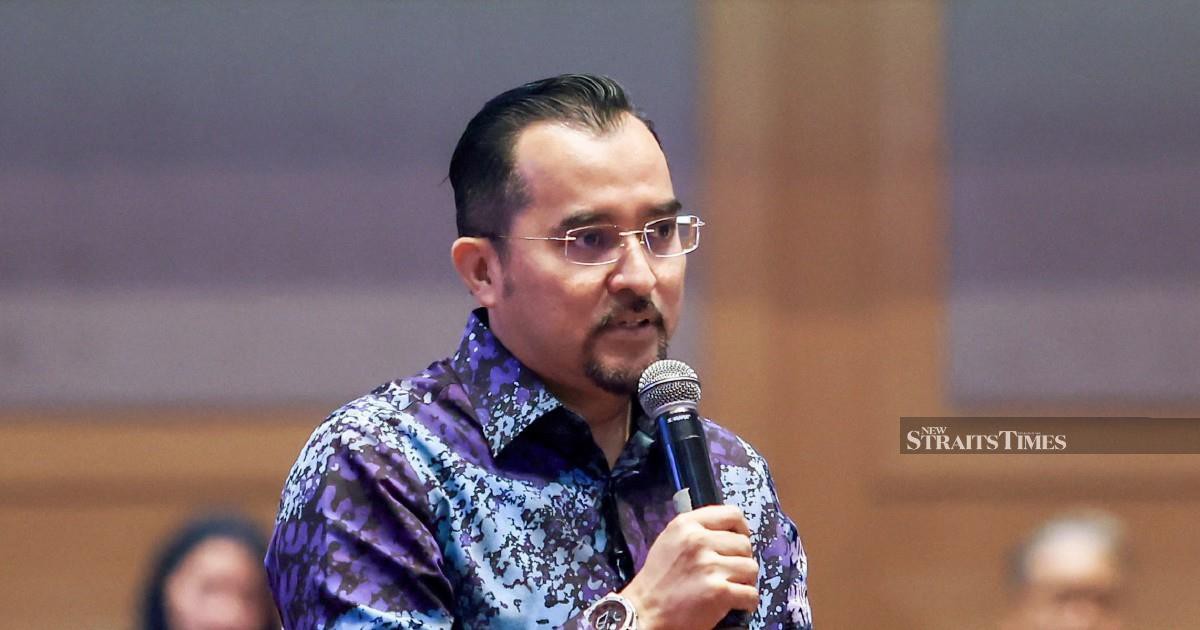
Umno's top leadership moved swiftly on Monday to rebuff mounting allegations that the party has engineered a political charade designed to shield individuals implicated in the Lembaga Tabung Haji financial crisis. Datuk Dr Asyraf Wajdi Dusuki, the party's secretary-general, directly confronted the accusation, issuing a firm denial that Umno has been complicit in any effort to obstruct accountability for misconduct at the pilgrimage fund.
The Tabung Haji scandal has emerged as one of Malaysia's most significant financial controversies in recent years, prompting intense scrutiny of how resources entrusted to the institution have been managed. The organisation, which administers hajj savings for Malaysian Muslims, has faced serious questions regarding the stewardship of billions of ringgit and decisions that have come under fire from investigators, lawmakers, and public observers. As details of the financial irregularities have surfaced, pressure has intensified on political leaders to demonstrate genuine commitment to uncovering the full extent of any wrongdoing and holding accountable those who bear responsibility.
Umno's position in this unfolding crisis carries particular weight given the party's long dominance of Malaysian governance and its traditional role in advancing Malay-Muslim interests through institutions like Tabung Haji. The party's historical stewardship of such bodies means its credibility on matters of institutional accountability becomes central to public confidence. Critics have suggested that Umno's handling of the scandal, coupled with the party's control over relevant government apparatus, creates perceptions of a protective barrier around potential wrongdoers with political connections.
The accusation of staging a charade touches on deeper concerns about Malaysian institutional governance and whether political affiliations can trump the rule of law. When leading figures within the ruling coalition face questions about financial misconduct, the public naturally scrutinises whether investigation processes operate with genuine independence or whether they become instruments of political management rather than justice. Such perceptions, whether justified or not, can significantly undermine public trust in both financial institutions and the investigative mechanisms designed to protect them.
Datuk Dr Asyraf Wajdi Dusuki's rebuttal represents Umno's latest attempt to position itself as committed to transparency and accountability rather than as a party engaged in protecting its allies. His statement underscores the party's assertion that it has not intervened to obstruct legitimate investigations or shield individuals from appropriate legal consequences. The denial appears calculated to address growing public scepticism while simultaneously maintaining party solidarity among members concerned about the implications for their peers.
For Malaysian investors and pilgrims who entrust their savings to Tabung Haji, the integrity of investigations into the scandal becomes a matter of profound personal consequence. Thousands of ordinary Malaysians have channelled significant portions of their accumulated wealth through the institution, viewing it as both a religiously appropriate mechanism for fulfilling hajj obligations and a secure financial vehicle. The discovery of financial irregularities naturally provokes anxiety about the safety of these funds and whether those managing them faced meaningful oversight and accountability.
The broader Southeast Asian context adds another dimension to this crisis. Malaysia's reputation for institutional governance influences investor confidence across the region and affects perceptions of the country's competence in managing significant financial entities. When major institutions encounter serious financial problems, the ability of the political and legal system to respond credibly through transparent investigation becomes essential to maintaining regional confidence in Malaysian institutions and markets.
Umno's denial must be weighed against the pattern of allegations and the legitimate questions raised by those seeking answers. The party's insistence that no cover-up exists will require substantiation through demonstrable action rather than mere assertion. This could involve full cooperation with investigators, transparency regarding communications between party officials and those under scrutiny, and acceptance of investigative findings regardless of political implications for party members.
The statement also reflects the delicate political balancing act Umno must perform. The party must simultaneously distance itself from potential wrongdoing while maintaining cohesion among members and avoiding perceptions of betraying allies. This tension between institutional accountability and internal loyalty often creates exactly the kind of public scepticism that Datuk Dr Asyraf Wajdi Dusuki seeks to dispel.
Moving forward, Umno's credibility on this matter will depend less on rhetorical denials and more on concrete evidence of commitment to accountability. This includes ensuring that any individuals found culpable face consequences proportionate to their actions, that investigations proceed without political interference, and that findings receive full public disclosure. Whether the party can meet these expectations will significantly influence perceptions of Malaysian governance and institutional integrity.

