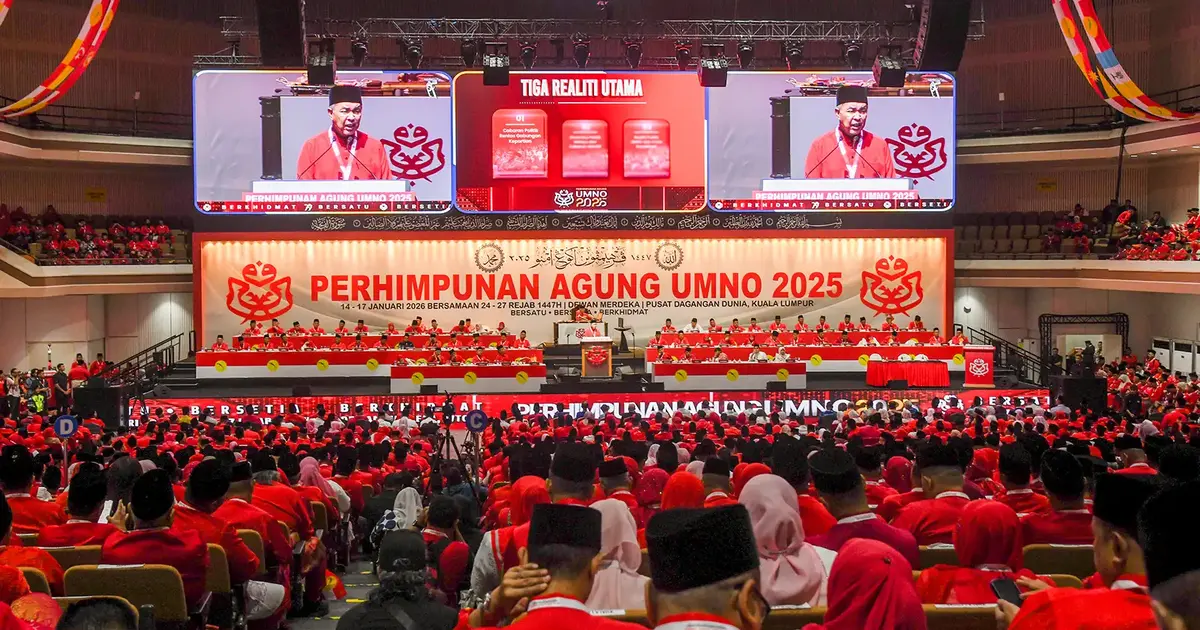
Friction has surfaced within Umno's grassroots leadership following the distribution of parliamentary seats ahead of national elections, with division-level party officials voicing significant unhappiness over the arrangement that saw Perikatan Nasional's component parties receive 11 contested seats. The allocation has triggered visible dissatisfaction among rank-and-file party structures, creating tension within Malaysia's dominant Malay-Muslim political organisation even as coalition negotiations continue to shape the electoral landscape.
The most contentious element of the seat distribution centres on Wawasan, a newer political player, which was granted four parliamentary constituencies despite this marking the organisation's inaugural electoral contest. Division leaders have expressed particular frustration over this arrangement, questioning why an untested political entity should receive such a substantial quota of winnable seats when established Umno grassroots have spent decades building electoral machinery and voter loyalty in their respective areas.
This grievance reflects a broader pattern of tension that emerges whenever larger coalitions negotiate seat-sharing arrangements. From the perspective of Umno's division leadership, the allocation represents a departure from historical norms where electoral positioning correlates directly with track record and organisational capacity. These grassroots leaders, who operate as the critical interface between party machinery and voters at the constituency level, view the decision as potentially disadvantageous to Umno's ability to consolidate support in competitive electoral zones.
The timing of this discontent carries significance for coalition stability. Umno's relationship with Perikatan Nasional has undergone considerable evolution, particularly following political realignments that reshaped Malaysia's electoral coalitions in recent years. The internal grumbling among division leaders suggests that managing such partnerships requires constant calibration, with each party's grassroots maintaining expectations about the returns on coalition membership.
Wawasan's prominence in negotiations likely reflects strategic calculations at the upper echelons of both Umno and Perikatan Nasional leadership. The newer party may represent demographic targets or geographic expansion possibilities that coalition strategists deem essential for overall electoral competitiveness. However, this reasoning rarely satisfies division leaders who compete directly for nominations in their constituencies and bear responsibility for campaign mobilisation.
For Malaysian voters, these internal coalition tensions hold practical implications. Grassroots unhappiness can translate into inconsistent campaign effort, reduced volunteer enthusiasm, or insufficient ground mobilisation in allocated constituencies. The energy and resources division leaders invest in an electoral contest often determines whether a party maximises its vote share in marginal seats, ultimately affecting whether coalition governments command comfortable legislative majorities.
The discord also illuminates the complex dynamics of multi-party coalitions in Malaysian politics. Unlike single-party systems where internal disputes remain largely confidential, coalitions necessarily negotiate allocations that expose each partner's relative weight and strategic importance. When these negotiations yield outcomes that grassroots leaders perceive as unfair, the resulting friction can undermine the unity essential for effective campaign execution.
Umno's leadership faces the challenge of reconciling these grassroots grievances with coalition commitments already made to Perikatan Nasional partners. Division leaders expecting particular seats before allocation decisions were finalised now find themselves disappointed, creating potential morale difficulties that ripple through campaign preparations across multiple constituencies.
The Wawasan allocation specifically raises questions about what criteria coalition leaders employed in seat distribution. If considerations centred primarily on demographic reach or strategic expansion beyond traditional support bases, division leaders might view this as privileging abstract coalition objectives over rewarding proven organisational capacity. This perception gap between coalition-level strategists and grassroots operators represents a recurring challenge in Malaysian coalition politics.
Looking forward, how Umno's leadership manages these tensions will influence both immediate electoral prospects and longer-term coalition cohesion. Party leaders must communicate convincingly to division officials that seat allocations serve broader strategic purposes justifying short-term disappointments. Without such persuasive messaging, division leaders dissatisfied with their allocation may reduce campaign intensity or harbour resentment that influences post-election coalition negotiations.
The episode also underscores broader questions about constituency autonomy within Malaysian political parties. Umno's federated structure theoretically vests considerable authority in division-level structures, yet coalition negotiations increasingly determine seat allocations at levels above division decision-making. This tension between grassroots autonomy and coalition-level strategic imperatives continues reshaping internal party dynamics across Malaysia's political spectrum.
For observers monitoring Umno's internal health and coalition stability, these reported grievances merit close attention. Grassroots morale directly correlates with electoral performance, and division leaders operating with less enthusiasm for allocated seats may struggle to deliver the voter turnout margins essential for coalition success in tightly contested constituencies. The coming weeks will reveal whether Umno's leadership successfully addresses these concerns or whether internal friction persists into the campaign period itself.

