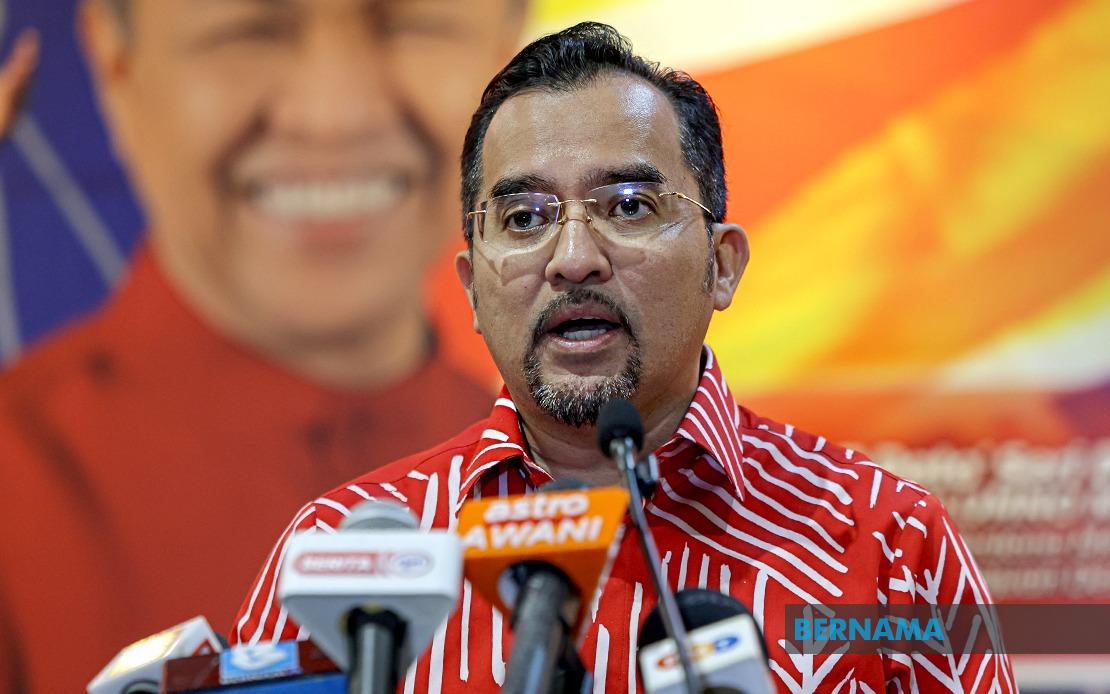
Malaysia's dominant political party UMNO has taken a significant strategic step by granting its state-level leadership autonomous authority to pursue political alliances and cooperation frameworks with other parties in preparation for the next general election. The decision emerged from a Supreme Council meeting convened late on Aug 28 in Kuala Lumpur, reflecting a shift toward empowering regional branches in Malaysia's complex coalition politics.
UMNO Secretary-General Datuk Dr Asyraf Wajdi Dusuki outlined the deliberations following the gathering, which was presided over by party president Datuk Seri Dr Ahmad Zahid Hamidi and included deputy president Datuk Seri Mohamad Hasan alongside other senior council members. The authorization represents a calculated move to enable nimble decision-making at the ground level, where state-specific political dynamics often differ substantially from national considerations. This decentralization acknowledges that electoral arithmetic and coalition viability vary across Malaysia's different territories, from Peninsular states to Sabah and Sarawak.
Crucially, Asyraf Wajdi emphasized that any such negotiations must be underpinned by principles of mutual sincerity and confidence rather than coercive tactics. The phrasing suggests awareness of tensions within Malaysian politics, where pressure and ultimatums have occasionally characterized coalition discussions. By explicitly rejecting threatening approaches, UMNO appears to be signalling a commitment to consensual partnership arrangements that could potentially prove more durable and functional than alliances forged under duress.
The timing of this authorization carries particular relevance in Southeast Asia's political context. Malaysia has experienced significant electoral volatility over recent years, with voter preferences shifting dramatically between general elections. State-level cooperation agreements can significantly influence both parliamentary composition and state government stability. By enabling state leaders to move swiftly on coalition opportunities, UMNO positions itself to respond rapidly to emerging political opportunities or challenges in specific regions without awaiting central party approval.
Parallel to these negotiation permissions, UMNO's leadership extended a formal invitation to PAS—Malaysia's largest Islamic political party and a significant coalition partner historically—to participate in UMNO's 2026 General Assembly scheduled for September 9 to 12. This gesture carries symbolic weight in Malaysian politics, where PAS-UMNO cooperation has repeatedly shaped electoral outcomes and government formations. The invitation suggests UMNO values maintaining strong working relationships with its existing allies even as it explores broader coalition possibilities.
The party also announced an extensive programme aligned with the assembly schedule, including the 2026 Malay Education Convention, the Malaysian Islamic Scholars Convention, and Laman Wanita Kreatif, all positioned for September 8. These parallel events reflect UMNO's traditional emphasis on Malay-Muslim constituencies and civil society engagement. The conventions provide platforms for policy discussion and grassroots mobilization, demonstrating how UMNO integrates party business with broader community programming.
Significantly, the Supreme Council meeting also reaffirmed UMNO's stated commitment to the rule of law and due legal process. Asyraf Wajdi articulated the party position that individuals should not face presumption of guilt without formal charges, trial, and court conviction. This declaration assumes importance given Malaysia's political history, where legal proceedings against prominent political figures have occasionally generated controversy regarding political motivation. By publicly emphasizing adherence to judicial procedures, UMNO appears to be establishing a principle that should theoretically apply across party membership, including senior leaders.
The party's reiterated stance that it will not defend wrongdoing, misconduct, or deviations from proper conduct—regardless of whether perpetrators are members or leaders—represents a normative position that theoretically constrains party protection of accused individuals. However, implementation often diverges from such formal declarations in Malaysian politics, where party solidarity can sometimes override principled positions. The explicit articulation nonetheless creates a public benchmark against which UMNO's actual conduct can be measured.
For Malaysian voters and regional observers, this development illuminates the shifting dynamics within UMNO as it navigates multiple challenges simultaneously. The party must balance maintaining coalition relationships with PAS and other existing partners while preserving flexibility for electoral positioning in different states. Simultaneously, UMNO is managing internal dynamics related to leadership, legal issues affecting senior figures, and broader public perception in an increasingly competitive political marketplace.
The authorization to state divisions reflects pragmatic recognition that Malaysia's electoral landscape defies one-size-fits-all strategies. Peninsular states dominated by Malay-Muslim voters present different coalition dynamics than Sabah and Sarawak, where indigenous and non-Muslim considerations carry substantial weight. State leaders possess granular knowledge of local political calculations that may be difficult to assess from national party headquarters. Empowering these divisions to negotiate could theoretically produce more contextually appropriate alliances.
However, this decentralization also carries potential risks. Divergent state-level agreements could create complications if state coalition arrangements conflict with or undermine national party strategies. Managing multiple simultaneous negotiations across different state divisions requires robust communication protocols and strategic coherence. Missteps by any state leadership could generate broader party complications or electoral setbacks in regions where UMNO's grip has weakened in recent years.
Looking ahead, these decisions position UMNO for an election cycle characterized by coalition fluidity and intense negotiations across Malaysia's 13 states and federal territories. The party's approach suggests confidence in its organizational capacity to manage distributed negotiation processes while maintaining overall strategic direction. Whether this devolved authority ultimately strengthens UMNO's electoral position or generates complications remains to be seen as state divisions begin exploring partnership possibilities ahead of the next general election.

