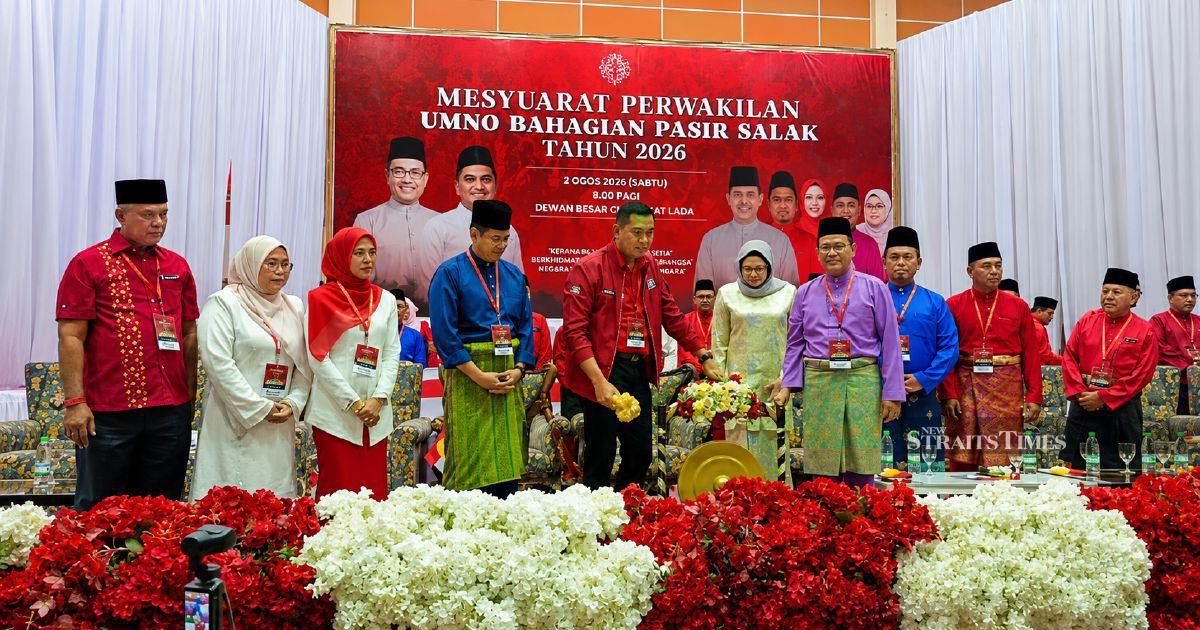
The relationship between Barisan Nasional and Perikatan Nasional continues to generate tension at the grassroots level of Umno, with the party's youth wing now urging leadership to acknowledge the reservations being voiced by divisional representatives over seat-sharing arrangements that could affect future electoral contests. Speaking in Pasir Salak, Umno Youth chief Datuk Dr Muhamad Akmal Saleh signalled that the concerns being raised by division leaders deserve serious consideration and should not be dismissed as peripheral to the larger political understanding being negotiated at the apex of both coalitions.
The intervention represents a notable acknowledgment that despite the high-level coordination between Umno and PN, the mechanics of translating that agreement into practical seat allocations remain contentious within the traditional opposition party. Division leaders, who command significant influence over candidate selection and grassroots mobilization in their respective constituencies, have expressed apprehension about how the political understanding might reshape electoral mathematics in their territories. These leaders occupy a critical intermediary position between party headquarters and rank-and-file members, making their support essential for the successful implementation of any seat-sharing framework.
The political understanding between BN and PN, which encompasses Umno's largest rival in terms of Islamic-oriented Malay political representation, represents one of the most complex realignments in Malaysia's contemporary political landscape. For Umno, the arrangement carries both strategic benefits and organizational risks. On one hand, it provides a pathway to challenge Pakatan Harapan's dominance in certain territories and demonstrates the flexibility of Malaysia's fluid coalition politics. On the other hand, seat allocations invariably create winners and losers within the party structure, as sitting representatives might find themselves sidelined or expected to contest less winnable seats to accommodate PN partners.
The division leaders' hesitation reflects practical concerns grounded in electoral reality. In constituencies where Umno has maintained traditional strongholds or achieved significant recent gains, ceding seats to PN partners represents a tangible loss of representation and political patronage resources. These grassroots leaders understand that seat allocations determine not merely which party label appears on ballots, but fundamentally affect the distribution of government positions, development funds, and community influence that flow to victorious candidates. Their resistance is therefore rooted in the material consequences that such arrangements impose on their political constituencies.
Akmal's public statement that these division-level perspectives warrant respect carries significance beyond its surface reading. Coming from the head of Umno's youth wing—traditionally a more ideologically flexible segment of the party—the position suggests that even younger party members recognize the legitimacy of grassroots concerns. The youth wing's support for recognizing divisional voices could provide political cover for higher-level party leadership to negotiate more carefully, ensuring that seat allocations do not generate sufficient internal friction to undermine party cohesion during election campaigning.
The timing of this intervention is noteworthy given the ongoing discussions surrounding electoral timelines. While the next federal election is not scheduled until 2025, both BN and PN appear to be preparing groundwork for potential contests that might emerge from state-level developments or shifts in coalition stability. State elections scheduled for the coming years in various constituencies mean that seat allocation frameworks could be tested sooner than federal electoral timelines might suggest. Division leaders' views on how such arrangements should work therefore feed directly into immediate political calculations rather than abstract future scenarios.
For Malaysian political observers, Akmal's remarks also illuminate the perpetual tension between top-down coalition coordination and bottom-up party dynamics in the country's political system. Malaysia's federal structure means that seat allocations at different levels—federal Parliament, state assemblies, and even local positions—must be negotiated separately, creating multiple pressure points where division leaders can exercise influence or obstruction. The principle that Akmal articulates—that grassroots voices matter—finds resonance across multiple Malaysian political parties facing similar internal coordination challenges.
The BN-PN understanding itself emerged from electoral calculations following Malaysia's fragmented 2022 general election, where no coalition achieved clear dominance. For Umno, the arrangement represents a pivot from years of viewing PN, particularly Parti Islam SeMalaysia, as a direct electoral competitor. The shift requires not merely diplomatic realignment at leadership levels but cultural adjustment within the broader party structure. Division leaders who have spent years mobilizing members against PN candidates naturally harbor skepticism about suddenly cooperating with former rivals, making their accommodation essential for successful coalition implementation.
The question of how Umno's senior leadership will respond to Akmal's framing remains open. Respecting division leaders' views could mean allowing constituencies greater autonomy in determining how PN cooperation is implemented locally, potentially resulting in a patchwork arrangement where some areas feature cooperative frameworks while others maintain more competitive positioning. Alternatively, leadership might interpret the call for respect as requiring enhanced consultation and communication rather than fundamental changes to previously agreed arrangements. The distinction between acknowledging grassroots sentiment and actually accommodating it through policy changes will likely define the trajectory of BN-PN coordination in coming months.
For Southeast Asian watchers of Malaysian politics, the episode demonstrates how coalition arrangements in plural democracies must navigate not merely formal institutional processes but also the expectations and interests of party members whose support is essential for electoral success. Umno's experience in managing the PN relationship while maintaining internal cohesion offers lessons applicable across the region's various coalition-based political systems. The principle Akmal has articulated—that party grassroots voices deserve respect in major strategic decisions—touches on fundamental questions about democratic legitimacy and party governance that extend well beyond the immediate mechanics of seat allocation.

