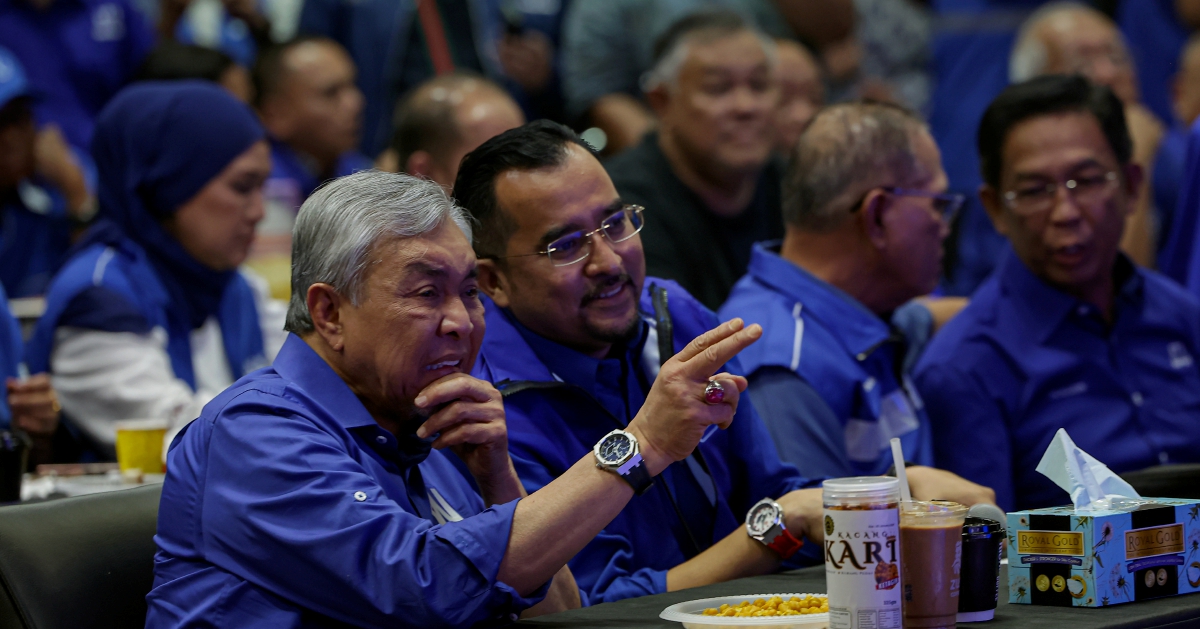
Umno secretary-general Datuk Dr Asyraf Wajdi Dusuki has issued a pointed reminder to party members and supporters that Barisan Nasional's recent victory in the Negri Sembilan state election demands measured responses rather than triumphalism, cautioning against the organisational patterns that have previously undermined the coalition's standing among voters.
The warning follows the dominant performance by Barisan Nasional in the Negri Sembilan polls, a result that reinforces the coalition's resurgence in several electoral contests across Malaysia. Rather than allowing party cadres to interpret the outcome as validation for relaxed governance standards, Asyraf has framed the election result as a fresh social contract requiring deliberate accountability and sustained engagement with constituents. His intervention reflects awareness within Umno's leadership that electoral mandates prove temporary when governments lose touch with underlying public expectations.
Historically, Umno has confronted significant electoral setbacks attributed to perceptions of institutional arrogance and governance remoteness. The 2018 general election, which resulted in the coalition's loss of federal power after decades of dominance, underscored how accumulated grievances regarding administrative conduct and perceived entitlement can translate into decisive voter rejection. Asyraf's current counsel appears designed to ensure that the party does not miscalculate the implications of recent electoral gains by assuming that voter sentiment has shifted from principled demands for integrity toward tacit acceptance of previous patterns.
The Negri Sembilan outcome contributes to a broader pattern of Barisan Nasional rebuilding momentum in state-level contests, yet Asyraf emphasises that such victories carry implicit obligations rather than privileges. His language around humility and mandate preservation suggests strategic concern that premature confidence could trigger friction within Barisan's coalition partners or generate backlash among swing voters who remain attentive to governance quality and administrative transparency. The message targets not only grassroots party members inclined toward celebratory excess but also mid-ranking officials whose conduct significantly influences voter perception of government accessibility and fairness.
For Malaysian voters broadly, Asyraf's admonition carries implications regarding the trajectory of political accountability in the country. A party leadership willing to caution against hubris signals recognition that electoral victories represent conditional endorsements rather than permanent entitlements. This stance contrasts sharply with governance patterns that preceded 2018, when institutional complacency and perceived disconnection from ordinary citizens' welfare concerns accumulated into systemic political alienation. Whether Umno's organisational culture responds substantively to this leadership guidance will largely determine whether recent electoral improvements prove durable or temporary.
The timing of Asyraf's intervention reflects calculated attention to party discipline and message control during a period when Barisan Nasional is consolidating recovery following years of uncertainty. Within Umno's internal structures, contradictory signals about governance standards create vulnerabilities that opposition parties can exploit. By establishing early normative frameworks around restraint and accountability, Asyraf attempts to preempt the emergence of problematic behavioural patterns among party members who might otherwise interpret electoral success as permission for institutional backsliding. This preventive approach acknowledges that electoral cycles amplify the visibility of governance conduct and that early trajectory-setting proves more effective than attempting corrective measures after public perception has solidified.
Southeast Asia's broader political environment provides additional context for Asyraf's caution. Regional democracies have experienced cycles in which parties regain electoral viability through pledges of institutional reform, only to revert to previous conduct patterns once electoral pressures diminish. Vietnam's neighbouring transitions and Thailand's repeated constitutional cycles illustrate how governance expectations, once articulated, create durable voter vigilance. Malaysia's electorate, having experienced significant political transition between 2018 and the subsequent restoration of coalition influence, demonstrates sophisticated capacity to distinguish between genuine institutional change and superficial messaging. Asyraf's insistence on humility thus addresses a demonstrated voter characteristic rather than issuing advisory sentiment without political consequence.
For opposition parties, Asyraf's statement simultaneously presents both challenge and opportunity. The acknowledgement of past mistakes and the emphasis on avoiding repetition might constrain opposition narratives built around accusations of institutional arrogance. Simultaneously, the message tacitly validates those criticisms by confirming that prior patterns did constitute problems warranting explicit leadership correction. Opposition entities will face pressure to articulate governance standards that differentiate their platforms from Barisan's reformed approach rather than relying exclusively on historical accountability narratives.
The practical implications of Asyraf's caution extend to administrative conduct at state and local levels, where Umno's representatives exercise direct authority affecting constituent welfare. Elected officials and bureaucratic appointees aligned with Umno will receive implicit expectations that recent victories do not justify procedural shortcuts, preferential treatment for party-aligned individuals, or governance conduct perceived as dismissive toward public input. This pressure cascades through organisational hierarchies as enforcement mechanisms rewarding conduct consistent with humility-centred messaging and establishing consequences for administrative conduct that contradicts stated principles.
Barisan Nasional's coalition structure further complicates the equilibrium that Asyraf's statement seeks to establish. Umno's partners in the coalition—including MCA, MIC, and Sabah-Sarawak aligned parties—will monitor whether Umno's recent electoral gains translate into disproportionate influence over coalition governance decisions. Asyraf's emphasis on humility and mandate preservation may function partly as reassurance to coalition partners that Umno recognises constraints on its authority and remains committed to collaborative governance frameworks rather than zero-sum resource competition.
Moving forward, the credibility of Asyraf's warning depends substantially on observable implementation across party structures and government institutions. Malaysian voters and Southeast Asian observers will assess whether the distinction between rhetoric and practice reflects genuine institutional reorientation or represents tactical positioning ahead of forthcoming electoral contests. The Negri Sembilan result and Asyraf's subsequent guidance thus constitute an early indicator regarding the trajectory of Malaysian politics during this critical period of coalition consolidation and voter reassessment.

