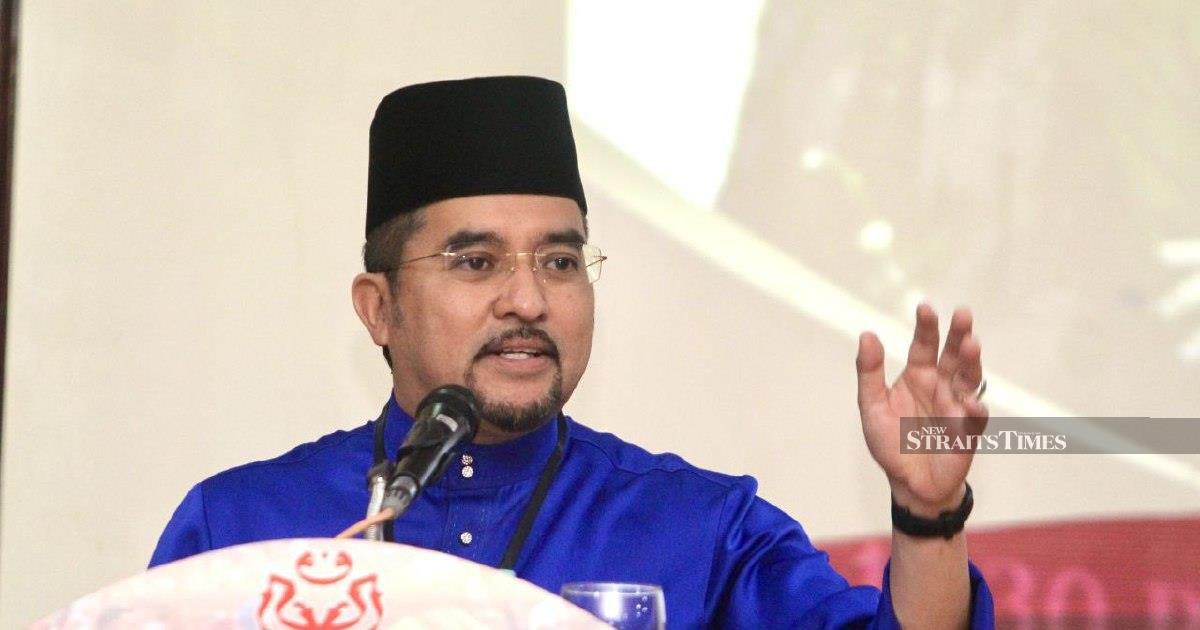
Umno has drawn a clear boundary in response to PKR Youth's recent activism over seat distribution for the Melaka state election, signalling that backroom diplomacy rather than public pressure campaigns should govern how coalition partners divide electoral opportunities. Speaking in Kota Baru, Umno representatives acknowledged that constituent bodies within the Pakatan Harapan alliance possess legitimate interests in pushing their preferred electoral arrangements, yet maintained that such matters belong in formal negotiation chambers rather than the court of public opinion.
The statement represents a measured but firm pushback against what Umno views as PKR Youth attempting to circumvent established protocols within the ruling coalition. Rather than dismissing the younger party wing's concerns outright, Umno chose instead to redirect the conversation toward proper channels, suggesting that while aspirations deserve hearing, methodology matters enormously in maintaining coalition cohesion. This distinction—acknowledging legitimacy of interest whilst questioning the appropriateness of tactics—reflects broader tensions within Pakatan Harapan over resource allocation as the coalition prepares for state-level contests.
Seat distribution disputes within governing coalitions routinely surface as flashpoints because they directly affect political advancement opportunities and party influence at state level. Melaka, with its moderate number of state assembly seats and competitive political terrain, represents a meaningful prize for coalition partners seeking to expand their footprint in a traditionally contested state. For PKR Youth, public advocacy signals to their parent organisation's leadership that younger voices demand consideration in strategic decisions, whilst also energising grassroots membership around concrete electoral prospects.
Umno's insistence on leadership-level negotiations reflects both institutional preference and practical political calculation. Coalition partners must eventually reconcile competing claims, and how that process unfolds shapes not merely seat counts but also party relationships, intra-coalition trust, and perceptions of fairness among membership bases. When disputes migrate to public channels, they risk hardening positions and complicating the compromise-oriented work that coalitions require. The Umno position essentially argues that keeping such matters within leadership circles preserves flexibility and room for negotiated settlement.
The Melaka election context carries particular weight for Pakatan Harapan's stability. The state has experienced considerable political turbulence in recent years, with government control shifting multiple times and internal pressures frequently destabilising coalitions. Any appearance that larger parties are monopolising seat selection whilst marginalising junior partners could further damage Pakatan Harapan's already fragile unity in the state. PKR Youth's public campaign may thus reflect genuine concerns that their party risks losing negotiating leverage unless they visibly demonstrate demand from membership for better treatment.
Geographically and politically, Melaka occupies a distinctive position in Malaysian electoral mathematics. Located between Kuala Lumpur and Johor, the state serves as a testing ground for coalition strategies that parties refine before applying to larger contests. The state assembly comprises 36 seats distributed across constituencies where urban, suburban and rural dynamics create diverse competitive environments. How coalitions divide such seats therefore influences not only which parties win which areas but also what voter messages different partners can credibly convey in their respective constituencies.
Umno's framing of the dispute as one requiring wisdom rather than public pressure implicitly contrasts mature institutional behaviour with what it characterises as youthful impatience. This generational dimension runs deeper than mere rhetoric; it reflects genuine differences in how established party structures and emergent factions within those structures view appropriate political conduct. Umno, as the largest coalition component and long-time administrator of state governments, tends to privilege hierarchical decision-making and respect for seniority, whilst younger activists increasingly demand transparency and inclusion in determinations affecting their career prospects.
The statement also carries implications for how Pakatan Harapan manages internal disputes without triggering the kind of public recriminations that previously weakened the coalition during its initial years in federal government. Umno's decision to issue a measured response rather than escalating rhetoric suggests coalition leadership recognises that excessive public sniping over seat shares could further alienate voters already questioning whether Pakatan Harapan genuinely functions as a unified government rather than a collection of competing factions jostling for advantage.
For Malaysian observers tracking coalition dynamics, this exchange illustrates enduring tensions between democratic participation and institutional discipline. PKR Youth's activism represents genuine pressure from party members seeking voice and opportunity, yet Umno's insistence on formal negotiation channels reflects understanding that sustainable coalition arrangements require restraint and respect for established decision-making processes. Neither position lacks merit; the genuine challenge lies in structures that accommodate both membership aspirations and leadership effectiveness.
Looking ahead to the Melaka election timeline, whether parties can navigate this dispute through private negotiations without further public skirmishing will significantly influence broader coalition stability. If Umno and PKR leadership successfully broker a seat arrangement that younger party members perceive as reasonably equitable, the episode becomes a manageable internal tension resolved through normal politics. Conversely, should negotiations stall and public pressure escalate, the dispute could crystallise deeper concerns about whether Pakatan Harapan genuinely operates as a coalition of equals or whether larger components exercise hegemonic control over resource distribution.

