UMNO's strategic direction for the forthcoming Melaka state election remains unresolved as the party prepares to make critical decisions at a high-level meeting scheduled for August 28. Party president Datuk Seri Dr Ahmad Zahid Hamidi will chair the Supreme Council gathering, where officials will deliberate on the most advantageous path forward to secure Barisan Nasional's dominance in the state poll and determine whether UMNO should pursue independent candidacies or pursue collaborative arrangements with competing political alliances.
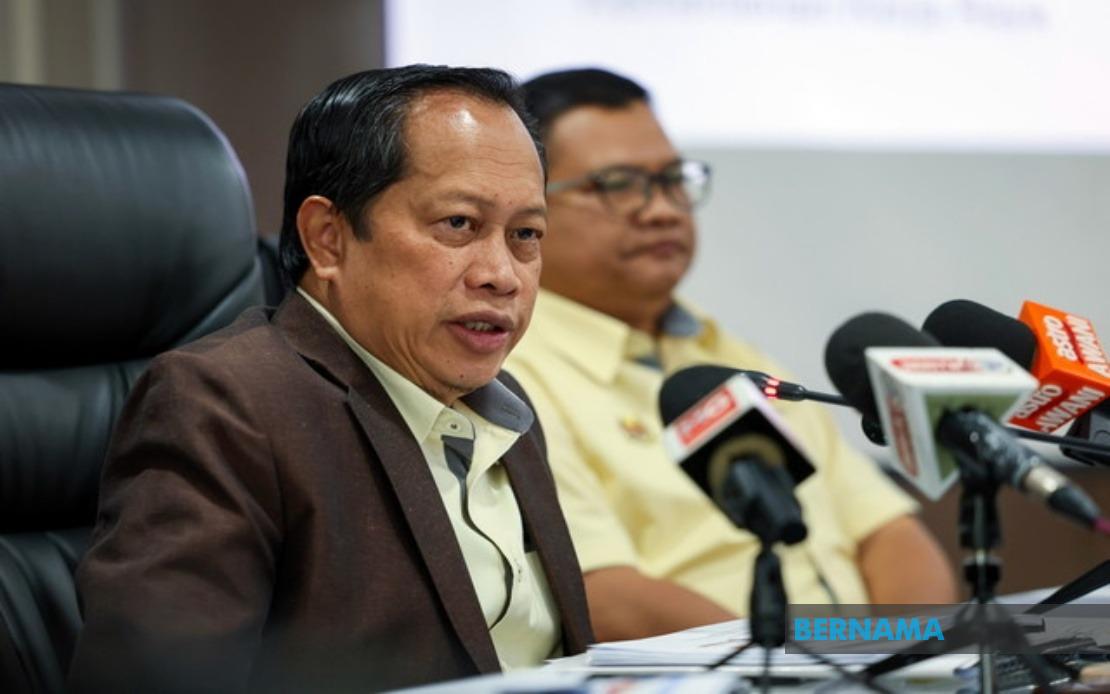
Speaking in Melaka on August 20, UMNO Supreme Council member Datuk Seri Dr Ahmad Maslan clarified that no binding commitment has yet been formalized regarding the party's electoral approach. He acknowledged the flurry of speculation dominating political commentary, noting that various stakeholders—particularly UMNO figures within Melaka—have publicly aired their perspectives on potential partnerships. These discussions have centred on two competing scenarios: an alliance between Barisan Nasional and the Pakatan Harapan-led federal government, or alternatively, a cooperation framework involving Barisan Nasional and Perikatan Nasional, the rival opposition coalition that has gained traction in several Malaysian states.
The Deputy Works Minister emphasized that the party's final determination must reflect a calibrated assessment of the unique political landscape prevailing in Melaka, rather than adopting a uniform national template. This underscores a pragmatic recognition within UMNO that electoral mathematics and local power dynamics vary significantly across Malaysia's states, necessitating tailored strategic responses. The flexibility UMNO is signalling stands in sharp contrast to the rigid alignment patterns that characterized Malaysian politics in preceding decades, reflecting instead the more fluid and context-dependent coalition dynamics that have emerged post-2018.
The stakes surrounding this decision are substantial. Barisan Nasional currently commands the Melaka statehouse after the fifteenth state election produced a commanding mandate, with the coalition capturing twenty-one of the twenty-eight available seats. Pakatan Harapan secured five seats, while Perikatan Nasional garnered the remaining two. However, the current state executive council composition reflects the hybrid governance model that has become standard across Malaysia since the formation of the federal Unity Government, with both Barisan Nasional and Pakatan Harapan representatives occupying ministerial portfolios and demonstrating a practical capacity for institutional cooperation despite their historical rivalry.
This arrangement mirrors the unprecedented power-sharing arrangement negotiated at the national level, where UMNO and other Barisan Nasional components joined forces with Pakatan Harapan to form a governing coalition that excluded Perikatan Nasional. Extending this partnership framework to Melaka's state administration would represent a consolidation of this federal model at the subnational level. Conversely, pivoting toward Perikatan Nasional would signal a reassessment of UMNO's strategic calculus and potentially destabilize the Unity Government coalition.
The timing of this decision carries additional weight, as the Melaka state government's constitutional mandate expires on December 31. This deadline creates a compressed timeframe for UMNO and its potential partners to navigate negotiations, finalise candidate selection, and mount an effective campaign. The August 28 meeting therefore represents a critical juncture where theoretical discussions must crystallize into actionable policy and tactical commitments.
For Malaysian political observers, this development illuminates broader patterns of coalition fluidity that have reshaped the country's competitive landscape. Rather than confronting a binary choice between monolithic blocs, voters and political actors now navigate a more intricate landscape where temporary alignments, issue-specific cooperation, and localized arrangements have become normalized features of Malaysian governance. UMNO's deliberation over whether to leverage its federal partnership with Pakatan Harapan at the state level, or conversely to explore accommodation with Perikatan Nasional, demonstrates how Malaysian parties have adapted to an environment where no single faction commands overwhelming parliamentary dominance and where strategic flexibility carries tangible electoral rewards.
The decision also carries implications extending beyond Melaka's borders. How UMNO resolves this question will signal the party's appetite for deepening the Unity Government experiment at subnational levels, or conversely, its willingness to pursue alternative configurations that might strengthen UMNO's independent standing or enhance its appeal to constituencies skeptical of the Pakatan Harapan partnership. Such precedents established in Melaka could influence UMNO's calculations in other state elections scheduled over the coming years, contributing to broader realignment patterns across Malaysian federalism.
Accordingly, observers across Southeast Asia watching Malaysian political developments will closely monitor the August 28 Supreme Council outcome. The decision will provide valuable insight into UMNO's medium-term strategic orientation, the durability of the federal Unity Government arrangement, and the evolving dynamics of coalition politics in one of the region's largest electoral democracies. For Malaysia's electorate and its business community, clarity on the political framework governing state administration affects everything from policy continuity to investment confidence and institutional stability.

