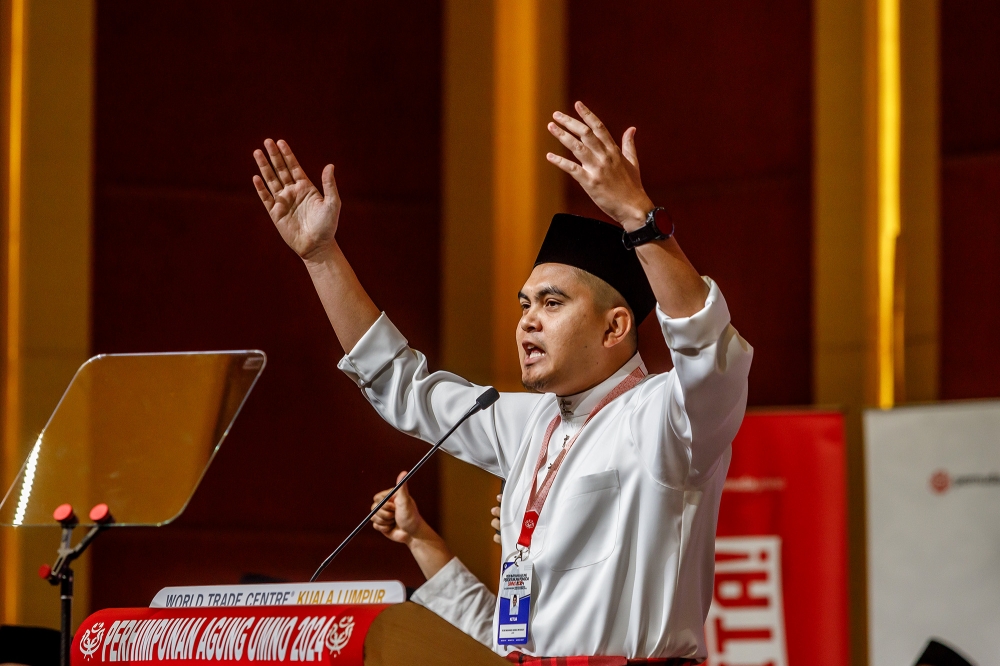
The debate over government coalition architecture intensified when Umno Youth chief Datuk Dr Akmal Saleh posed a pointed challenge to Pakatan Harapan's youth wing, demanding consistency in how political alliances are evaluated. Speaking in Kuala Lumpur on July 19, Akmal questioned whether expectations for coalition reconfiguration should apply uniformly across the political spectrum or remain selectively targeted at the Barisan Nasional.
The underlying tension reflects deepening divisions within Malaysia's governing structure. Since the formation of the current administration, questions about the legitimacy and sustainability of various coalition arrangements have persisted. Umno Youth's intervention suggests frustration with what party strategists perceive as asymmetrical criticism directed exclusively at their coalition partners, while similar arrangements elsewhere escape comparable scrutiny. This asymmetry, Akmal implied, undermines the credibility of calls for institutional reform.
Umno Youth's challenge carries particular weight given the generational dynamics at play. Young party members represent the future leadership class and their public positions signal where mainstream Umno may eventually pivot on governance questions. By raising the consistency argument, Akmal positioned his wing as defenders of principled politics rather than opponents of legitimate criticism. The framing matters considerably in Malaysian political discourse, where appeals to fairness and equal treatment resonate across demographic groups.
The coalition alliance question itself reflects ongoing tensions between pragmatism and ideology within Malaysian politics. Electoral mathematics frequently force parties into uncomfortable partnerships to achieve parliamentary majorities. Barisan Nasional, historically the dominant coalition, now operates as a junior partner in many state administrations, a stark reversal from decades of supremacy. These shifting power dynamics create pressure points where alliance decisions become battlegrounds for competing visions of governance.
Pakatan Harapan's position presents its own complexities. The coalition encompasses ideologically disparate partners—from Islamist PAS to secular DAP—who maintain their partnership primarily through shared opposition to Barisan Nasional. This structural tension means that criticisms of other coalitions must navigate carefully to avoid exposing weaknesses in its own architecture. Akmal's challenge effectively forces Pakatan Harapan Youth into acknowledging these contradictions or appear inconsistent.
The timing of Akmal's statement reflects broader strategic calculations within Umno. As Barisan Nasional navigates its reduced political footprint, party youth wings serve as laboratories for testing messaging that may resonate with broader constituencies. Generational politics increasingly influence electoral outcomes, and youth engagement through statements like these signals Umno's determination to remain relevant in this demographic. The challenge also serves domestic party purposes, rallying Umno Youth supporters around a narrative of principled resistance to what they characterise as unfair treatment.
From a regional perspective, Malaysia's coalition politics offer instructive lessons for other Southeast Asian democracies grappling with multi-party systems. The question of coalition legitimacy and consistency cuts across borders, affecting Thailand, Indonesia, and the Philippines. How Malaysia resolves these debates—whether through institutional reforms, constitutional amendments, or political consensus—carries implications for democratic governance throughout the region. The willingness of parties to engage in principled debate about coalition standards, even while defending their own arrangements, contributes to democratic maturation.
The practical implications of Umno Youth's challenge deserve examination. Should Pakatan Harapan Youth reciprocate with demands that Umno impose equivalent standards on its own partners, an escalatory dynamic could emerge, further destabilising the governing coalition. Alternatively, if the challenge triggers substantive debate about coalition principles, it might produce clearer understandings about what constitutes acceptable electoral partnerships. Such clarity would benefit Malaysian voters who increasingly demand transparency about coalition decision-making.
For ordinary Malaysians observing these political manoeuvres, the underlying question concerns governance quality and stability. Coalition partners typically negotiate behind closed doors, with public understanding of agreements remaining limited. Demands for transparency and consistency in alliance-building resonate with voter frustrations about opaque political dealings. Akmal's challenge, framed around fairness, implicitly acknowledges that Malaysians increasingly expect their political leaders to articulate coherent principles rather than pursue naked power calculations.
The response from Pakatan Harapan Youth will significantly influence how this debate develops. A dismissive reaction risks validating Akmal's assertion that standards are applied unevenly. Conversely, engaging seriously with the consistency argument requires Pakatan Harapan to either impose comparable demands on its own members or acknowledge that coalition politics inherently involves difficult compromises that resist universal principles. Either path carries political consequences.
Looking forward, these arguments about coalition standards will likely persist through successive election cycles. As Malaysian politics continues fragmenting, with fewer single-party majorities and greater reliance on coalitions, questions about alliance legitimacy will intensify. Umno Youth's intervention, regardless of its immediate tactical motivations, contributes to an important conversation about how coalitions should function, what constraints should bind them, and whether democratic principles can provide meaningful guidance in parliamentary arithmetic.

