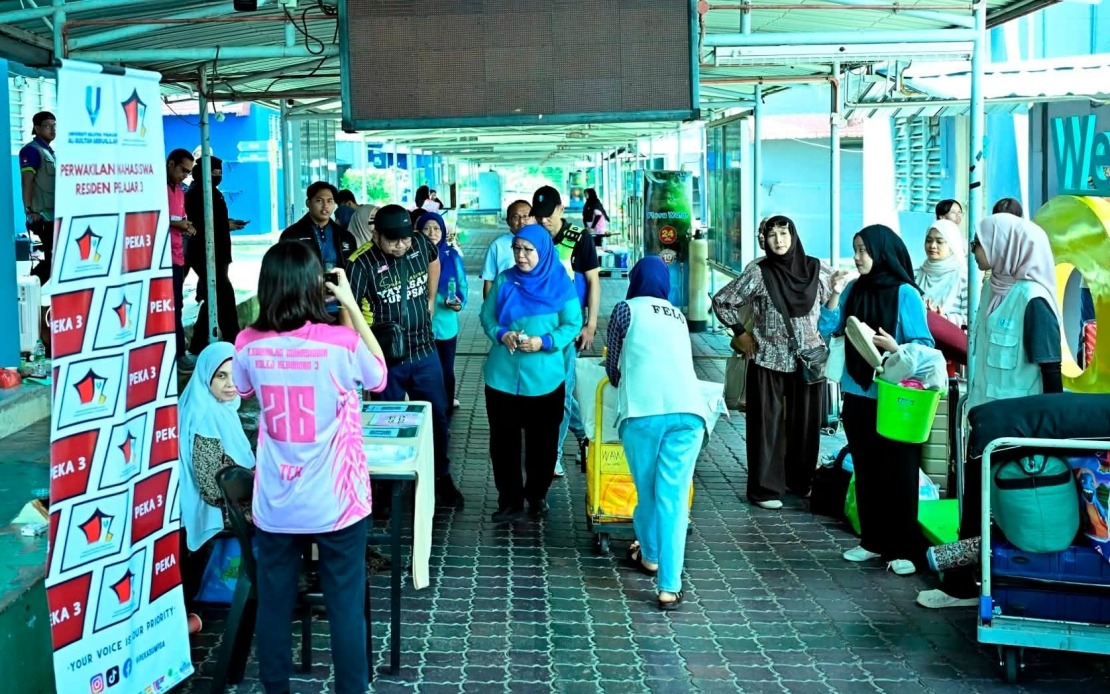
Universiti Malaysia Pahang Al-Sultan Abdullah (UMPSA) is intensifying efforts to ensure that economic barriers do not prevent talented students from accessing quality higher education, according to its vice-chancellor Prof Dr Yatimah Alias. Speaking during new student registration in Kuantan on July 19, Alias emphasised that the institution views support for underprivileged learners not as an ancillary programme but as a core institutional priority that directly advances the university's educational mission.
The commitment extends across multiple dimensions of student welfare. UMPSA has structured its assistance to address the varied financial challenges that disadvantaged students face, from tuition costs to living expenses that often force talented young people to abandon their studies. The university's multi-layered approach combines direct financial aid with academic mentoring and skill-development initiatives designed to help at-risk students not merely survive their programmes but thrive within them. This holistic strategy recognises that financial hardship rarely manifests in isolation—students without secure funding often struggle simultaneously with accommodation insecurity, limited access to learning resources, and the psychological stress of financial precarity.
During the registration period, UMPSA distributed scholarships to 20 students, with awards structured to cover both tuition obligations and monthly living allowances. This design choice is significant, as many scholarship schemes address only tuition fees, leaving beneficiaries to navigate subsistence costs independently. By including monthly stipends, UMPSA tacitly acknowledges that educational access requires freedom from immediate financial anxiety. Additionally, the UMPSA Foundation distributed early education incentive payments of RM1,000 to students identified as facing acute financial need, providing immediate relief as students commence their studies.
The timing of these announcements coincides with a notable milestone in the university's trajectory. Registration data shows that 1,045 new Diploma students enrolled for the 2026/2027 academic session, representing the highest intake of new students since UMPSA's establishment. This growth presents both opportunity and challenge: expanded enrolment amplifies the university's capacity to democratise access to tertiary education, but it also intensifies pressure on financial aid systems and support infrastructure. Universities experiencing rapid growth must scale their welfare provisions proportionately to avoid situations where increased enrolment inadvertently marginalises the most vulnerable cohorts within larger student populations.
For Malaysian higher education broadly, UMPSA's emphasis on student welfare reflects evolving sector expectations around institutional responsibility. As Malaysia pursues its aspiration to become a regional education hub, the quality of that achievement cannot be measured solely by research output or international rankings. Equally important is whether the sector successfully widens access to learners from lower-income backgrounds, thereby transforming tertiary education from a privilege reserved for affluent families into a genuine engine of social mobility. Universities that fail to prioritise disadvantaged students risk ossifying class divisions and forfeiting the intellectual potential of entire population segments.
Prof Dr Yatimah Alias's direct engagement with new students during registration—a practice many vice-chancellors delegate entirely to administrative staff—signals institutional seriousness about student welfare beyond rhetorical commitment. When senior leadership invests time in connecting with incoming cohorts, particularly during resource distribution exercises, it reinforces messaging that student support matters to institutional decision-making. This personal dimension also creates informal feedback channels through which students can articulate emerging challenges before they crystallise into retention or completion crises.
The expansion of UMPSA's financial assistance architecture should be contextualised within broader Malaysian economic patterns. Income inequality in Malaysia remains substantial, with significant regional disparities in household wealth. Students from rural Pahang and adjacent states frequently face greater financial obstacles than their urban counterparts, particularly those whose families depend on agriculture, small-scale trading, or informal sector employment. For such cohorts, the availability of institutional funding frequently determines whether university attendance is feasible, not merely comfortable. By prioritising disadvantaged student support, UMPSA implicitly positions itself as an instrument for geographic equity and intergenerational mobility, particularly within East Coast communities historically underrepresented in Malaysian higher education.
The academic support dimension of UMPSA's welfare strategy deserves particular emphasis, as financial assistance alone cannot guarantee student success. Many disadvantaged students enter university with academic preparation gaps rooted in unequal school experiences rather than intellectual capability. Targeted tutoring, study skills workshops, and peer mentoring programmes help such students develop competencies necessary for degree-level work while simultaneously building confidence and belonging. Research across diverse national contexts consistently demonstrates that combination approaches—pairing financial aid with academic support—produce superior retention and completion outcomes compared to financial assistance in isolation.
Looking ahead, UMPSA's expanding student support infrastructure will require sustained financial commitment and careful evaluation. As the university continues attracting larger cohorts, it must ensure that support programme quality does not deteriorate through dilution across an ever-larger recipient base. Regular assessment of scholarship impact—tracking whether recipients progress satisfactorily, graduate on schedule, and successfully transition to employment—should inform ongoing programme refinement. Additionally, UMPSA might consider expanded outreach to secondary schools in underserved regions, ensuring that disadvantaged students aware of available support and encouraged to apply.
The record enrolment figures and enhanced student welfare commitments position UMPSA as an institution increasingly attuned to Malaysia's demographic diversity and social aspirations. Whether the university can sustainably balance rapid growth with genuine support for its most vulnerable learners will significantly influence its emerging institutional character and regional influence within Malaysian higher education.

