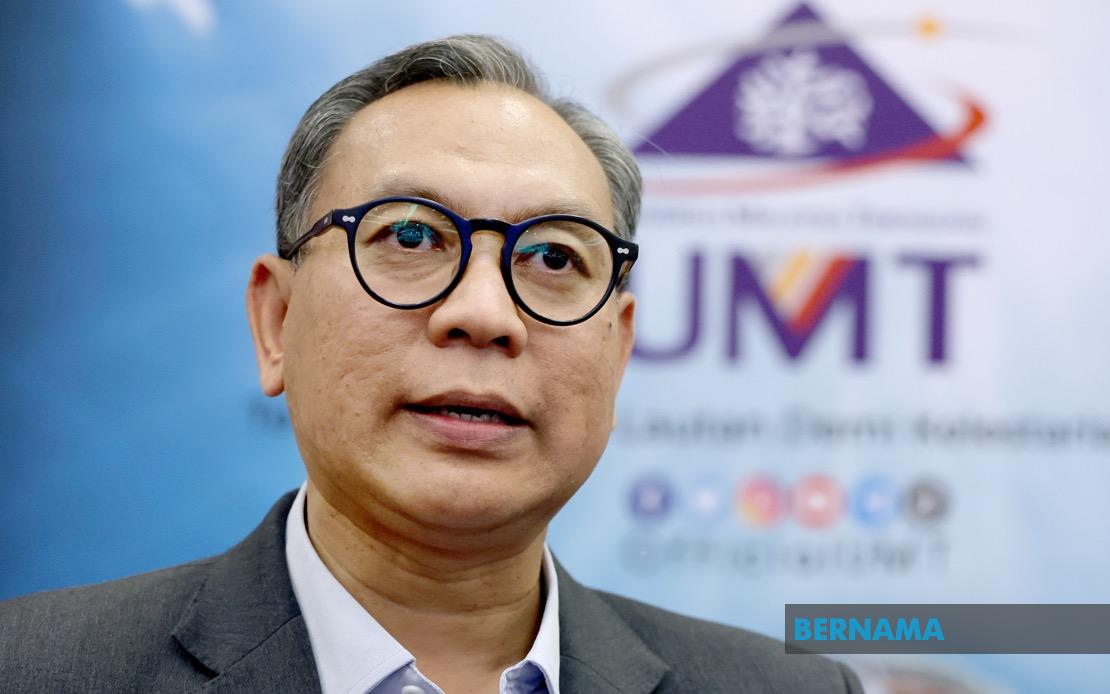
The inaugural International Conference on Microplastics 2026 has opened in Putrajaya with participation from 126 delegates representing universities, research institutions, government bodies, corporations, and civil society organisations across Malaysia, Australia, Indonesia, China, Japan, Canada, India, South Korea, the Philippines, and Thailand. Organised by Universiti Malaysia Terengganu (UMT), the two-day gathering marks a significant step in coordinating regional and global responses to microplastic contamination, an environmental challenge that has moved from scientific obscurity to mainstream policy concern within the past decade.
The conference reflects growing international anxiety about the ubiquity and persistence of microplastics across every major ecosystem on Earth. These tiny plastic fragments—defined as particles smaller than 5 millimetres—have infiltrated oceans, rivers, soil, and the atmosphere, permeating food chains and accumulating in human tissues. What began as a curiosity in marine science has evolved into a multidisciplinary crisis requiring coordination across environmental science, public health, industrial regulation, and international governance. The concentration of expertise in Putrajaya underscores Southeast Asia's particular vulnerability, given the region's extensive coastlines, rapid industrialisation, and substantial plastic consumption.
UMT Vice-Chancellor Prof Dr Mohd Zamri Ibrahim positioned the conference as emblematic of the university's strategic focus on marine and aquatic sciences, fields where Malaysian institutions have developed considerable research capacity. He emphasised that the gathering represents not merely an academic exercise but a commitment to generating evidence-based insights that policymakers can translate into actionable regulation. This framing is significant for Malaysia, where the plastic industry remains economically important yet faces mounting pressure to adopt circular economy principles and reduce environmental externalities. The conference thus sits at the intersection of economic development and ecological stewardship—a tension increasingly difficult to ignore across the region.
The academic architecture supporting the conference—UMT's Microplastics Research Interest Group (MRIG) and its commercial consultancy arm (UMTCS)—illustrates a modern approach to knowledge production that blends fundamental research with applied problem-solving. By coupling pure science with commercialised expertise, the university signals that microplastics research must feed into practical interventions: better monitoring technologies, improved waste management systems, and product redesign. For Malaysian policymakers observing from the sidelines, this model suggests avenues for accelerating the translation of research findings into regulatory frameworks and corporate compliance mechanisms.
The scientific evidence presented at the conference will likely underscore the ecological and human health costs of microplastic proliferation. Peer-reviewed studies increasingly demonstrate that microplastics disrupt biodiversity at multiple trophic levels, from plankton to fish to marine mammals. In human populations, researchers have detected microplastic particles in blood, lungs, and placentas, though the long-term health consequences remain incompletely understood. This uncertainty itself represents a regulatory challenge: governments must decide whether to act preemptively on incomplete evidence or await definitive proof of harm while contamination accumulates. Southeast Asian nations, many of which lack robust environmental monitoring infrastructure, face particular difficulty in gathering reliable baseline data.
The conference agenda encompasses several interconnected dimensions of the problem. Environmental monitoring technologies will feature prominently, reflecting recognition that measurement precedes management. Participants will examine ecological impacts across marine, freshwater, and terrestrial environments—a breadth reflecting the realisation that microplastics are not merely a coastal or aquatic phenomenon but a systemic contaminant. Equally important are discussions surrounding pollution prevention, where industrial strategy and consumer behaviour intersect. The regulatory frameworks under review will likely include both command-and-control approaches (bans, restrictions, standards) and market-based mechanisms (extended producer responsibility, green procurement).
For Malaysia specifically, the conference carries implications beyond academic networking. The country's plastic waste management challenges remain acute, with significant quantities of domestic and imported plastic waste destined for landfills, incineration, or informal recycling. Microplastic generation occurs throughout this waste lifecycle: during fragmentation in landfills, incomplete combustion in incinerators, and rough handling in informal recycling operations. Moreover, Malaysia's petrochemical industry—a major employer and export earner—faces the prospect of reduced demand for virgin plastics if circular economy initiatives accelerate. The conference thus offers an opportunity for Malaysian stakeholders to observe how peer nations are positioning themselves in this transition and to benchmark their own preparedness.
International collaboration emerging from the conference is likely to concentrate on three fronts: harmonised analytical standards (ensuring that microplastic measurements conducted in different laboratories are comparable), shared research infrastructure (allowing developing nations to access expensive analytical equipment), and coordinated policy development (preventing a patchwork of incompatible regulations). Southeast Asia's particular interest lies in the second category: capacity building that enhances the region's scientific self-sufficiency rather than perpetuating dependence on external expertise. UMT's hosting role positions Malaysian institutions as potential hubs for microplastics research in Southeast Asia, an opportunity requiring sustained institutional investment and recruitment of specialised talent.
The participation of policymakers alongside scientists at ICM2026 is noteworthy. Too often, research conferences remain insular spaces where academics communicate primarily with one another. By deliberately including government officials and regulatory agencies, the organisers have signalled that the research agenda must be responsive to policy questions. Conversely, policymakers gain direct exposure to emerging science rather than relying on filtered summaries from consultants or lobbying groups. This direct interaction creates space for negotiating the boundary between scientific evidence and policy choice—an inherently political negotiation that benefits from transparency and dialogue.
Looking forward, the relationships forged at the conference may catalyse regional research collaborations that amplify the voice of Southeast Asian scientists in global microplastics discourse. Currently, research agendas in this field are shaped predominantly by institutions in wealthy nations; expanding Southeast Asian capacity could reorient questions toward environmental realities and policy contexts specific to the region. For instance, microplastics in tropical marine ecosystems, interactions with other contaminants (heavy metals, agricultural runoff), and pathways through informal economic sectors may receive insufficient attention in the current global literature. A Southeast Asian research community could address these gaps while building indigenous expertise.
The conference also reflects broader shifts in how Malaysia and the region approach environmental challenges. Rather than outsourcing expertise or awaiting international guidance, the country is hosting knowledge production directly. This represents maturation of the region's scientific infrastructure and growing confidence in regional capacity. Whether this momentum translates into sustained research funding, institutional support, and policy implementation remains to be seen, but the conference represents a significant marker of ambition.

