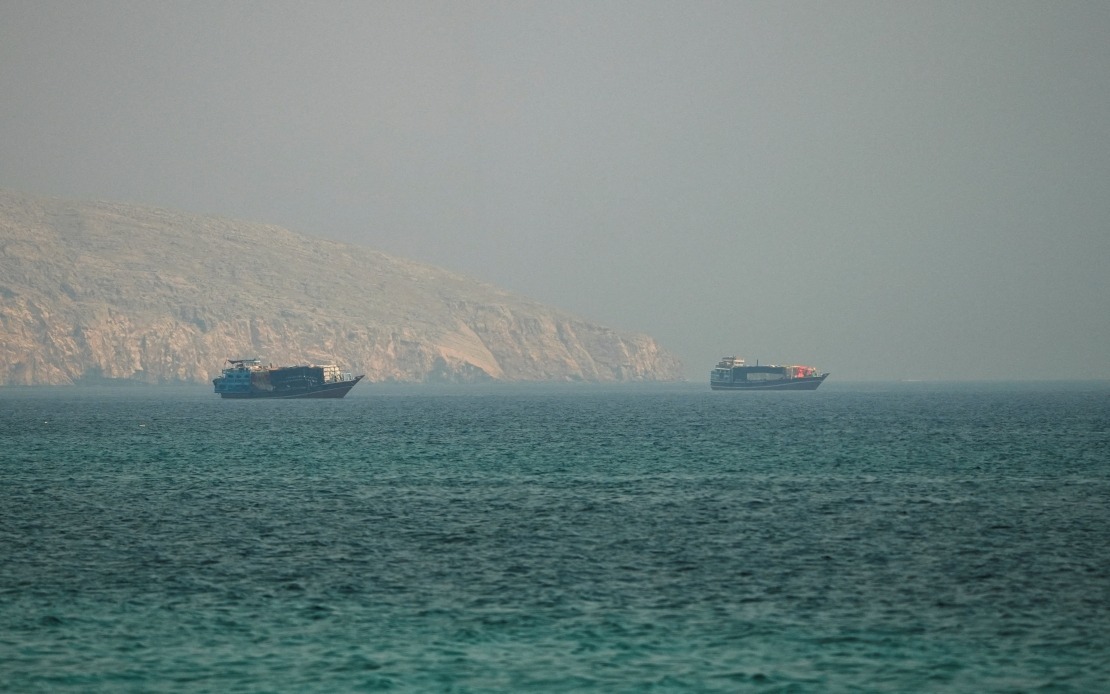
The United Nations' top official has sounded an urgent alarm over the deteriorating security situation unfolding across the Persian Gulf, warning that the region stands at a dangerous crossroads where diplomatic engagement must replace military posturing. Speaking on Sunday through his spokesperson Stephane Dujarric, Secretary-General Antonio Guterres laid bare his deep apprehension about a succession of hostile actions that have markedly heightened tensions between major regional and international powers, fundamentally threatening the stability that underpins global commerce and security.
Guterres identified a troubling pattern of escalating confrontations that have characterized recent months in the strategically vital waterway. Iranian vessels have targeted commercial shipping transiting through the Strait of Hormuz, one of the world's most critical maritime passages, while the United States has conducted military strikes against Iranian positions. Meanwhile, Iranian-backed forces have launched attacks on targets in neighbouring countries throughout the region, creating a dangerous spiral of tit-for-tat military actions that shows no signs of abating without decisive international intervention.
The UN Secretary-General's intervention reflects mounting international anxiety that the current trajectory of military exchanges could spiral into full-scale conflict with implications far beyond the Gulf itself. Guterres explicitly cautioned that a return to comprehensive hostilities would unleash what he characterised as catastrophic consequences—a term deliberately chosen to underscore the severity of the threat. These consequences would extend across multiple dimensions: the immediate humanitarian toll on regional populations, broader implications for international peace and security architecture, and substantial disruption to global economic systems that depend critically on uninterrupted energy supplies and maritime commerce flowing through Gulf waters.
At the heart of Guterres's appeal lies recognition that the Strait of Hormuz functions as an irreplaceable artery of the global economy. Approximately one-third of all seaborne traded oil passes through this narrow waterway, making any sustained disruption to shipping potentially catastrophic for economies worldwide. When Iranian actions directly threaten commercial vessels or US military operations provoke further retaliation, the ripple effects extend to consumers in Malaysia, Singapore, and across Southeast Asia, where energy security and manufactured goods depend heavily on uninterrupted Gulf shipping lanes.
The UN chief's call for maximum restraint represents a deliberate attempt to inject a pause into the cycle of action and reaction. He has appealed to all parties involved in the confrontation to exercise genuine military and political discipline, avoiding the tactical strikes and hostile gestures that each side justifies as defensive responses to the other's aggression. Such restraint is politically difficult for governments facing domestic constituencies demanding strong responses to perceived threats, yet Guterres has positioned restraint as the only viable path toward de-escalation and eventual resolution.
Crucially, Guterres has emphasised the restoration of full freedom of navigation in the Strait of Hormuz as a non-negotiable requirement for regional stability. This principle transcends the immediate dispute between Iran and the United States, affecting shipping interests worldwide and maritime law obligations that extend across the international community. Regional powers including Saudi Arabia, the United Arab Emirates, and other Gulf Cooperation Council members have watched nervously as shipping incidents have multiplied, recognising that their own economic prosperity depends fundamentally on the ability of vessels to traverse the waterway safely.
The UN Secretary-General's most consequential intervention centres on his direct appeal to both Tehran and Washington to abandon the current confrontational trajectory and return to the negotiating table. This plea carries weight precisely because it comes from an office theoretically positioned above the fray of great power competition, yet the historical record demonstrates that such appeals rarely succeed without parallel shifts in domestic political calculations within the respective capitals. Guterres is essentially arguing that both nations possess compelling reasons—the avoidance of catastrophic consequences—to choose dialogue over military escalation.
For Malaysia and Southeast Asian nations, this confrontation poses particular challenges. The region sits downstream of Gulf geopolitical tensions, dependent on stable energy supplies and unobstructed shipping lanes that enable the commercial networks underpinning economic growth. Malaysian shipping companies operate in these waters, while the country's energy security portfolio includes significant exposure to Persian Gulf petroleum sources. Prolonged regional instability could elevate shipping insurance costs, disrupt supply chains, and create economic headwinds affecting manufacturing and commerce across Southeast Asia.
The UN's intervention also reflects broader international frustration with the apparent absence of sustained diplomatic channels between Iran and the United States. Previous multilateral frameworks, including the Joint Comprehensive Plan of Action negotiated in 2015, have fractured, leaving little institutional scaffolding for de-escalation dialogue. Guterres's appeal implicitly acknowledges that without renewed commitment to negotiated settlement of underlying disputes—whether concerning nuclear programmes, regional influence, or economic sanctions—the cycle of military incidents will likely persist and intensify.
The challenge confronting the international community is converting Guterres's rhetorical appeal into concrete behavioural change by decision-makers in Tehran and Washington. Both governments operate within strategic frameworks shaped by domestic politics, regional alliance systems, and accumulated grievances spanning decades. Neither side can easily back down from positions already publicly articulated without appearing to suffer diplomatic defeat. Yet the alternative—continued escalation toward full-scale conflict—carries risks that truly would prove catastrophic for regional populations and global economic stability.
The UN Secretary-General's statement represents a moment of diplomatic clarity about stakes and consequences. Whether his urgent call for restraint and renewed negotiations carries sufficient weight to alter trajectories already set in motion remains uncertain, but his willingness to speak plainly about the dangers ahead underscores the gravity with which the international community views the unfolding crisis.

