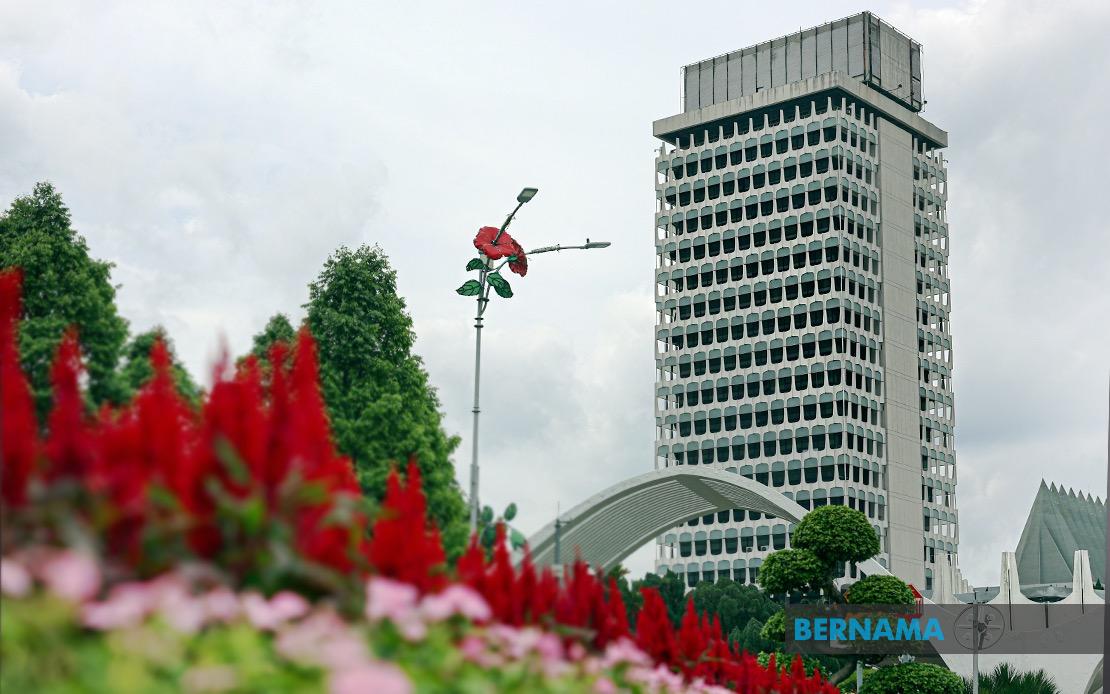
Malaysia's parliament reconvenes today for a substantive agenda that reflects the nation's evolving concerns about global governance, domestic food resilience, and strategic independence. The 16-day sitting, running until July 16, will encompass questions spanning the United Nations Security Council's structural imbalances, government contingency planning for an anticipated food supply shortage, and the Malaysian Armed Forces' dependency on foreign military suppliers. The breadth of these issues signals parliament's intent to scrutinise how Malaysia navigates interconnected international challenges while safeguarding national interests.
The question of UN Security Council reform, posed by Datuk Seri Sh Mohmed Puzi Sh Ali, addresses one of the most contentious structural deficiencies in global diplomacy. The veto power wielded by the Council's five permanent members—the United States, Russia, China, Britain, and France—has repeatedly prevented decisive action on humanitarian crises, regional conflicts, and emerging threats. For Malaysia and other non-permanent members, this asymmetry creates a frustrating reality: meaningful participation in collective security decisions remains constrained by the interests of established superpowers. The Foreign Ministry will be pressed to articulate how Malaysia intends not merely to voice objections to this system but to actively champion substantive reform that would enhance the country's influence and elevate Southeast Asia's standing within a modernised UN framework.
Food security represents an equally pressing parliamentary concern, reflecting vulnerability that transcends Malaysia's borders. Shaharizukirnain Abd Kadir's question to the Agriculture and Food Security Minister seeks clarity on the government's contingency framework should global food supplies tighten or domestic production falter. The inquiry pointedly references rising agricultural input costs triggered by instability in West Asia—a reminder that Malaysian farmers and food producers face price pressures stemming from geopolitical disruption thousands of kilometres away. The government has allocated incentives to food-producing states, but their efficacy remains unproven. Parliament will demand evidence that these financial interventions meaningfully boost domestic self-sufficiency or merely represent emergency expenditure without strategic impact.
The connection between agricultural input inflation and regional geopolitics underscores why food security cannot be treated as a purely domestic agricultural matter. Supply chains for fertilisers, pesticides, and machinery are globally integrated, and disruptions in energy markets or shipping routes directly affect Malaysian farmers' costs and profitability. A comprehensive contingency plan must therefore incorporate not only domestic production targets but also supply chain diversification, strategic grain reserves, and coordination with neighbouring countries to ensure regional stability. Parliament's questioning signals that lawmakers expect tangible mitigation strategies rather than rhetorical reassurances.
Military supply chain vulnerability introduces a third dimension to Malaysia's strategic calculus. Datuk Awang Hashim's query addresses a structural weakness that few nations openly discuss but all strategically dependent countries face: reliance on foreign suppliers for defence equipment creates potential leverage points for external pressure. Should international relations deteriorate or suppliers face sanctions, the Malaysian Armed Forces could encounter delays, cancellations, or inability to maintain critical systems. The Defence Minister must articulate concrete measures to reduce this vulnerability, whether through indigenous defence manufacturing initiatives, supplier diversification, or technological self-sufficiency in key domains.
This concern assumes particular salience for a Southeast Asian nation that has historically maintained non-aligned positioning and values strategic autonomy. Over-dependence on any single defence supplier—whether Western, Chinese, or Russian—constrains diplomatic flexibility and strategic options. Parliament's investigation into planning delays and contract cancellations reflects frustration that supply disruptions may already be impacting force modernisation timelines. The government must demonstrate it is systematically addressing these bottlenecks through strategic planning rather than reactive crisis management.
Sarawak's green hydrogen aspirations feature prominently in today's proceedings through Rodiyah Sapiee's question to the Science, Technology and Innovation Minister. The state's ambition to position itself as Southeast Asia's green hydrogen hub leverages its abundant hydroelectric capacity and renewable energy potential. However, realising this vision requires coordinated national energy policy and meaningful cooperation between federal and state governments. The parliamentary question suggests concerns that policy alignment may be insufficient or that strategic cooperation mechanisms remain underdeveloped. For Malaysia's renewable energy transition and regional competitiveness in emerging green technologies, Sarawak's hydrogen sector development cannot remain siloed from broader national energy planning.
Beyond these substantive questions, parliament will process seven government bills in their opening stages, including amendments to communications and multimedia legislation and introduction of a Social Work Profession Bill. The Communications and Multimedia (Amendment) Bill 2026 and the related Malaysian Communications and Multimedia Commission (Amendment) Bill 2026 merit monitoring, as telecommunications regulation increasingly intersects with national security, data protection, and digital governance—domains of heightened scrutiny globally.
The House will also progress debate on the Control of Paddy and Rice (Amendment) Bill 2026, which relates directly to food security discussions. This legislation likely contains provisions addressing rice production management, pricing mechanisms, or supply chain coordination. That it warrants continued parliamentary debate following initial scrutiny suggests the bill contains provisions lawmakers view as requiring careful examination and potential amendment.
These parliamentary proceedings reflect Malaysia's engagement with challenges that are simultaneously local and global. Food security connects to agricultural policy and international commodity markets. UN reform touches on Malaysia's voice in global affairs and the broader legitimacy of international institutions. Defence supply chains link to the nation's strategic autonomy and regional stability. Collectively, this agenda demonstrates that Southeast Asian parliaments must now grapple with transnational complexities that defy compartmentalised governance. Malaysia's parliament shows awareness that prosperity, security, and influence depend on coherent, forward-thinking responses to these interconnected challenges.

