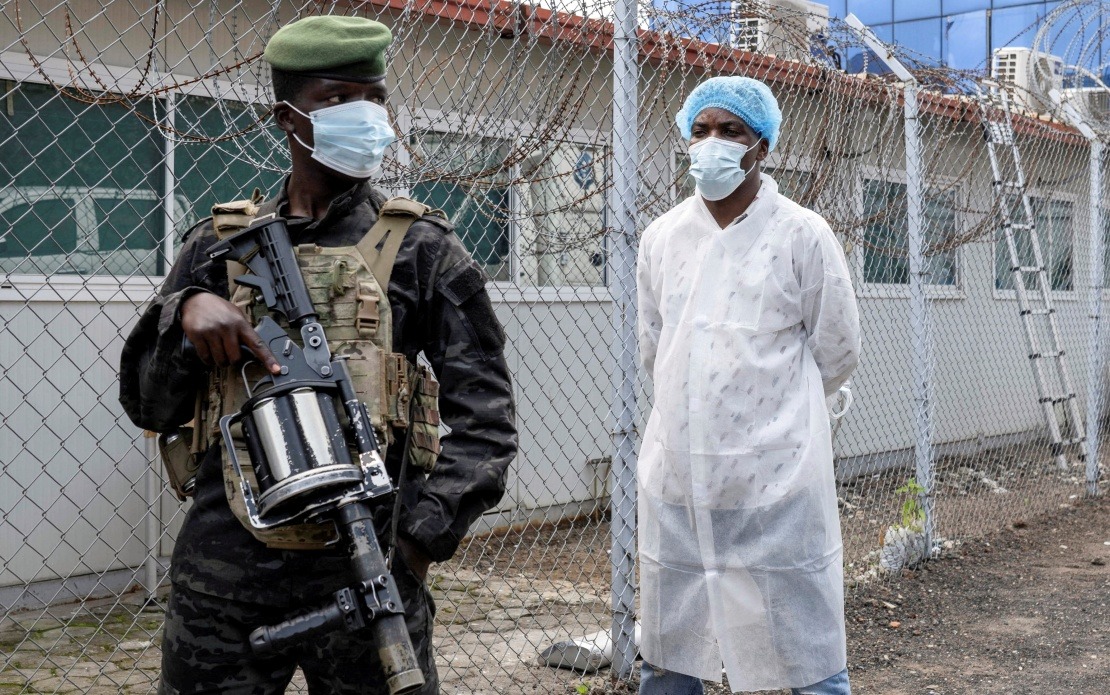
A critical challenge threatening to derail containment of the Ebola outbreak sweeping the Democratic Republic of Congo has emerged in an unexpected quarter: the cultural practice of transporting deceased victims across provincial boundaries for burial in ancestral communities. The UN's International Organisation for Migration flagged this concern as the epidemic claimed its 800th life, with no sign of slowing momentum across one of Africa's largest nations. The practice, deeply rooted in communal traditions, has inadvertently become a transmission vector that health authorities struggle to manage without alienating already suspicious populations.
Since May 15, when health officials formally declared the outbreak, the Democratic Republic of Congo has documented more than 2,100 confirmed cases, resulting in at least 828 deaths according to the most recent Health Ministry figures. The case fatality rate stands at a grimly consistent 37.5 per cent, underscoring the Bundibugyo virus strain's devastating potency. What distinguishes this outbreak from previous episodes is not merely its scale but its trajectory: the number of new infections has accelerated dramatically, with an average of more than 40 cases reported daily. This exponential acceleration over the preceding fourteen days represents approximately a 70 per cent increase in outbreak velocity, creating what epidemiologists regard as an epidemiological emergency demanding urgent intervention.
The geographical spread compounds the containment challenge. Five provinces now harbour active transmission: Haut-Uele, Ituri, North Kivu, South Kivu and Tshopo, transforming what initially appeared as a localised health crisis into a region-wide emergency. This dispersal pattern has simultaneously expanded the area requiring surveillance resources and fragmented the focus of limited medical personnel and equipment. The International Organisation for Migration's Regional Director, Frantz Celestin, articulated the particular vulnerability created by funeral movements during a briefing conducted via video, emphasising that the decentralised nature of the outbreak necessitates coordinated cross-provincial responses that remain frustratingly difficult to execute.
Culturally sensitive burial practices have placed health workers in an untenable position. The organisation's epidemiological monitoring at border crossings and health zone entry points intercepted 105 bodies being transported across provincial boundaries, representing documented cases where traditional funeral arrangements directly facilitated viral movement. Yet each intervention risks deepening community alienation from official health messaging, a phenomenon already evident in widespread resistance to safe burial protocols. Celestin noted that 60 per cent of recorded deaths have occurred within community settings rather than medical facilities, indicating that early detection systems and healthcare access remain profoundly inadequate across affected regions.
Violence has erupted at burial sites, reflecting the volatile intersection of grief, cultural practice and public health intervention. Last month, a cemetery in Bunia, capital of Ituri province, became a flashpoint when youth attempted to forcibly open a coffin during Ebola victim funeral rites, resulting in serious injuries to four Red Cross volunteers engaged in the response effort. Such incidents illustrate the deep distrust of external authorities and the determination of communities to conduct funerals according to ancestral custom, regardless of epidemiological consequences. These confrontations simultaneously obstruct burial teams and endanger health workers, creating a vicious cycle where continued resistance generates security risks that further impede operations.
Doctors Without Borders characterised the outbreak as the third-largest and fastest-growing Ebola epidemic on record, a distinction the crisis achieved within merely two months of declaration. This acceleration trajectory distinguishes the current emergency from previous outbreaks and suggests that containment capacity may be outpaced by transmission velocity. The organisation's assessment indicates that standard response protocols developed for geographically concentrated outbreaks prove inadequate when facing an epidemic expanding across multiple provinces simultaneously whilst confronting entrenched cultural practices and community resistance.
The World Health Organisation's epidemiological update tracking health zone spread provides quantitative evidence of the situation's deterioration. The number of affected health zones increased from 36 to 42 within a single week, demonstrating that geographical expansion continues unabated despite ongoing containment initiatives. This rate of spatial spread suggests that the outbreak has acquired considerable momentum, with transmission chains establishing themselves faster than response teams can identify and isolate cases. The expanding footprint simultaneously dilutes the concentration of medical resources across increasingly dispersed populations.
For Malaysian and Southeast Asian observers, this crisis underscores the fragility of public health systems when confronting highly transmissible pathogens in regions where limited healthcare infrastructure intersects with cultural practices that inadvertently facilitate transmission. The DR Congo outbreak demonstrates that epidemiological control cannot rely solely on medical intervention but requires sophisticated engagement with community values and trust-building with populations naturally suspicious of external authorities. The outbreak's trajectory carries implications for regional pandemic preparedness in Southeast Asia, particularly regarding how governments balance respect for cultural autonomy with imperative public health measures during emergencies.
The funeral practice challenge reveals a fundamental tension in disease control: health measures perceived as culturally insensitive risk generating community resistance that ultimately undermines epidemic containment. Successful management of this outbreak will require health authorities to develop protocols that permit modified burial practices maintaining cultural dignity whilst minimising transmission risk. Without such balanced approaches, the current trajectory suggests the epidemic may sustain transmission across DR Congo's vast territory for months ahead, creating conditions for potential cross-border spillover into neighbouring countries and regional destabilisation.

