The women's draw at the US Open enters uncharted territory this year, with the tournament's customary favourites facing significant obstacles just as the competition begins on Sunday. Top seed Aryna Sabalenka has endured a troubling second half of the season that threatens her pursuit of an unprecedented third consecutive title at Flushing Meadows, whilst the second-ranked Elena Rybakina withdrew from Cincinnati with a leg injury, casting serious doubt over her championship prospects. This convergence of circumstance has created an unusual landscape where past champions stand positioned to reclaim glory.
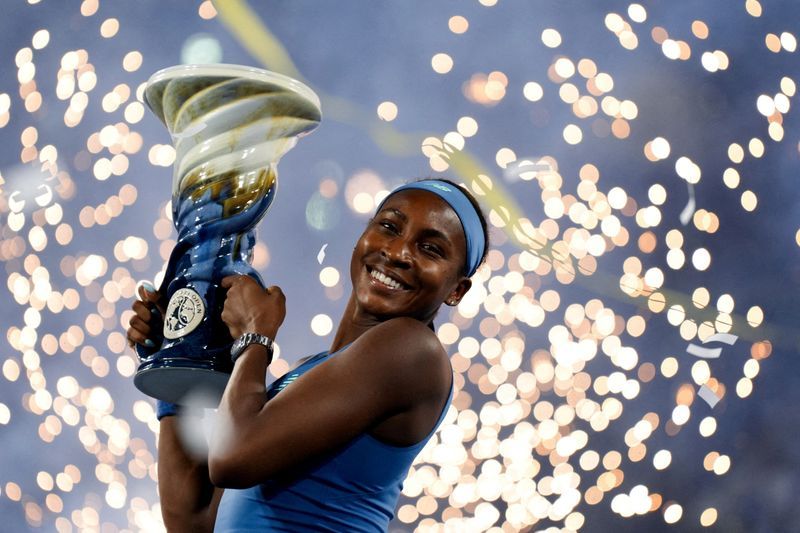
Coco Gauff, the 2023 US Open winner, has emerged as perhaps the tournament's most in-form competitor heading into the opening round. The American's resurgence has been built on a newfound reliability with her serve, historically a source of frustration in her game, which powered her run to the Toronto semi-finals and culminated in a triumphant performance at Cincinnati earlier this month. That Cincinnati victory, her first title of the season, came backed by decisive tennis and the kind of mental composure that defines major championship contenders. ESPN commentator and former world number four Mary Joe Fernandez observed that Gauff's recent trajectory reflects a player executing at her peak, suggesting she represents perhaps the strongest claim to the trophy among the field.
The home-court advantage at Flushing Meadows has historically proven decisive for American players, and Gauff's status as a perennial fan favourite means she will have the New York crowd firmly in her corner throughout the fortnight. Ranked fourth in the world, she will be joined by third-ranked compatriot Jessica Pegula in carrying national expectations. The significance of having American representation in this tournament extends beyond individual achievement; the US women have failed to reach a single Grand Slam final across the first three major competitions this year, placing particular weight on both Gauff and Pegula to restore American credibility at the season's final major on hard courts.
Iga Swiatek presents an equally compelling narrative as the eighth-ranked Pole seeks to add another major to her six-title collection. Her journey to New York has been notably turbulent, marked by sustained criticism in her home country and a conspicuous inability to progress beyond the quarter-finals at any major championship in 2024. However, her breakthrough victory in Toronto just weeks ago signals a dramatic restoration of form arriving at precisely the optimal moment. By claiming that title, she arrested a lengthy drought and demonstrated to herself and observers that her game remains capable of sustained excellence when it counts most.
Swiatek's trajectory this season encapsulates the volatility that has characterised much of 2024. During an interview following her Toronto triumph over Rybakina, she articulated the challenge of maintaining consistency throughout a grinding campaign, acknowledging that impatience and seeking results prematurely had undermined her earlier efforts. That honest assessment reflected a player who has recalibrated her expectations and approach, rediscovering the mental discipline required to convert tournament situations into titles. The timing of her resurgence—arriving just as Sabalenka's influence wanes—suggests the championship may fall to a competitor riding genuine momentum.
Sabalenka's decline stands in sharp contrast to her dominance in earlier months. The Belarusian had captured the Australian Open in January and the Miami Masters in the spring, establishing herself as the clear favourite for a three-peat that would represent only the third instance of such achievement in the Open Era. Only Serena Williams, who captured three consecutive US Open titles from 2012 to 2014, has accomplished this feat among women in the modern era. However, Sabalenka's recent performances have deteriorated markedly; she has failed to reach a single final since collecting the Sunshine Double, with particular struggles materialising in crucial moments when executing pressure points proves decisive. Fernandez characterised these shortcomings frankly, noting that Sabalenka has surrendered substantial leads in multiple competitions and now presents a vulnerable profile to prospective opponents.
Beyond the established contenders, the women's draw contains numerous wildcards capable of producing upsets or surprise runs. Mirra Andreeva, the Russian teenager who captured her maiden major at Roland Garros this year, brings genuine pedigree and fearlessness, whilst Linda Noskova of the Czech Republic arrives fresh from a breakthrough Wimbledon title secured just weeks ago. Alexandra Eala of the Philippines has made an unexpected statement by capturing the prestigious Washington WTA 500 event this month, defeating both four-time major winner Naomi Osaka and Jessica Pegula in succession. Such accomplishments against elite opposition suggest the depth of competition throughout the field.
Naomi Osaka represents another compelling storyline, returning to major championships following her 2023 maternity leave with a career trajectory that has stabilised around a respectable competitive level. The two-time US Open champion, victorious in 2018 and 2020, possesses an established connection with the New York audience that transcends sport, and recent form improvements, including a Bad Homburg final appearance in June, have rekindled optimism among observers that she might produce another title run. Though she has not captured a major since the 2021 Australian Open, her semi-final appearance at last year's US Open demonstrated that championship-level tennis remains accessible when circumstances align.
The structural uncertainty permeating the women's draw has prompted analytical reassessment from tournament observers. Patrick McEnroe, also commentating for ESPN, resisted characterising the competition as entirely wide open yet acknowledged that between six and eight serious contenders possess legitimate pathway to victory. This represents a departure from tournaments where a single competitor dominates narrative discussion; instead, the 2024 US Open women's competition reflects genuine unpredictability. The absence of overwhelming favourite status creates conditions where recent form, mental resilience, freedom from injury concerns, and supportive crowd dynamics—factors that typically influence tournament outcomes—assume heightened significance.
For Southeast Asian followers of professional tennis, the participation of Alexandra Eala adds particular regional relevance to the competition. Her emergence as a player capable of defeating established stars and capturing major titles at just 22 years represents potential inspiration for aspiring competitors throughout the region and signals shifting global dynamics in women's professional tennis. As the main draw commences Sunday, the convergence of vulnerability among seeded players, surging form among previous champions, and depth of competitive talent suggests this US Open could produce an outcome that rewrites conventional expectations and elevates unexpected narratives into championship achievement.

