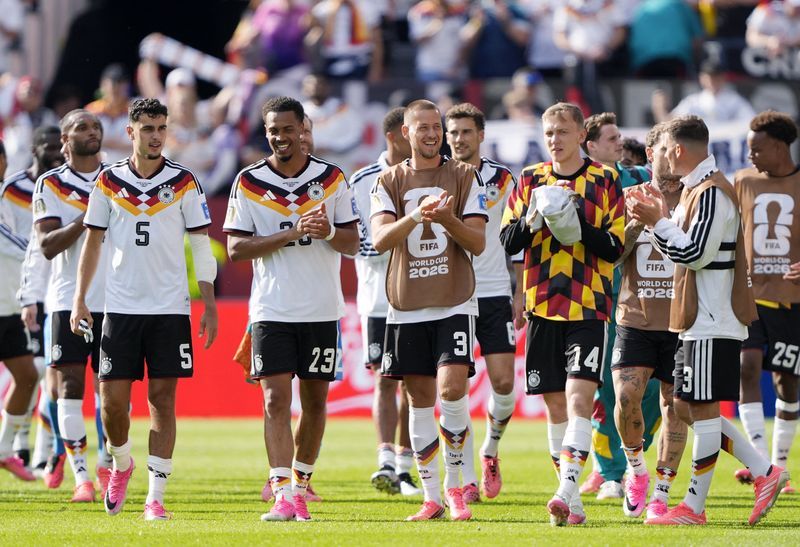
Germany bounced back from a frustrating first half to engineer a 2-1 comeback victory over Ivory Coast in their World Cup Group E encounter in Toronto on Saturday, cementing their progression to the knockout stages for the first time since lifting the trophy in 2014. The German side, buoyed by the presence of more than 100,000 supporters of German heritage in the Canadian city, ultimately overcame early setbacks and a deficit to advance with their unbeaten record intact.
The match unfolded as a compelling contest between two contrasting styles of play. Germany sought to control proceedings through methodical, intricate passing sequences, while Ivory Coast countered with an aggressive, dynamic attacking approach that kept the Europeans under considerable pressure. This tactical interplay produced an entertaining encounter filled with intensity and technical quality, though marred by controversial officiating decisions that frustrated both teams at different junctures.
Franck Kessie gave the West Africans the lead in the opening period when he converted a rebound from Amad Diallo's effort, with the initial chance created after Yan Diomande advanced down the left flank and delivered a cross into the German penalty area. This goal extended Ivory Coast's remarkable tournament streak to seven consecutive matches scoring, the longest such sequence in their World Cup history. The early breakthrough provided the underdogs with genuine belief, and they carried that momentum into the closing stages of the first half.
Germany's frustration grew acute as the opening 45 minutes concluded. Aleksandar Pavlovic appeared to have broken the deadlock from a short corner in the 25th minute, only to have his effort ruled out for an alleged foul on goalkeeper Yahia Fofana. The decision left Pavlovic visibly bewildered, hands clasped to his head in exasperation, while the predominantly German crowd's displeasure with the referee's judgment was abundantly clear. Manager Julian Nagelsmann's side had recorded eight attempts on goal without reward by halftime, a barren spell that promised to test their mental resolve.
The narrative shifted dramatically after the interval when Deniz Undav, introduced from the substitutes' bench, transformed the contest with clinical finishing. The versatile striker restored parity in the 68th minute with a controlled volley that gave Fofana no opportunity to prevent it reaching the net. Undav's second arrival mere minutes later, arriving to a pass on the turn and swivelling to fire a low drive past the goalkeeper, completed the turnaround and gave Germany command of the fixture. The goals extended Undav's impressive recent form to nine strikes across his last eight competitive appearances, highlighting his significance to this German side.
Ivory Coast's hopes of drawing level received a late stimulus when Simon Adingra found himself in a promising attacking position inside the German box, yet he squandered the opportunity by failing to fashion a clear shooting chance. Germany swiftly responded to that moment of danger, recovering possession and launching a counterattack that culminated in Nathaniel Brown's low attempt being blocked by Fofana. The goalkeeper's intervention proved decisive in preserving the German advantage during this tense closing sequence.
Germany's earlier frustrations extended beyond the Pavlovic incident. A subsequent effort from Jamal Musiala was also disallowed when the referee determined the German winger had fouled Odilon Kossounou in the build-up to the chance, compounding Nagelsmann's team's sense of injustice during a first half where they created meaningful opportunities without converting them. These marginal decisions could have proved costly had Germany failed to find their winning moments in the second half, underscoring how fine the margins are at this elite level.
The victory consolidates Germany's position atop Group E with six points, guaranteeing their safe passage to the knockout phase. Ivory Coast, meanwhile, remain on three points from two matches, leaving them facing a critical final group fixture to determine whether they advance as runners-up or exit the tournament. The West Africans' earlier goal-scoring run, impressive though it proved, could not sustain them through a second-half collapse that shifted momentum decisively toward the German side.
The group stage concludes with Germany facing Ecuador in New Jersey on Thursday, while Ivory Coast travel to Philadelphia to confront Curacao. Ecuador and Curacao were scheduled to meet later on Saturday in Kansas City as the race for qualification intensified across Group E, with multiple permutations still possible depending on results. Germany's qualification now allows them to approach their final group match with greater tactical flexibility, though the Germans will likely seek to build momentum heading into the knockout rounds.
%22%2F%3E%3C%2Fpattern%3E%3C%2Fdefs%3E%3Crect%20width%3D%22100%25%22%20height%3D%22100%25%22%20fill%3D%22url(%23ph5r0sjg)%22%2F%3E%3Crect%20width%3D%22100%25%22%20height%3D%22100%25%22%20fill%3D%22url(%23ph5r0sjp)%22%2F%3E%3Ctext%20x%3D%2250%25%22%20y%3D%2250%25%22%20text-anchor%3D%22middle%22%20dominant-baseline%3D%22central%22%20fill%3D%22rgba(255%2C255%2C255%2C0.95)%22%20font-family%3D%22Georgia%2C%20'Times%20New%20Roman'%2C%20serif%22%20font-weight%3D%22700%22%20font-size%3D%22170%22%20letter-spacing%3D%22-0.02em%22%3EMalaysia%3C%2Ftext%3E%3C%2Fsvg%3E)
%22%2F%3E%3C%2Fpattern%3E%3C%2Fdefs%3E%3Crect%20width%3D%22100%25%22%20height%3D%22100%25%22%20fill%3D%22url(%23phllcpg)%22%2F%3E%3Crect%20width%3D%22100%25%22%20height%3D%22100%25%22%20fill%3D%22url(%23phllcpp)%22%2F%3E%3Ctext%20x%3D%2250%25%22%20y%3D%2250%25%22%20text-anchor%3D%22middle%22%20dominant-baseline%3D%22central%22%20fill%3D%22rgba(255%2C255%2C255%2C0.95)%22%20font-family%3D%22Georgia%2C%20'Times%20New%20Roman'%2C%20serif%22%20font-weight%3D%22700%22%20font-size%3D%22226%22%20letter-spacing%3D%22-0.02em%22%3EMarcos%3C%2Ftext%3E%3C%2Fsvg%3E)