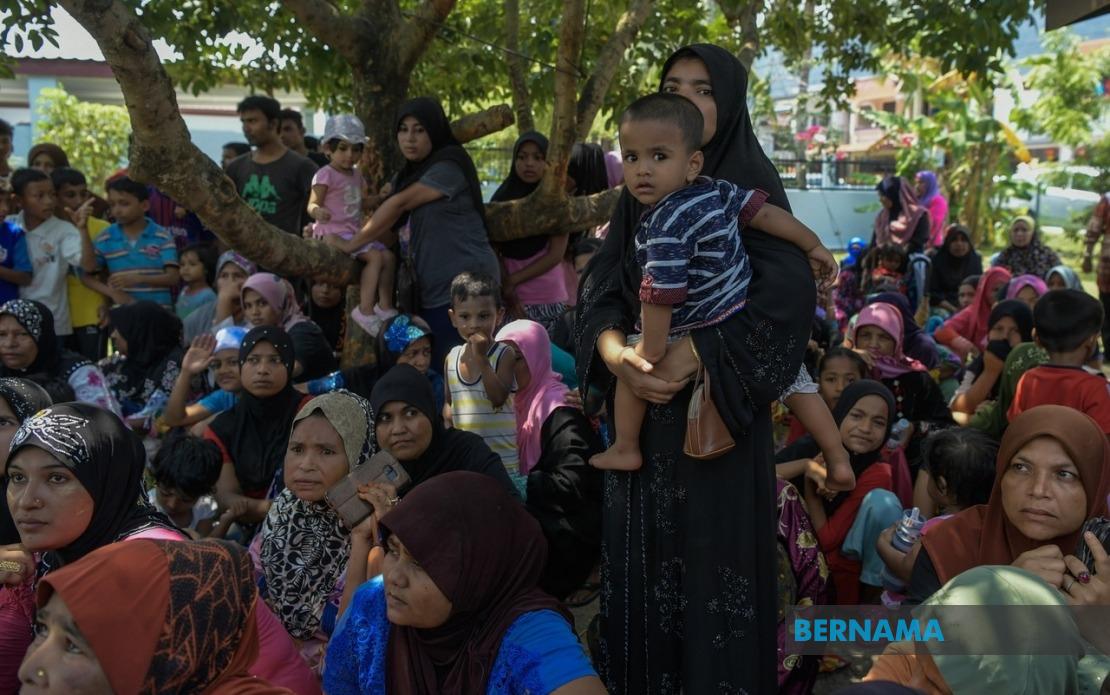
The Malaysian government has moved to dispel misconceptions surrounding refugee documentation, with Economy Minister Datuk Akmal Nasrullah Mohd Nasir emphasizing that United Nations High Commissioner for Refugees (UNHCR) cards carry no legal exemptions under domestic law. Speaking during a briefing on July 13, Akmal Nasrullah clarified that while such cards serve identification purposes within the UN framework, they do not function as citizenship documents nor shield cardholders from Malaysian criminal statutes. Any refugee or asylum seeker who violates local law will face investigation and prosecution according to existing legislative frameworks, he stated, underscoring the government's commitment to maintaining rule of law across all resident populations.
The clarification comes as Malaysia grapples with rising public anxiety regarding refugee populations and undocumented migrants. Concerns have intensified around inadequate management systems, vulnerabilities to human trafficking networks, and perceived security threats to local communities. These anxieties have spilled into public discourse, prompting the government to address what officials view as dangerous misunderstandings about the scope and limitations of international humanitarian documentation. The statement reflects broader attempts by authorities to rebuild public confidence in their capacity to administer refugee affairs while protecting national security interests.
The Home Ministry (KDN) presented a comprehensive overview of refugee management operations at a National Economic Action Council (MTEN) meeting chaired by Prime Minister Datuk Seri Anwar Ibrahim. The briefing highlighted implementation of the Refugee Registration Document (DPP) Programme, which represents Malaysia's systematic approach to registering and monitoring asylum populations. The initiative incorporates biometric data collection, multi-stage security screening, and ongoing compliance monitoring—infrastructure designed to create a verifiable record of refugee movements and prevent misuse of identity documents by criminal networks.
Enforcement operations have been expanded across multiple fronts to combat the interconnected problems of smuggling, human trafficking, and fraudulent documentation. Intelligence agencies and border authorities are intensifying joint operations targeting organized networks that exploit vulnerable migrants and asylum seekers. These coordinated efforts represent a shift toward proactive interdiction rather than purely reactive responses to discovered violations. The government is leveraging modern tools to enhance effectiveness, with data analytics platforms and monitoring technology now integral to identifying potential risks before they materialize into security incidents or community harm.
Resourced commitment underscores official seriousness about these challenges. The government has allocated RM1.2 billion across multiple agencies for border control and security infrastructure development. This substantial investment reflects recognition that effective refugee management requires sustained financial commitment alongside policy frameworks. Projects supported through this allocation include upgrading border checkpoint facilities, deploying surveillance technology, and expanding personnel capacity within enforcement agencies. Such infrastructure improvements are particularly significant given Malaysia's extensive maritime borders and porous terrestrial frontier with Thailand, both of which present ongoing management challenges.
The Malaysian Border Control and Protection Agency (ABTL) is undergoing expansion to streamline operations and consolidate enforcement authority. By concentrating border management functions within a single entity, the government aims to reduce coordination gaps, eliminate duplicate efforts, and create clear chains of command during crisis response. This administrative restructuring follows international best practice models for integrated border management. The acceleration of ABTL expansion reflects official assessment that previous systems lacked sufficient coordination capacity to address contemporary challenges of migration pressures and cross-border criminal activity.
Beyond refugee management, the government is simultaneously navigating broader regional security and economic challenges. The MTEN meeting addressed food security vulnerabilities exposed by global supply chain disruptions, particularly relevant to a Southeast Asian economy heavily dependent on imports. Manufacturing sector resilience also featured prominently in discussions, as businesses confront persistent logistical costs and transport bottlenecks that erode competitiveness. These interconnected policy challenges—migration management, food security, manufacturing competitiveness—reflect the complex governance environment facing contemporary Malaysia, where border control decisions intersect with economic performance and social stability.
The government's dual emphasis on clarification and enforcement demonstrates awareness that refugee policy operates within contested political space. Public concern about refugee populations is not unique to Malaysia; similar anxieties have driven policy shifts across Southeast Asia and beyond. However, the tension between humanitarian obligations under international protocols and domestic security imperatives creates genuine policy dilemmas. By emphasizing that UNHCR status confers no special legal privileges, officials attempt to reframe refugee presence as managed and contingent rather than automatic or unconstrained. This rhetorical approach serves domestic audiences while maintaining Malaysia's international standing as a responsible UN protocol signatory.
The distinction between UNHCR documentation and national legal status carries practical implications for enforcement agencies. Police and immigration officials require clear guidance that refugee cardholders remain subject to comprehensive law enforcement authority. Conversely, the existence of formal UNHCR registration ostensibly provides authorities with reliable identity information superior to the undocumented status that characterized pre-registration refugee populations. In theory, this trade-off benefits both security objectives and humanitarian management—officials gain better situational awareness while refugees receive basic dignity protections and documentation legitimacy. Whether implementation achieves these competing objectives remains an ongoing question for policymakers and civil society observers monitoring program outcomes.
The broader context involves Malaysia's long-standing role as host to significant refugee populations, particularly Rohingya from Myanmar, alongside smaller populations of Pakistani, Afghan, and other asylum seekers. The Rohingya presence alone exceeds 180,000 persons across peninsular Malaysia, representing one of the world's largest stateless populations. Managing such numbers sustainably requires coordination across humanitarian, security, economic, and social policy domains. Government statements emphasizing legal frameworks and enforcement capacity can be understood partly as responses to public concern about numbers and integration challenges. Officials face persistent pressure to demonstrate that refugee populations remain managed and monitored rather than beyond state authority.
Looking forward, Malaysia's approach suggests continued reliance on technological systems and administrative consolidation to address refugee management challenges. Investment in biometric registration, data analytics, and border infrastructure reflects contemporary governance trends toward digitalized population management. Such systems theoretically enhance both administrative efficiency and enforcement capability. However, effectiveness ultimately depends on implementation quality, resource adequacy, and inter-agency coordination—persistent challenges in complex bureaucracies. The government's willingness to allocate substantial budgets and restructure agencies indicates serious intent, though observers will monitor whether institutional capacity genuinely matches expanded responsibilities.

