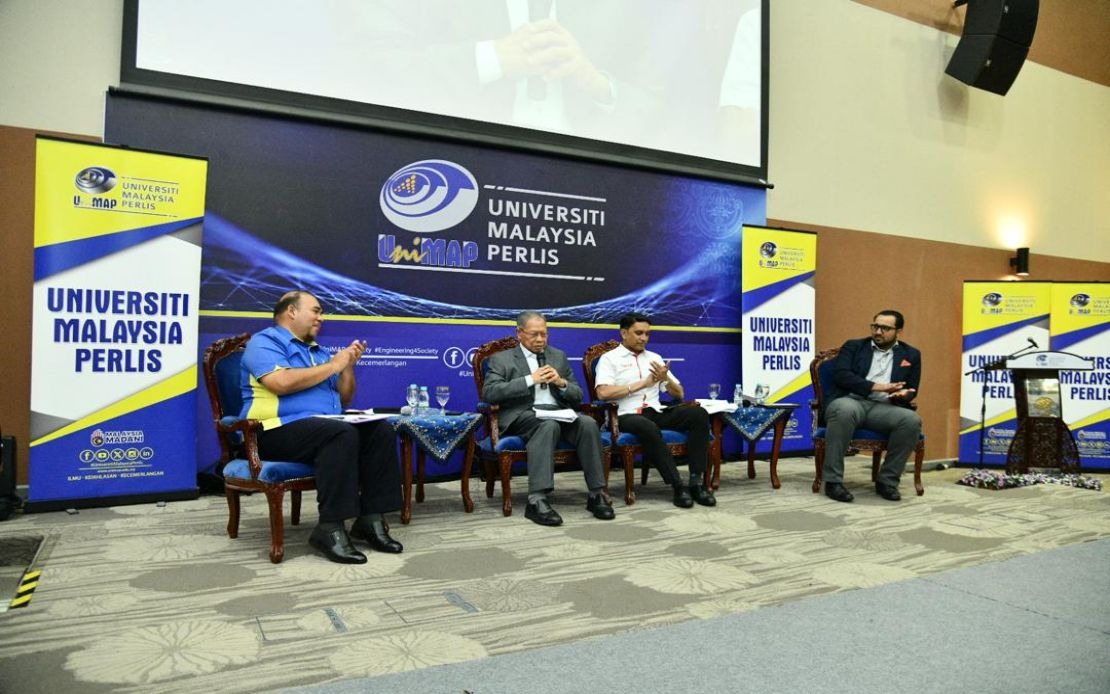
Universiti Malaysia Perlis (UniMAP) is positioning itself as a critical engine for Malaysia's semiconductor ambitions, graduating nearly 2,000 students each year into the electrical and electronics (E&E) and semiconductor sectors. The contribution represents a substantial commitment to addressing the skilled labour shortages that threaten Malaysia's competitiveness in what has become one of the world's most strategically important industries. Datuk Prof Dr Zaliman Sauli, UniMAP's Vice-Chancellor, outlined this alignment during the From Semiconductor Policy to Industry Forum held at the university's Arau campus, emphasising the institution's role in executing Malaysia's National Semiconductor Strategy (NSS).
The NSS itself is anchored on an ambitious objective: producing 60,000 skilled workers and engineers by the end of the decade. This figure underscores the magnitude of the challenge facing policymakers and educational institutions alike. Malaysia's semiconductor sector, while historically strong in manufacturing and assembly, now requires a deeper, more diverse talent pool capable of driving innovation and higher-value activities. UniMAP's output of nearly 2,000 graduates annually represents approximately 3.3 per cent of this total target, a meaningful contribution from a single institution but also an indication that the burden of workforce development must be distributed across Malaysia's entire higher education ecosystem.
Employment data released by UniMAP reveals encouraging signals about graduate absorption into the sector. More than 30 per cent of the university's 2024 and 2025 cohorts have begun careers in the E&E industry, suggesting that the university's curriculum and industry connections are successfully matching graduate capabilities with employer demand. This integration between academic training and industry needs is neither automatic nor inevitable; it reflects deliberate choices in programme design, faculty expertise, and institutional partnerships. For a developing nation attempting to retain and grow a complex manufacturing sector, this alignment between educational output and labour market requirements becomes critically important.
Malaysia's position in global semiconductor trade provides important context for understanding why the NSS and UniMAP's graduation pipeline matter so deeply. The country currently ranks as the world's sixth-largest semiconductor exporter, commanding seven per cent of the global chip trade and holding a commanding 13 per cent share of the global Assembly, Testing and Packaging (ATP) market. These figures represent decades of accumulated industrial capability and investment, yet they also mask underlying vulnerabilities. Competitors ranging from Vietnam to India are rapidly building their own semiconductor ecosystems, armed with comparable labour costs and increasingly sophisticated domestic talent. Malaysia's advantage lies partly in established infrastructure and international firm presence, but retaining that advantage hinges on continuously upgrading the skill profile of the workforce.
The semiconductor industry itself has undergone profound transformation in recent years. These devices no longer power merely consumer electronics; they form the foundation for artificial intelligence systems, electric vehicle platforms, data centre infrastructure, and countless emerging applications. This broadening of applications has created new demand categories and skill requirements. Engineers must now understand not just the manufacture of chips but also their integration into intelligent systems, their thermal management in high-performance environments, and their role in global supply chains characterised by geopolitical fragmentation. UniMAP's emphasis on evolving curriculum and partnerships reflects recognition of this shifting landscape.
UniMAP's strategy for strengthening its pipeline extends beyond traditional classroom instruction. The university has established several mechanisms designed to maintain current knowledge and foster direct industry-academic collaboration. The Industry-on-Campus initiative brings practitioners and real-world problems into the university environment, allowing students to engage with contemporary challenges. Industry Advisory Panels ensure curriculum remains attuned to employer priorities and emerging skill gaps. The recruitment of International Adjunct Professors brings global expertise and perspectives into the classroom. Industry-recognised professional certification programmes embedded within degree structures create stackable credentials that enhance graduate marketability. Collectively, these initiatives represent an institutional commitment to remaining relevant and effective in a rapidly evolving sectoral landscape.
The forum that provided the platform for UniMAP's announcements drew participation from senior government and industry figures, reflecting the political and commercial importance assigned to semiconductors within Malaysia's economic policy framework. Former International Trade and Industry Minister Datuk Seri Dr Mustapa Mohamed, Northern Corridor Implementation Authority Chief Executive Datuk Mohamad Haris Kader Sultan, and Micron Technology Inc Malaysia's Head of Government and Public Affairs Ahmed Zaki Moten collectively represented the policy, regional development, and multinational industry perspectives shaping Malaysia's semiconductor future. This convergence of voices underscores that semiconductor sector development is no longer a purely business concern but a matter commanding sustained government attention.
The Northern Corridor, encompassing Perlis, Kedah, and surrounding regions, occupies particular strategic significance in Malaysia's semiconductor ambitions. UniMAP's location at the heart of this region positions the university as a crucial link between national strategy and regional implementation. The Northern Corridor has historically served as a secondary electronics manufacturing hub relative to the more developed southern zones, yet it possesses abundant land, reasonable labour availability, and increasingly sophisticated industrial infrastructure. University-based talent development can help unlock this region's potential, attracting higher-value semiconductor activities and embedding supply chain clusters that create durable employment and wealth generation.
The emphasis on collaboration between government, universities, and industry reflects a genuinely important insight: no single institution can address Malaysia's semiconductor workforce challenge in isolation. Government policy must create attractive conditions for investment and human capital development. Universities must respond with relevant, high-quality education that balances theoretical foundations with practical applicability. Industry must engage with academic institutions to guide curriculum development and provide internship and employment pathways. Malaysia's success in maintaining and advancing its semiconductor position depends on sustaining this three-way partnership as global competition intensifies and technological requirements continue accelerating.
Looking toward 2030, the 60,000-worker target established by the NSS represents both aspiration and operational challenge. UniMAP's contribution of nearly 2,000 graduates annually demonstrates institutional capacity and commitment, yet achieving the broader national target will require parallel efforts across polytechnics, private colleges, vocational institutions, and industry training programmes. The semiconductor sector's strategic importance to Malaysia's continued economic competitiveness ensures that workforce development will remain a priority for policy attention. UniMAP's role as a major source of talented graduates positions the university as indispensable to this ongoing project of industrial and technological upgrading.

