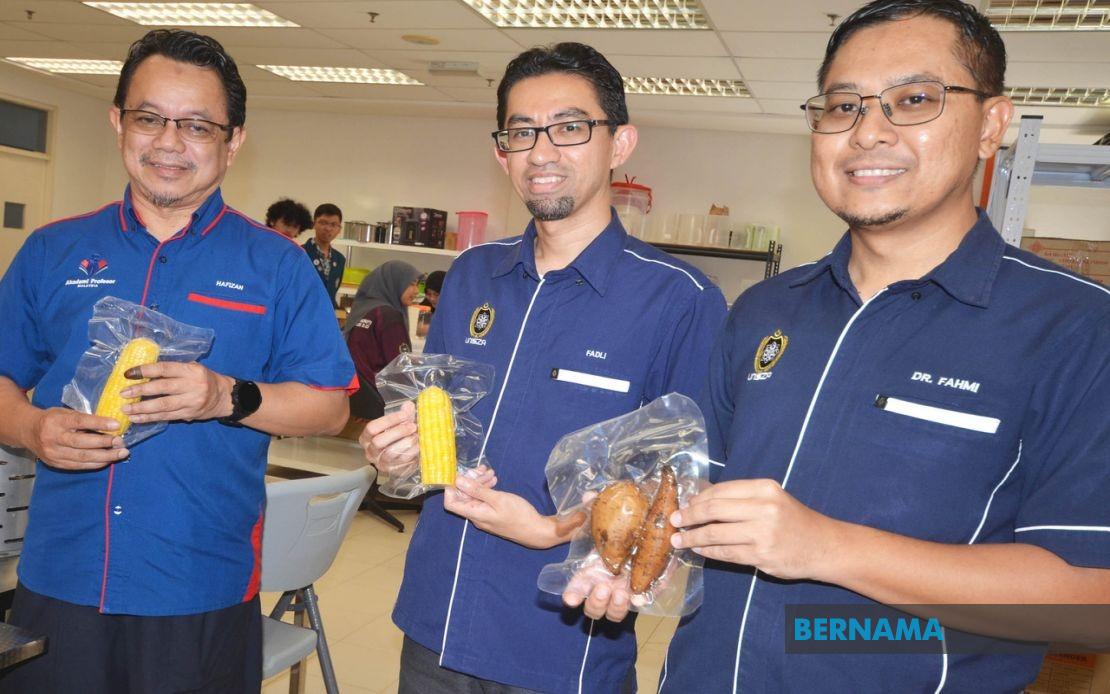
Universiti Sultan Zainal Abidin's Dapur Komuniti represents an innovative response to a persistent agricultural challenge facing rural communities across Malaysia. The community kitchen, developed in partnership with the Sustainable Community Farm at UniSZA's Besut campus, addresses a critical gap in the agricultural supply chain where farmers struggle with excess produce and limited market access. According to the faculty's dean, Prof Dr Hafizan Juahir, the initiative functions simultaneously as a food innovation hub and an economic development tool designed to strengthen livelihoods within the local agricultural sector.
At its core, the initiative tackles a problem that extends far beyond Besut. Malaysian farmers, particularly those in rural areas, frequently face a squeeze from intermediaries who purchase at deflated farm-gate prices while consumers pay substantially more in urban markets. Sweet potatoes in Besut exemplify this disparity starkly—farmers once received less than RM2 per kilogramme for produce that commanded significantly higher prices in Kuantan and major cities like Kuala Lumpur. This price compression, driven by logistical inefficiencies and farmers' limited exposure to digital marketing platforms, leaves cultivators with accumulated unsold stock and mounting losses. The Dapur Komuniti directly confronts these structural disadvantages by establishing infrastructure and training that enables farmers to capture additional value.
The kitchen's operational model focuses on converting agricultural products that lack commercial viability in their fresh form into processed goods with substantially extended shelf lives. One flagship product demonstrates this approach effectively: pickled Terengganu Sweet Melon, manufactured from lower-grade melons destined for waste. By transforming unmarketable fruit into a shelf-stable, value-added commodity, the initiative simultaneously reduces food waste and creates supplementary revenue channels for farming households. This approach resonates with broader sustainability concerns across Southeast Asia, where agricultural waste constitutes both an economic loss and environmental burden.
Beyond product development, UniSZA has embedded comprehensive training programmes within the kitchen's operations. Local residents, particularly farmers themselves, receive hands-on instruction in food processing techniques that translate into marketable skills. This educational component reflects recognition that sustainable rural development requires building human capital alongside infrastructure. The university recognizes that technical knowledge transfer, when paired with accessible processing facilities, empowers agricultural communities to diversify income streams independently of middlemen and market volatility.
The university's pursuit of accreditation as a Malaysian Skills Certificate (SKM) training centre represents a significant institutional commitment to formalize these competencies. Through collaboration with the Department of Skills Development, the Dapur Komuniti aims to become an officially recognized centre for SKM Level 3 qualification in food processing. This development carries implications extending well beyond UniSZA's immediate locale. Students graduating from the university will potentially exit their programmes holding dual qualifications—a bachelor's degree alongside an industry-recognized technical credential. This combination addresses a persistent Malaysian labour market concern: the perception that university graduates possess theoretical knowledge without practical, immediately applicable skills valued by employers.
The initiative's expansion to encompass Malaysian Armed Forces veterans represents yet another dimension of economic inclusion. Military personnel transitioning to civilian employment often face disruption and limited pathways to income security, particularly in rural areas where job markets remain constrained. By equipping veterans with food processing certifications and connecting them to operational kitchen facilities, UniSZA creates viable entrepreneurial pathways for a demographic frequently marginalized in rural economic planning. This approach acknowledges that agricultural value addition requires diverse human resources, and that community development succeeds when multiple populations benefit.
The Besut location itself carries significance within Terengganu's agricultural landscape. Besut district possesses established agricultural productivity, particularly in horticultural crops. However, like many rural Malaysian regions, it suffers from inadequate post-harvest infrastructure and limited linkages to higher-value markets. UniSZA's presence as the district's primary university institution positions it uniquely to address these gaps through research-informed intervention. The Dapur Komuniti's foundation in empirical findings about local farming challenges demonstrates that effective rural development emerges from rigorous understanding of specific community contexts rather than generic policy application.
The research underlying the initiative identified middleman pressure as a principal constraint on farmer viability. In Malaysia's agricultural sector, value chains frequently concentrate disproportionate margins among traders and distributors, leaving primary producers vulnerable to price suppression. The Dapur Komuniti indirectly addresses this structural imbalance by reducing farmers' dependency on fresh-produce marketing and enabling direct value capture through processing. When farmers themselves control processing and can access certification enabling direct-to-consumer or institutional sales, market power dynamics shift measurably.
Food processing skill development also aligns with broader Malaysian economic diversification priorities. As agriculture's share of national GDP continues declining, rural communities require economic alternatives that remain geographically feasible. Value-added food production represents one such alternative, particularly when paired with institutional support and certified training. The SKM qualification framework specifically targets this need, creating pathways whereby agricultural regions develop higher-value service capabilities rather than exclusively competing on commodity production.
The initiative's emphasis on shelf-life extension through proper processing addresses another critical Malaysian concern: post-harvest loss reduction. Malaysian agriculture loses substantial percentages of production to spoilage, particularly for perishable crops grown in humid tropical conditions. Terengganu's climate creates particular challenges for horticultural preservation. By converting surplus production into processed forms—pickling, drying, or value-added transformation—the Dapur Komuniti directly reduces resource waste while improving supply chain efficiency.
Looking forward, the Dapur Komuniti model offers replicability potential across rural Malaysia. Other districts, facing analogous agricultural oversupply and farmer marginalization challenges, could adapt this approach with appropriate local customization. The initiative demonstrates that universities, when strategically positioned and sufficiently resourced, can function as meaningful development institutions beyond teaching and research. Through engagement with local agricultural challenges, institutional research capacity, and training infrastructure development, UniSZA contributes tangibly to rural economic transformation.
The initiative ultimately reflects recognition that agricultural challenges in Malaysia require integrated solutions addressing infrastructure deficits, skills gaps, and market access simultaneously. By coupling processing facility provision with formal certification pathways and direct skills training, UniSZA's Dapur Komuniti creates conditions enabling farmers to navigate market pressures more effectively. As rural economies across Southeast Asia grapple with generational shifts and urbanization pressures, such community-embedded institutional responses become increasingly essential for sustaining agricultural viability and rural population retention.

