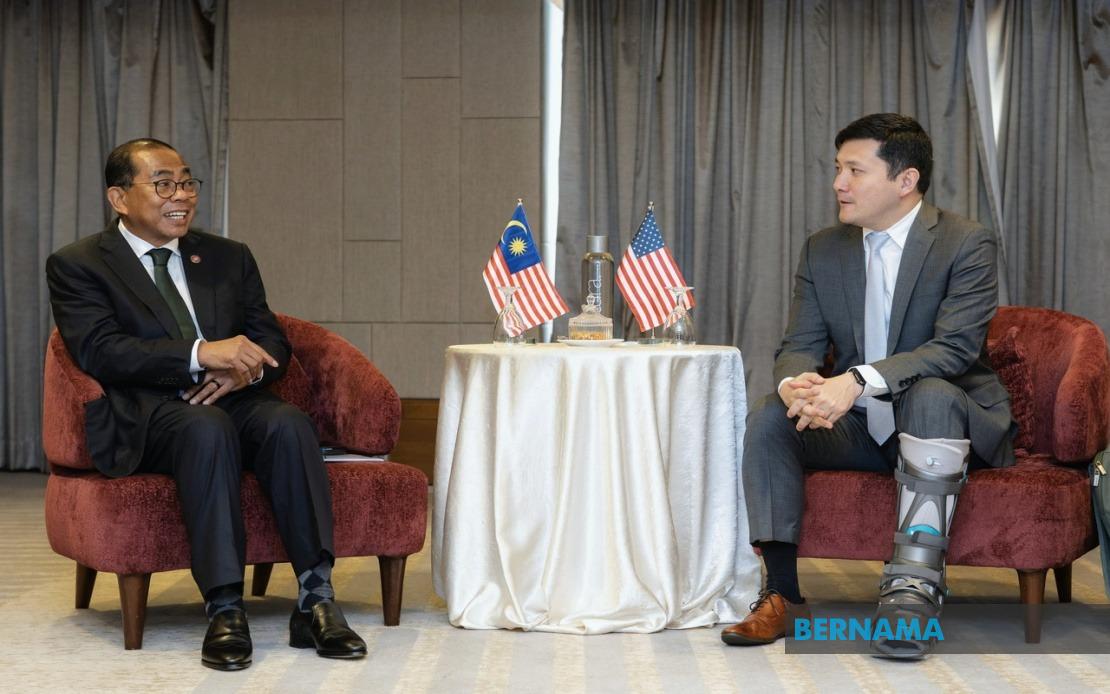
Malaysia's Defence Minister Datuk Seri Mohamed Khaled Nordin has confirmed that the United States intends to deepen its military and defence cooperation with the country, signalling continued strategic alignment at a time of shifting regional security dynamics. The assurance came during a courtesy visit from US Ambassador to ASEAN Kevin Kim on the sidelines of the 37th Annual Military Law and Operations Conference (MILOPS) in Kuala Lumpur on August 3.
The diplomatic overture underscores Washington's sustained interest in maintaining close security partnerships across Southeast Asia, particularly with key allies like Malaysia. The conversation between Kim and Nordin focused primarily on consolidating existing bilateral relations rather than introducing new policy initiatives, according to the Defence Minister's remarks to journalists following the meeting. This approach reflects a pragmatic strategy of deepening institutional ties and operational coordination rather than announcing fresh strategic pivots.
The timing of this engagement carries significance for Malaysia's defence posture within the broader Southeast Asian context. As the region grapples with maritime security challenges, great power competition, and transnational threats, maintaining robust partnerships with established allies remains a cornerstone of Kuala Lumpur's security strategy. The emphasis on strengthening rather than transforming ties suggests both nations are comfortable with the current trajectory of their relationship, seeking to enhance what already works rather than undertake risky new commitments.
Beyond the bilateral dimension, Nordin's interactions during the MILOPS conference revealed multilayered regional security conversations. Separately, he received ASEAN Secretary-General Dr Kao Kim Hourn, with whom he discussed the defence sector's role in preserving regional stability and supporting ASEAN's core principles. Both officials acknowledged that military cooperation and institutional frameworks remain essential for addressing shared challenges while maintaining the bloc's centrality in regional architecture. This multilateral engagement illustrates how Malaysia navigates between bilateral partnerships and collective ASEAN positioning, a delicate balance critical to its diplomatic effectiveness.
Singapore's newly appointed Permanent Secretary for Defence, Joseph Leong, also paid courtesy call to Nordin, emphasising Singapore's commitment to strengthening defence cooperation with Malaysia. The discussion extended beyond strictly bilateral concerns to encompass broader arrangements including the Five Power Defence Arrangements (FPDA), a Cold War-era security framework that continues to shape regional military cooperation. For Malaysia, engagement through such multilateral mechanisms provides opportunities to influence regional security discourse while maintaining flexibility in its strategic choices.
The FPDA connection is particularly noteworthy for Malaysian policy observers. Though Malaysia is not formally a member, the framework's activities involving Singapore, Australia, New Zealand, and Britain directly affect regional security dynamics and Malaysia's positioning. Cooperation through these structures allows Malaysia to maintain constructive relationships with major Indo-Pacific powers while preserving its strategic autonomy—a characteristic feature of Malaysian foreign policy that resonates across government and defence establishments.
The 37th MILOPS conference itself represents a significant institutional gathering for regional and international defence professionals. Drawing more than 30 countries' government officials and military representatives, the conference provides a structured forum for discussing emerging security challenges, legal frameworks for military operations, and mechanisms for deepening operational cooperation. For Malaysia as the host, such conferences serve multiple purposes: demonstrating its standing as a responsible regional actor, generating opportunities for bilateral engagements like those involving the US, and positioning the country as a convener of security dialogue in Southeast Asia.
The focus on legal and operational dimensions of military cooperation, rather than doctrinal or strategic posturing, reflects pragmatic approaches to regional security. As countries navigate complex relationships involving competing interests and overlapping security concerns, establishing clear legal frameworks and standardised operational procedures reduces friction and builds confidence. Malaysia's ability to host such conferences and facilitate these discussions contributes to its reputation as a serious participant in regional security architecture.
For Malaysian stakeholders, these developments reinforce the country's role as a bridge between major powers and between ASEAN and the broader Indo-Pacific. The simultaneous engagement with American, Singaporean, and Indonesian (through ASEAN Secretary-General) representatives demonstrates Malaysia's diplomatic reach and the value placed on its partnership by multiple strategic actors. This positioning, cultivated over decades of careful diplomacy, provides Malaysia with meaningful leverage in regional negotiations and access to diverse security perspectives.
Looking forward, the reaffirmation of US commitment to defence partnership carries implications for Malaysia's military modernisation and strategic planning. American defence cooperation often encompasses technology transfer, training opportunities, and access to advanced systems, all of which contribute to military capability development. For Malaysian defence planners, maintaining strong US ties ensures access to these resources while preserving relationships with other partners, including China and Russia, reflecting Malaysia's traditional non-aligned positioning.
The broader context matters for understanding these exchanges. Regional security challenges—from maritime piracy and terrorism to managing great power competition in the South China Sea—require sustained cooperation and capable partners. Malaysia's geographic position along crucial sea lanes, its economic dynamism, and its significant Muslim-majority population make it a valuable partner for global security arrangements. The US recognition of this importance, expressed through Ambassador Kim's visit and the broader defence engagement, acknowledges Malaysia's significance to American regional strategy.

