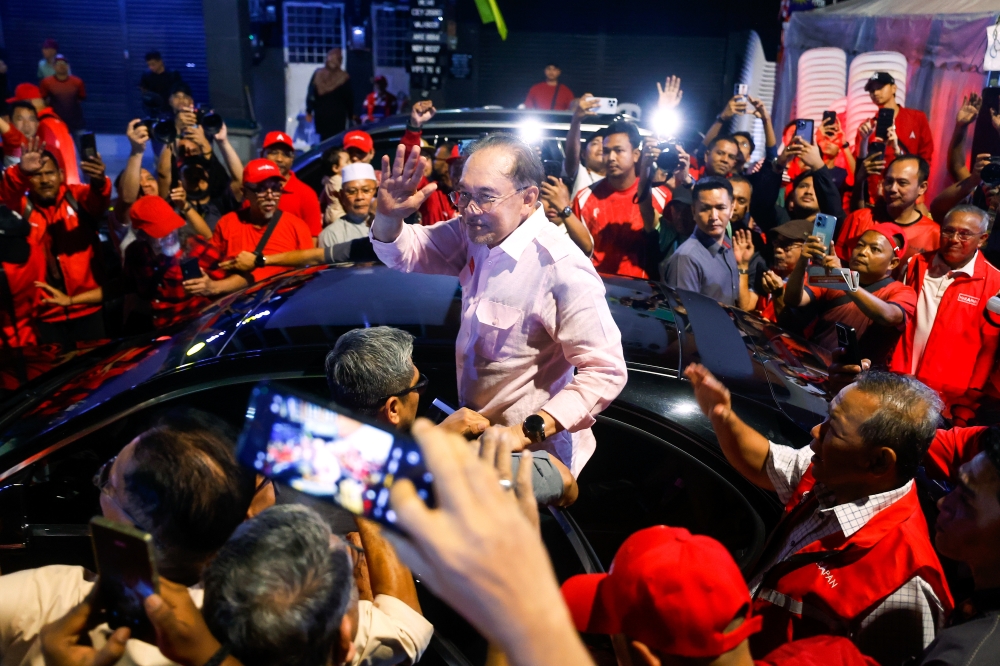
Prime Minister Datuk Seri Anwar Ibrahim delivered remarks in Seremban on July 23 signalling that Malaysia's governing coalition remains intact and capable of steering the country through its current challenges. His statement comes at a time when coalition partners continue to navigate the complexities of shared governance, a framework that has defined Malaysian politics since the 2022 elections ushered in the unity government model as a response to political fragmentation.
The Prime Minister's confidence in the stability of his administration reflects efforts to project continuity and reassurance to investors, business leaders, and the public as the country manages multiple economic pressures. The unity government, comprising representatives from major political blocs spanning Peninsular Malaysia and East Malaysian constituencies, has been tested repeatedly by divergent priorities and occasional public disagreements between partners. Anwar's statement appears designed to counter any suggestion that these tensions threaten the government's survival or effectiveness.
Economic performance has emerged as a central pillar of the government's legitimacy and a key metric by which Malaysians assess its competence. By anchoring his remarks to economic fundamentals, Anwar is positioning the administration as focused on tangible improvements in living standards rather than becoming mired in political infighting. Malaysia's economy has shown resilience despite global headwinds, including persistent inflation in developed markets and slower growth in key trading partners. The government's ability to maintain investor confidence while managing fiscal pressures directly influences employment, wage growth, and consumer sentiment.
The assertion of economic solidity carries particular weight given concerns about purchasing power that have animated public discourse. Rising costs for essential goods, housing, and utilities have shaped household finances across income brackets, and any perception of economic instability could amplify public anxiety. The Prime Minister's remarks therefore serve a dual purpose: demonstrating political control at the federal level while signalling that macroeconomic management remains on track. This is especially important as Malaysia heads toward critical periods when policy decisions around taxation, spending, and sectoral support will shape the trajectory of growth.
The coalition model itself has proven both a constraint and a stabilising force for Malaysian governance. By requiring consensus among diverse political parties representing different regions and constituencies, it imposes discipline on individual actors but also creates vulnerability to defections or strategic withdrawals. Anwar's emphasis on unity government strength directly addresses the inherent fragility of such arrangements. Coalition partners, aware that their participation is essential to government formation, retain considerable bargaining power, and managing these dynamics requires constant attention to intra-coalition negotiations and burden-sharing.
State-level politics intersect with these federal dynamics in complex ways. Seremban, located in Negeri Sembilan, sits within a political landscape where various coalitions compete for influence across local and state assembly seats. By choosing to deliver such remarks in the state capital, Anwar may be signalling continued engagement with regional political actors and reaffirming federal-state coordination on matters ranging from infrastructure to economic development. The strategic positioning of political messaging across Malaysian geography remains a crucial element of governance legitimacy.
International economic conditions form an important backdrop to these domestic assurances. Malaysia, as a highly open economy dependent on trade and foreign direct investment, remains vulnerable to external shocks including trade tensions, commodity price volatility, and shifts in global supply chains. The government's confidence in economic foundations implicitly reflects assessments that key risk factors remain manageable and that structural advantages in technology, energy transition, and regional trade will support continued growth. This confidence must be grounded in concrete policy initiatives rather than rhetoric alone for it to retain credibility.
The unity government framework, while novel in recent Malaysian politics, draws on historical precedents and reflects pragmatic adaptation to electoral outcomes that no longer delivered decisive single-party majorities. Maintaining this coalition requires ongoing demonstration of performance legitimacy—the notion that the government delivers tangible benefits justifying public support. Economic stability serves as the most direct measure of such performance, affecting employment, investment, and consumer optimism in ways that citizens experience directly in their daily lives.
Looking forward, the cohesion of Malaysia's unity government will likely depend on managing competing demands from coalition members while delivering on economic objectives. Anwar's statements provide a public signal of confidence but represent only one element of the complex institutional and political arrangements required to sustain multi-party coalitions. The test of such claims emerges through implementation of policies, management of inevitable disputes, and continued economic performance that reflects positively on the government's stewardship. Malaysian observers will be watching closely to assess whether assertions of stability translate into sustained political cooperation and economic improvement.

