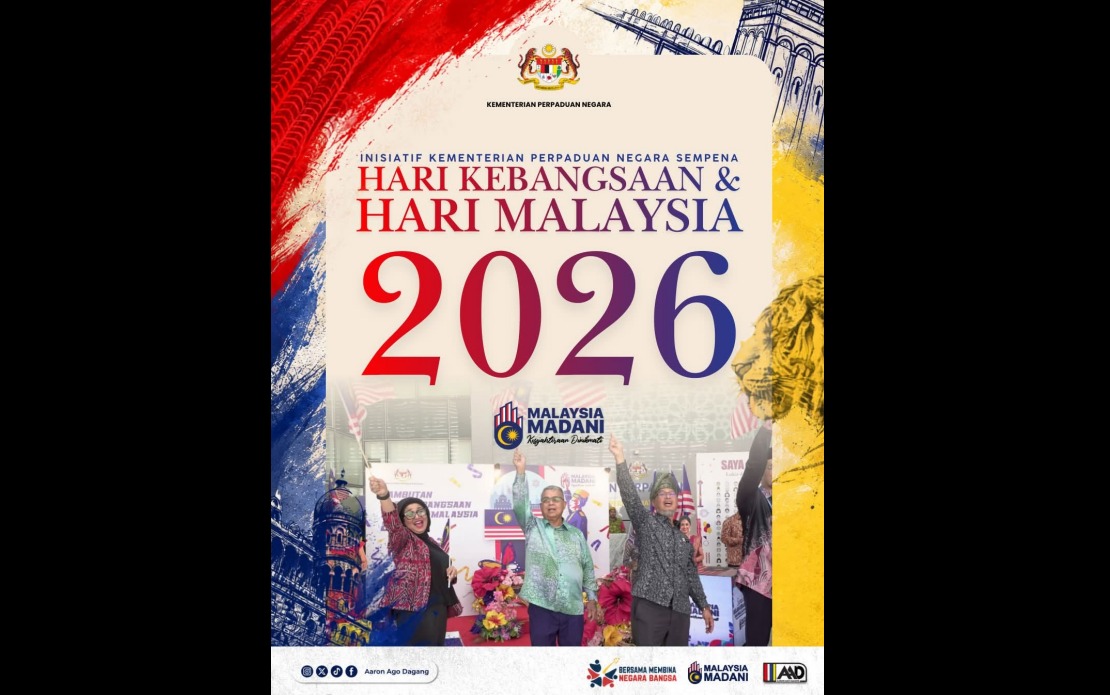
The National Unity Ministry (KPN) is preparing an ambitious slate of public programmes for the 2026 National Day and Malaysia Day celebrations, positioning nation-building and heritage appreciation as central to the government's unity agenda. Minister Datuk Aaron Ago Dagang outlined the 11 initiatives on Monday, framing them as vehicles to deepen Malaysians' connection to their country whilst acknowledging the nation's multicultural character.
The calendar of events speaks to a deliberate strategy of engaging Malaysians across multiple platforms and age groups. The 2026 National Unity Integration Movement represents the flagship initiative, though specific details about its scale and reach remain under wraps. Alongside this anchor programme, the ministry will stage Malaysia's Merdeka Children Celebration, designed to instil patriotic values in younger generations at a formative stage. The approach recognises that nation-building begins with early socialisation, a principle increasingly emphasised across Southeast Asia as governments grapple with generational disconnection from historical narratives.
Educational and cultural dimensions feature prominently in the ministry's blueprint. An Exhibition on Independence will offer curated perspectives on Malaysia's journey from colonial rule to sovereignty, whilst a dedicated programme honouring Tun Abdul Razak, the nation's second Prime Minister and founding architect of key institutions, provides historical anchoring. These exhibitions serve dual purposes: they educate contemporary audiences unfamiliar with post-independence history, whilst reinforcing official narratives about Malaysia's development trajectory. In a region where historical memory is contested, such institutional framing carries political significance.
The Pesta Bola Merdeka Exhibition merges sports and national celebration, tapping into football's enduring popularity across Malaysian society as a unifying force. Sport has long been recognised as a soft-power tool for building social cohesion, and the ministry's inclusion of this event suggests understanding of how athletic competition transcends ethnic and religious divides. The exhibition component, rather than competition alone, indicates an intent to educate audiences about Malaysia's sporting heritage and international achievements.
Cultural programming extends to Night at the Museum, a format increasingly adopted by heritage institutions globally to democratise access and create informal learning environments. Such initiatives typically combine entertainment with education, drawing families and young adults who might not otherwise visit museums during conventional opening hours. For Malaysia, where museum attendance remains modest compared to regional peers, expanding accessibility aligns with broader efforts to strengthen public engagement with national institutions and historical record.
The Rukun Negara Oratory Competition represents perhaps the most explicitly nation-building initiative, directly mobilising the five principles enshrined in the social contract since 1970. Compelling young speakers to articulate these foundational values—belief in God, loyalty to King and country, upholding the Constitution, rule of law, and good behaviour and morality—creates repeated opportunities for public recitation and internalisation of state ideology. Oratory competitions also develop communication skills whilst conferring status on those who master articulation of national values.
Minister Ago Dagang's statement emphasises alignment between these programmes and the government's broader nation-building agenda, explicitly referencing strengthening national identity, fostering a sense of belonging, and cultivating patriotism. The language reflects recognition that shared identity cannot be assumed in a country spanning thirteen states and federal territories, encompassing Peninsular Malaysia, Sabah, and Sarawak, with populations identifying across multiple ethnic, religious and cultural axes. The invocation of Malaysia's diversity as a strength rather than challenge signals commitment to inclusive nationalism, though implementation will determine whether such rhetoric translates into genuine representation across these programmes.
For Malaysian audiences and regional observers, these initiatives warrant attention as indicators of how Kuala Lumpur approaches national cohesion at a moment when social polarisation and generational divides present ongoing challenges. The 2026 celebrations arrive during Malaysia's 69th anniversary as an independent nation, a milestone that affords opportunity for reflection on national progress and collective identity. The breadth of the ministry's programming suggests ambition to reach diverse demographics through varied cultural and educational channels.
The timing of announcing these plans in August 2024, nearly two years before implementation, allows for extensive preparation and community input. Heritage institutions, educational bodies, corporate sponsors and civil society organisations can begin coordinating contributions. For regions like Sabah and Sarawak, historically assertive of distinct identities within the Malaysian federation, inclusive planning processes become particularly important to ensure these celebrations resonate beyond Peninsular narratives.
The National Unity Ministry's commitment, as stated by the minister, positions itself as guardian of Rukun Negara principles and historical memory. Whether these 11 initiatives succeed in their stated purpose—strengthening unity and national identity in an increasingly plural society—will depend on implementation quality, genuine engagement with communities, and how effectively these programmes navigate the tension between promoting overarching national identity and respecting constituent identities within Malaysia's multicultural framework. The ministry has signalled its hand; execution will reveal whether substance matches aspiration.

